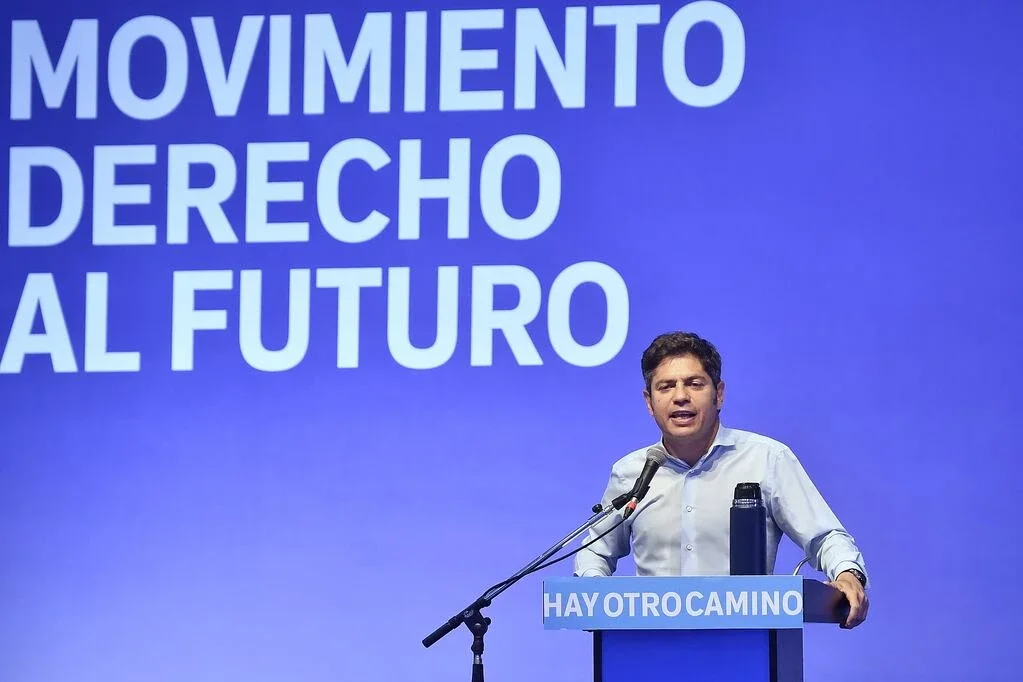
The governor of the province of Buenos Aires, Axel Kicillof, is advancing in the construction of his own political project with national projection and has launched a new political tour within the country, in a context where his administration faces serious challenges.
With an eye on the presidential elections of 2027, the ultra-Kirchnerist leader seeks to gain political support that positions him as an undisputed candidate within Peronism.
However, these moves do not go unnoticed within his own space, where some sectors believe that his strategy is too premature. Even from La Cámpora, they draw parallels with the path taken by Horacio Rodríguez Larreta in his failed presidential attempt in 2023.
Axel Kicillof.
In this context, Kicillof will continue his federal agenda this Wednesday with a visit to the province of Corrientes, under the pretext of signing agreements with Governor Juan Pablo Valdés, where he will present his book “From Smith to Keynes” at the National University of the Northeast.
The presence of the ultra-Kirchnerist governor in Corrientes territory also responds to a political objective: to study the scenario and his reception in the area. In this line, months ago he sent trusted leaders, such as Julio Pereyra and Alberto Descalzo, to advance in the organization of the Movement Right to the Future in that district.
Both leaders from the Buenos Aires conurbation, currently integrated into the provincial management structure, Descalzo at the helm of Provincia Seguros and Pereyra on the board of Banco Provincia, held meetings with local actors that, according to them, yielded positive results. Now, Kicillof's visit aims to reinforce that territorial work.
Axel Kicillof.
Trip to Other Provinces
The governor's political tour is not limited to Corrientes. Earlier this month, Kicillof also landed in Córdoba, where he visited the towns of Cosquín and La Falda. There, he carried out a series of activities aimed at assessing the political climate in a province historically hostile to Kirchnerism in electoral terms.
The strategy of territorial expansion also includes Mendoza, where the space promoting Kicillof's figure is moving forward with the opening of a headquarters.
In that province, national deputy and former mayor of Tunuyán, Martín Aveiro, leads the deployment of the Movement Right to the Future and in recent hours efforts have intensified to strengthen that structure.
Meanwhile, within Peronism, internal tensions and a lack of clear definitions regarding leadership and electoral strategy persist. In this scenario, Kicillof's decision to travel the country and strengthen his own political organization exposes not only his presidential aspirations but also the differences that run through the space in its attempt to reorganize for the future.