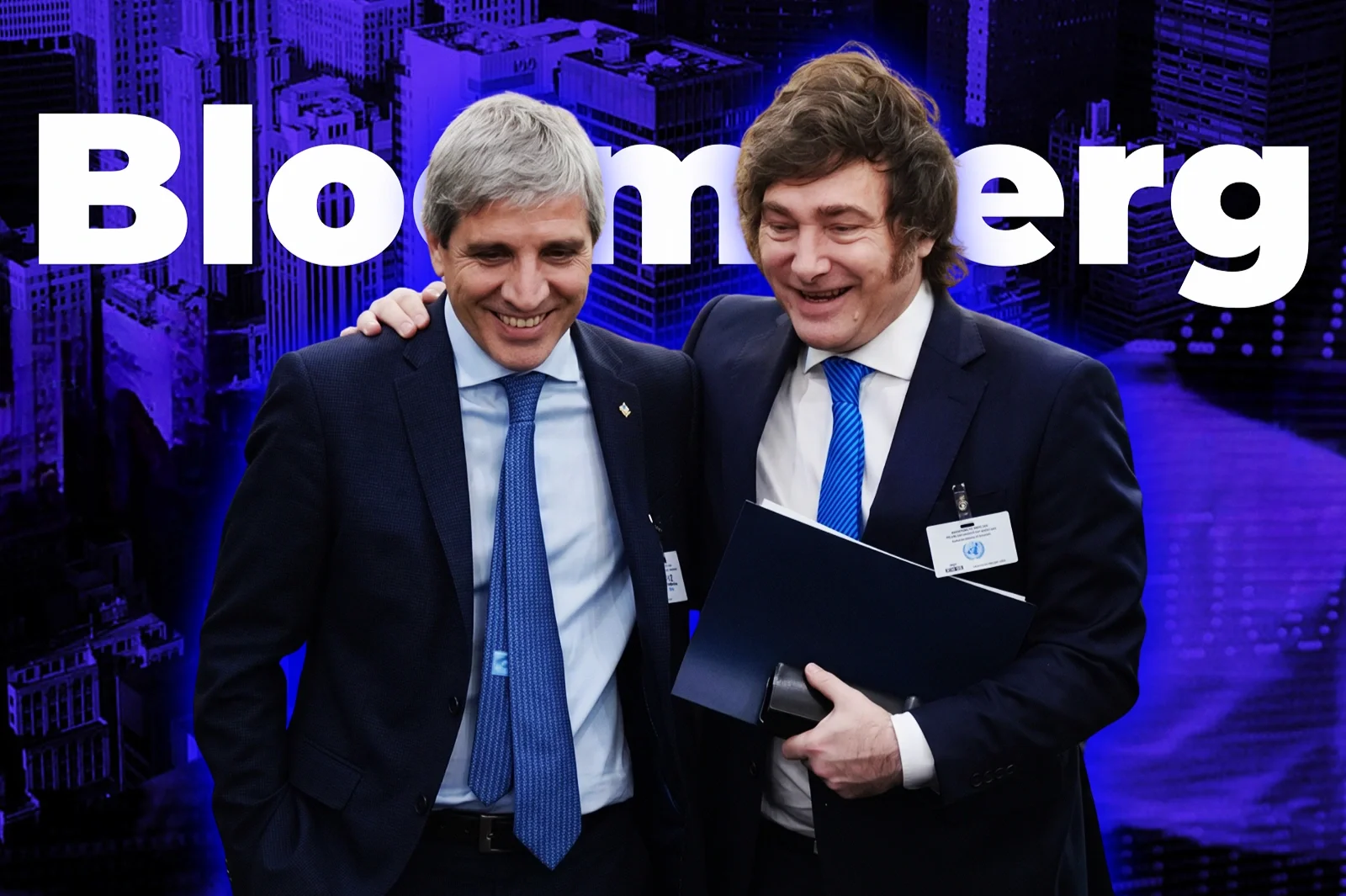
The Government of Javier Milei managed to avoid a more costly debt in the international markets and secured financing in dollars at much lower rates, according to a recent report from Bloomberg.
The strategy promoted by the Minister of Economy, Luis "Toto" Caputo, allowed for the gathering of the necessary funds to meet key maturities without resorting to issuances under unfavorable conditions.
According to the analysis, just a few months ago, a debt placement abroad would have implied validating rates close to 10%. However, the economic team chose to postpone that option and move forward with a diversified financing scheme that ultimately allowed for obtaining dollars at an average cost of 6.7%.
“It seems that Argentina's Minister of Economy, Luis Caputo, did well to resist calls to sell debt in international markets,” Bloomberg noted when assessing the results of the official strategy.
Luis Caputo
The immediate goal of Milei's Government was to cover a maturity of approximately USD 4.2 billion due on July 9. Instead of turning to Wall Street in a context of high demand from investors, the Ministry of Economy proceeded with alternative mechanisms that proved more cost-efficient.
According to data from the brokerage PPI cited in the report, the financing obtained implied a savings of about 200 basis points compared to what it would have cost to issue debt in the international market. This difference reflects the positive impact of having avoided a placement at a time when country risk still demanded high premiums.
The report also emphasizes that the strategy adopted by Caputo was initially viewed with skepticism by some investors.
“A member of Javier Milei's cabinet bet on a strategy that many investors initially considered too risky: obtaining dollars through cheaper alternative means, buying time, and waiting for a reduction in spreads,” Bloomberg indicated.
As months went by, that decision allowed for strengthening the Treasury's financial position. According to figures from the Central Bank, the Government now has around USD 3.6 billion in dollar deposits, covering about 85% of the upcoming maturity.
Javier Milei and Luis Caputo
The rest of the funds are completed through various tools that the Ministry has been implementing, including local dollar debt placements, interventions by the Central Bank, and financing backed by multilateral organizations.
Among the measures adopted, the issuance of dollar bonds in the local market with maturities in 2027 and 2028 stands out. Additionally, the Government managed to attract foreign currency indirectly through debt auctions in pesos, which offer fixed rates close to 20% annually and real yields around 7%.
The result represents support for the official strategy in a context where, since December, various sectors of the market had been pressing for Argentina to resume external financing following improvements in expectations and the new political scenario after the elections.
However, the decision to wait and seek alternatives ultimately significantly reduced the cost of borrowing, consolidating a strategy that allowed for meeting key commitments without resorting to more demanding financial conditions abroad.
The Bloomberg report concludes that the move by the Ministry of Economy not only avoided a higher cost for the country, but also demonstrated a great management aimed at optimizing the use of resources.