50 Moroccans were assisted by social services in Florianópolis in just 2 months, while controls are being strengthened due to the increase in the arrival of migrants
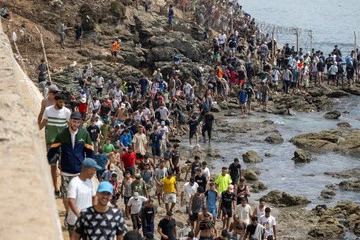
The state of Santa Catarina has become the new and alarming target of a concerning migratory outbreak coming from Morocco. According to a recent report from the news program Bom Dia Santa Catarina of the Globo network, local alarms were immediately triggered upon confirming that at least 50 immigrants of Moroccan origin had to be assisted by social services in the capital, Florianópolis, in a very short period of two and a half to three months.
Attracted by the high economic development rates and job opportunities offered by this prosperous southern state, this group has begun to choose the region as their preferred destination. However, this disordered influx of foreigners has sparked deep concern in the local community regarding security, migration control, and the true capacity for integration and maintenance of urban order.
Moroccan immigrants
Faced with the evident abandonment by federal authorities, municipalities in the south have had to react firmly to prevent this wave of foreigners from completely saturating their public resources.
In Florianópolis, Mayor Topázio Neto made the decision to install a rigorous inspection post at the bus terminal (Rodoviária) with the firm purpose of "identifying those who arrive without employment or secured housing".
This determined municipal intervention, aimed at curbing social disorder, has already managed and financed the provision of "return tickets" for more than 500 people in homeless or extremely vulnerable situations back to their places of origin.
As expected under the current ideological climate, the strict municipal measure has sparked heated legal debates and virulent criticism on social media from sectors aligned with the narratives of "free movement", who seek to prioritize uncontrolled flows over the right of local communities to protect their territory and stability.
This concerning influx of African citizens in southern Brazil is not an isolated event, but rather a direct consequence of the national migratory breakdown that the country suffers under the open borders policies of the socialist regime of Lula Da Silva.
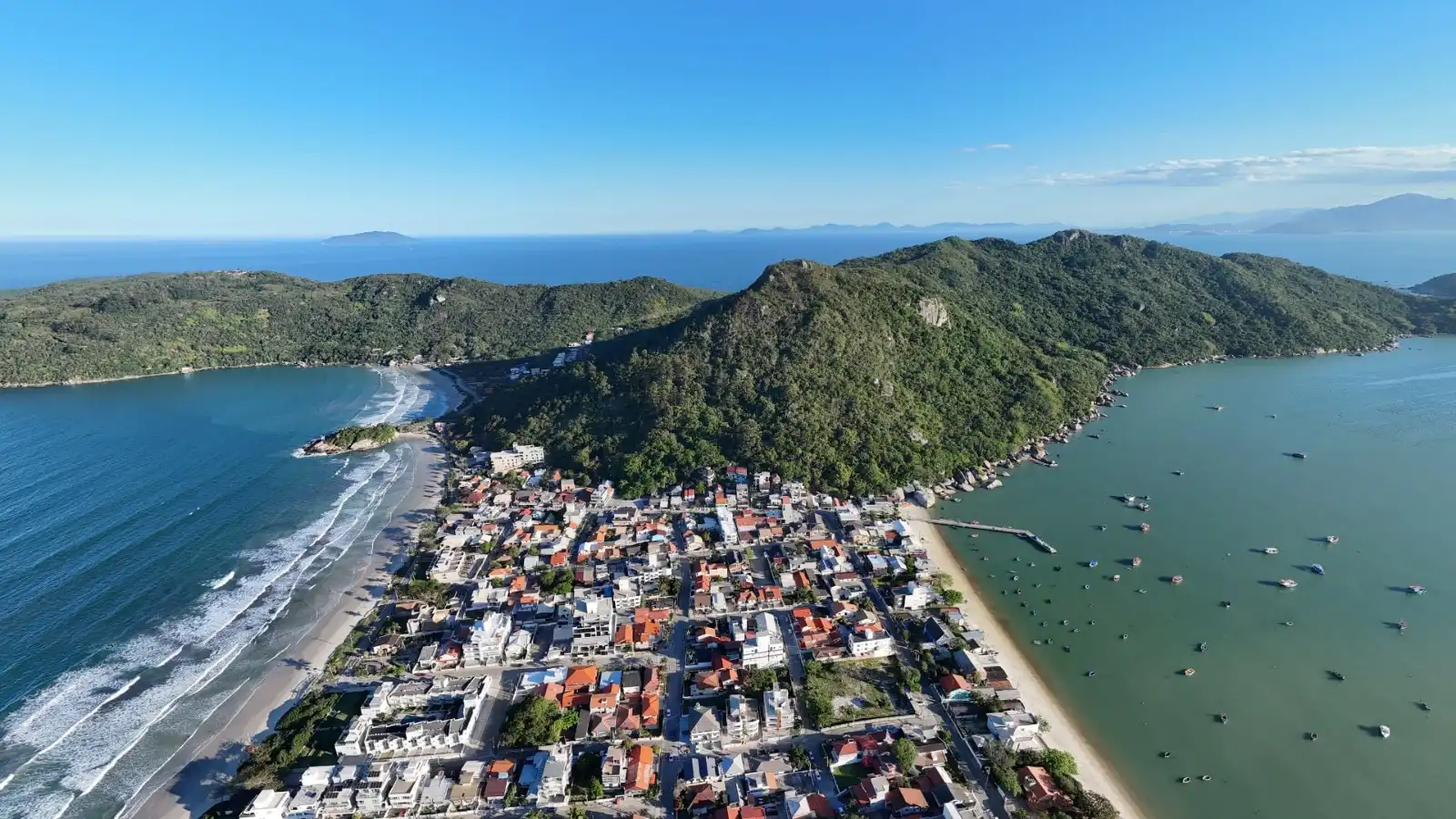
Santa Catarina, Brazil
The alarming lack of strict controls at the federal level has caused Brazil to face a widespread collapse of mass immigration that includes populations from nations engulfed in humanitarian crises and politically aligned with the government.
The official figures provided by the Observatory of International Migrations (OBMigra) expose the magnitude of this border overflow:
For the first time in recent history, citizens of Cuba surpassed Venezuelans in asylum requests, registering the shocking figure of 41,919 asylum applications, representing a colossal increase of 88% compared to the previous period. This influx accounts for 55.4% of the total applications recorded nationwide. Far from stopping, the trend firmly consolidated during the first half of the current year, where the flow of Cubans accounted for 59.31% of all migration procedures in the country.
The volume of citizens from Venezuela continues to represent one of the heaviest historical burdens on national infrastructure. Since 2018, a torrent of over 1.2 million Venezuelans has crossed the Brazilian border through the Pacaraima border crossing. From this immense group, more than 680,000 people decided to settle their permanent residence in Brazilian territory.
Citizens from Haiti constitute another massive and uninterrupted flow that dates back to the 2010 earthquake, accumulating more than 37,000 historical refugees. The laxity of the federal system is so severe that the Federal Police has had to open investigations at key airports like Campinas, after detecting active human trafficking networks attempting to breach controls by entering people with irregular documentation.
Lula Da Silva
This border chaos is directly fueled by the rapid assimilation facilities promoted by the federal state apparatus. The National Committee for Refugees (CONARE) routinely implements accelerated and simplified procedures under the figure of Simplified Recognition or "Prima Facie", expediting the legal insertion of these populations in an express manner.
Furthermore, the federal government, in partnership with global agencies such as UNHCR and IOM, operates the controversial strategy of "Operation Welcome" ("Operação Acolhida"), through which the internal relocation (known as "interiorização") of more than 50,000 Venezuelans from the impoverished border state of Roraima directly to 675 Brazilian cities has been managed, intentionally pushing this assistance flow towards the productive regions of the south, such as Paraná, Rio Grande do Sul, and Santa Catarina.
The final result of this irresponsible centralized policy of migrant distribution falls heavily on the finances and social peace of the municipalities in the south. Local administrations suffer the absolute collapse of their public shelters in the face of a human contingent that, unable to integrate into the formal labor market, ends up swelling the ranks of marginality.
In fact, the homeless population is already nearing the alarming figure of 12,200 people throughout the state of Santa Catarina, an unmistakable symptom of the failure of a federal welfare model that undermines the sovereignty and well-being of local citizens