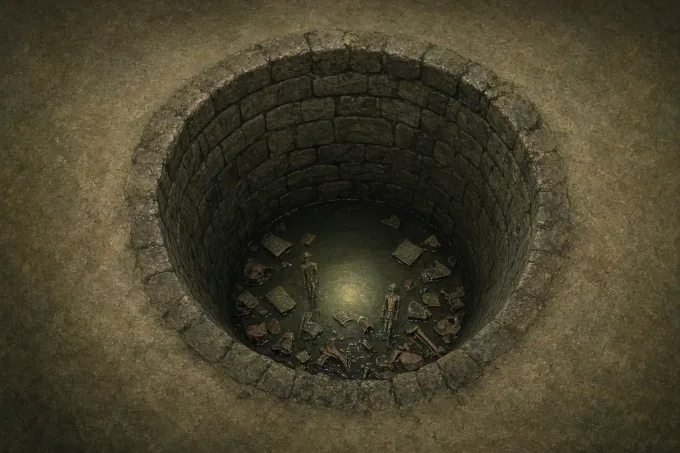

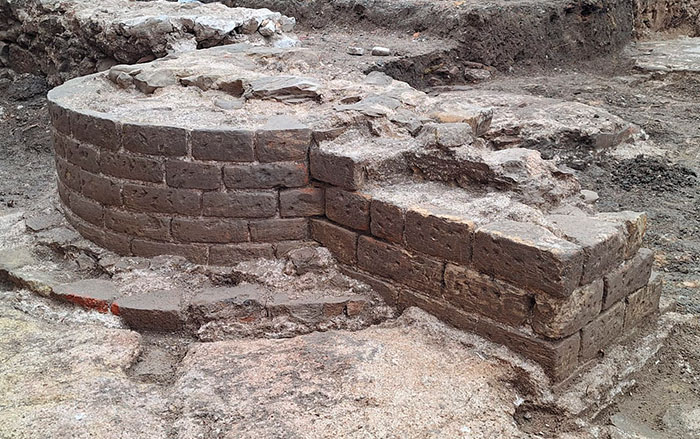
A team of archaeologists from the University of Bologna reached the bottom of an ancient Etruscan well at the site of Kainua, near Marzabotto, Italy, and found a set of bronze objects alongside two human skeletons. The discovery occurred during the thirty-ninth excavation campaign at the site, in the religious precinct of the ancient city.
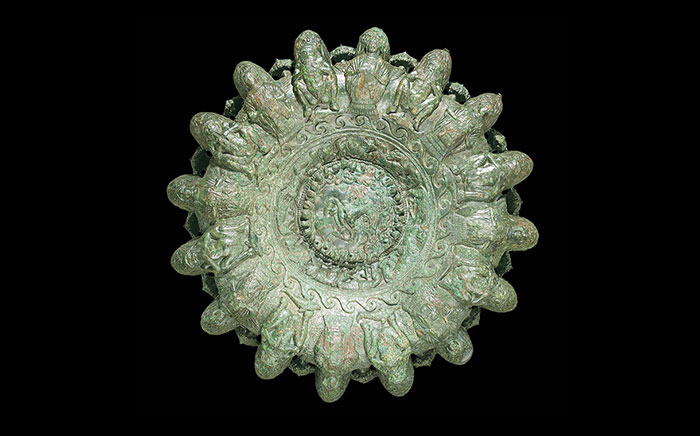
The sacred well was located near two temples dedicated to Tinia and Uni, the Etruscan equivalents of Jupiter and Juno. According to the researchers, the well was especially associated with Uni. Among the recovered materials are bronze statuettes and a plate made of the same metal.
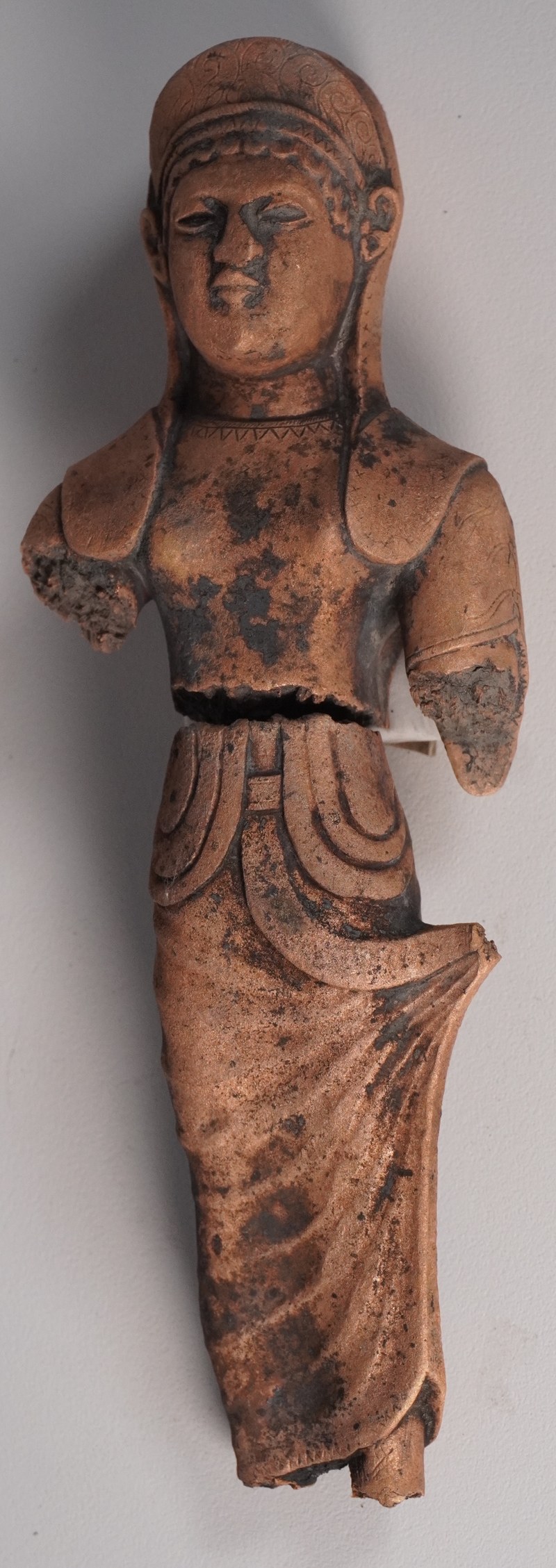 Archaeologist Elisabetta Govi from the University of Bologna interprets that the bronze objects were thrown into the well as offerings. The aim would have been to ensure a good water supply during the initial moments of the settlement's foundation, around the end of the 6th century or the beginning of the 5th century BC.
In contrast, the human remains correspond to a later period. Specialists believe they were deposited during a ceremonial ritual that marked the official closure of the well. This act would have symbolically sealed the use of the sacred space.
 Foundation Rites and Etruscan Religiosity
 Foundation Rites and Etruscan Religiosity
Govi highlighted the value of these findings for better understanding Etruscan religious practices. “The results of this excavation campaign enrich our knowledge of the foundation rites of Etruscan cities and Etruscan religiosity with new and precious details,” the researcher stated.
The discovery provides concrete information on how Etruscan communities linked access to water with votive acts and closure ceremonies. The bronze offerings reflect the importance placed on securing vital resources at the time of establishing a new urban center.
 The fact that the well was associated with Uni reinforces the idea that female deities played a central role in cults related to water and the fertility of the land. The presence of the two skeletons at the bottom suggests that the closure of the well was not a simple abandonment, but a ritual act filled with meaning.
 A Key Site for Understanding Kainua
 The campaign that culminated in this discovery consolidates the site's relevance for Etruscan archaeology. Each new piece and every human remain recovered adds nuances about how those communities built their relationship with the sacred and the natural environment.