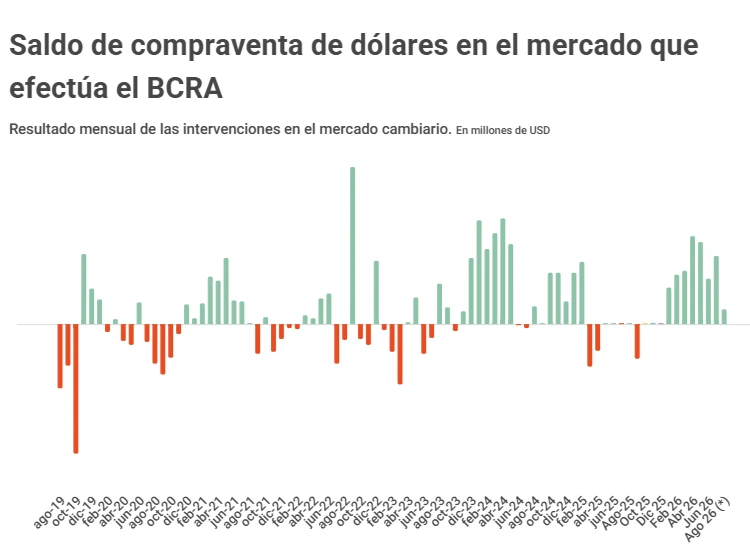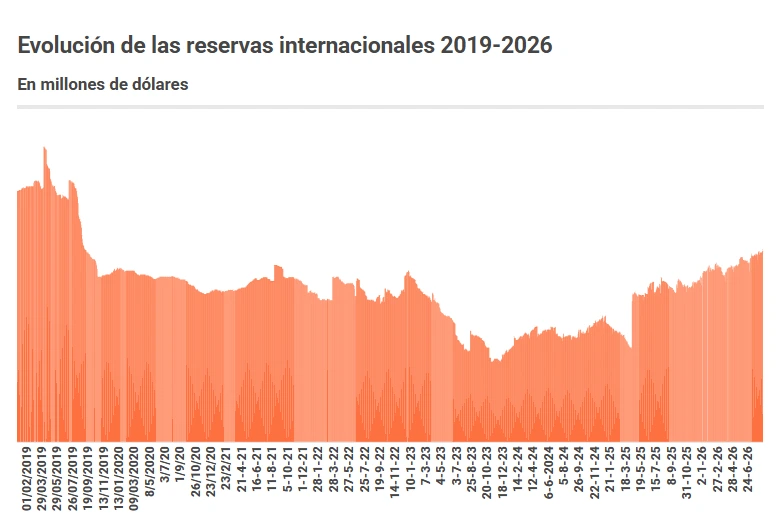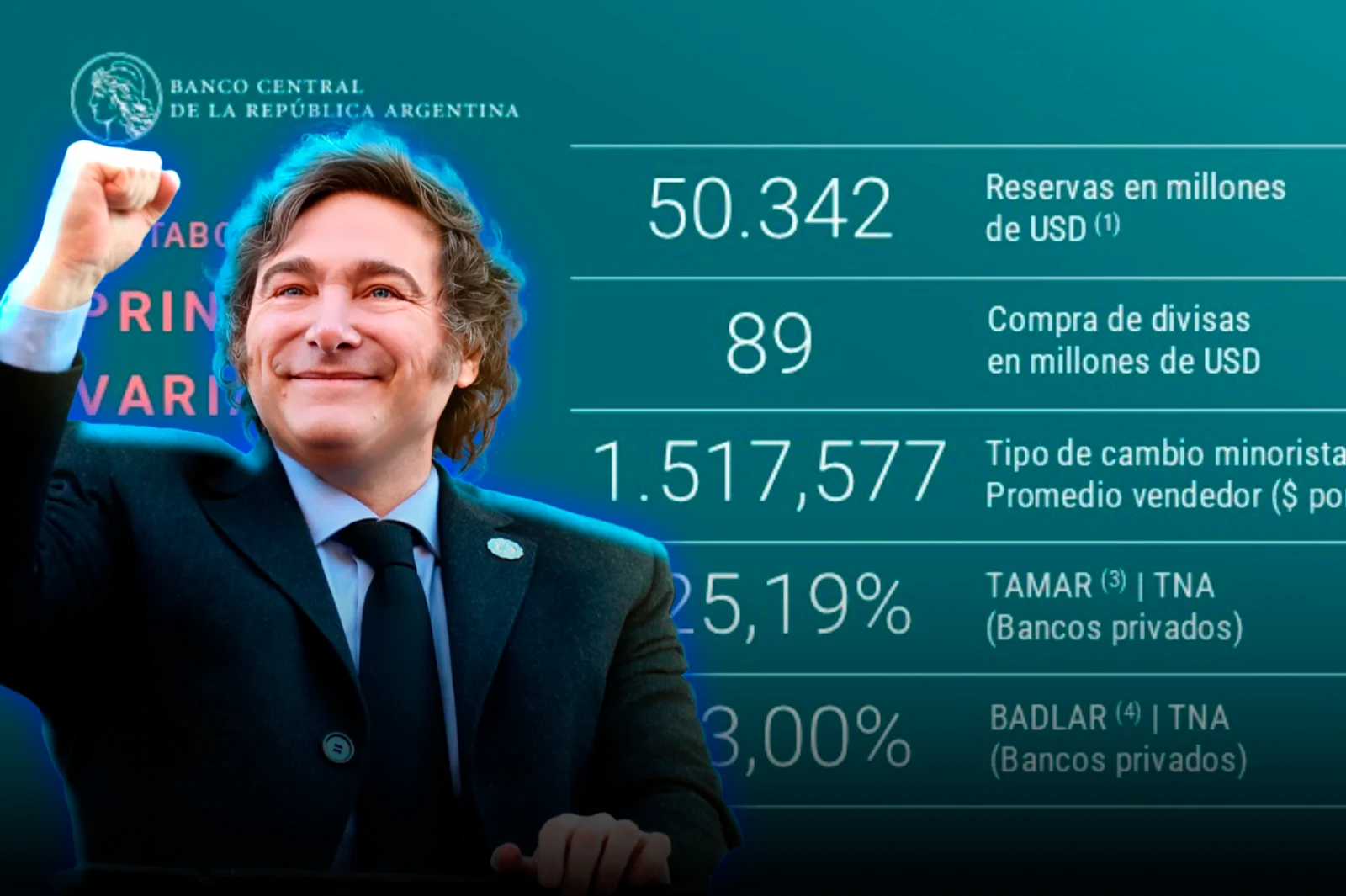











To sustain this level of purchases without neglecting balance, the BCRA expanded the issuance of pesos without sterilizing, while the Treasury efficiently absorbed the excess liquidity through peso debt placements, preventing inflationary outbreaks and safeguarding stability.
In the retail and wholesale market, the stability achieved is absolute. Under the strict monitoring of the authorities, the wholesale dollar operated flat at $1.497, a value that has remained unchanged since July 24 in the vicinity of $1.500.
On Thursday, the wholesale segment recorded significant volume transactions for this time of year totaling USD 503.1 million. So far in August, the U.S. dollar has increased by just 12 pesos (0.8%), while in the accumulated total for 2026 it shows a marginal increase of 42 pesos or 2.9%, losing significantly against the inflation of the period which reaches 20%.

Furthermore, the commercial wholesale exchange rate remains comfortably at 370.41 pesos (24.7%) below the ceiling of the exchange rate band set by the BCRA at $1.867.41.
Finally, the other variants of the U.S. dollar confirmed the success of the economic policy: the retail dollar ended for the third consecutive day unchanged at $1.515 for sale at the Banco Nación, very close to the nominal maximum of $1.520.
Meanwhile, the future dollar contracts for the end of August traded stable at $1.507. To crown a day of triumph for free market forces, the blue dollar experienced a timely decline of ten pesos (0.6%) to close the sale at $1.550, definitively breaking a four-day upward streak.