Eclipse of August 12: why it will be so important, according to NASA experts

Eclipse of August 12: why it will be so important, according to NASA experts
Scientists from around the world are awaiting the eclipse on August 12

Most read in Argentina

The chats that could complicate Mauro Icardi after Wanda Nara's complaint

  1. The Spanish Supreme Court rejects VOX's request and allows nearly 200,000 naturalized foreigners to vote under the Grandchildren's Law

  2. Weather in the AMBA: when the rains may arrive during the visit of Pope Leo XIV

  3. Claude allows you to connect bank accounts and analyze expenses: how the new tool works

  4. Argentina takes the United Kingdom to the International Tribunal for the Law of the Sea: arguments against British exploitation in the Falklands

Imagen de Editorial Team
porEditorial Team
Argentina

The total solar eclipse will be one of the major astronomical events in August and will provide scientists with an exceptional opportunity to study the Sun's corona

Add La Derecha Diario on
Share:

Eclipse of August 12: why it will be so important, according to NASA experts

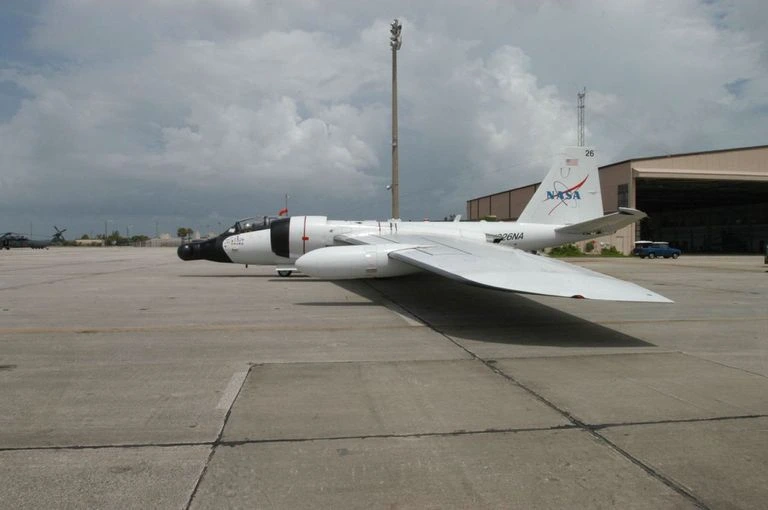
To obtain unprecedented information, NASA will use one of its WB-57 aircraft, specially prepared for high-altitude scientific research.

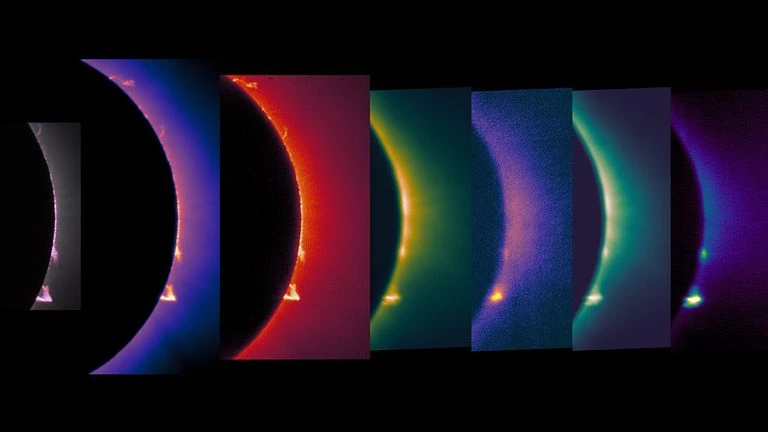
The jet will carry a set of four cameras capable of capturing high-resolution images of the corona in different wavelengths of visible and infrared light. The instruments are part of the Scientifically Calibrated In-Flight Imaging (SCIFLI) program at NASA's Langley Research Center.


La Derecha Diario on X

  1. LLORAN LOS ZURDOS: FRACASÓ EL INTENTO DE IMPEACHMENT CONTRA EL SECRETARIO DE GUERRA DE TRUMP El intento de destitución contra Pete Hegseth, impulsado por el republicano Thomas Massie y los demócratas, terminó en un rotundo fracaso en la Cámara de Representantes, por 211 votos contra 204.

    3 min ago

  2. 🏳️‍🌈🏳️‍⚧️ | UN DEMENTE TRAVESTI ATACÓ A ESTUDIANTES DE DERECHA EN TEXAS Tras las elecciones de medio término, un enfermo mental que se cree mujer derribó una bandera estadounidense y atacó con un bastón a un representante de Turning Point USA —organización fundada por Charlie Kirk— y a otros dos alumnos durante un evento universitario.

    13 min ago

  3. HISTÓRICO: La aerolínea española Iberia celebró 80 años de vuelos entre Madrid y Buenos Aires, una ruta que inauguró en 1946 con un avión Douglas DC-4 que tardaba 36 horas en completar el recorrido. Actualmente, Iberia opera tres vuelos diarios entre ambas ciudades y considera a la Argentina uno de sus mercados prioritarios en América Latina, con planes de seguir ampliando su conectividad.

    17 min ago

  4. RELIGIÓN ASESINA: MUSULMÁN ADMITE SU APOYO A HITLER POR MATAR JUDÍOS En pleno centro de Londres, Reino Unido, un musulmán afirmó que "ama a Hitler" porque "solía matar judíos".

    28 min ago

La Derecha Diario logo
TwitterInstagramYouTubeTikTokFacebook
Derecha Diario TV

Nosotros

  • Quienes Somos
  • Autores
  • Donar

Privacidad

  • Protección de datos
  • Canales
  • Sitemap
  • RSS

Contacto

  • info@derechadiario.com.ar
PUBLICIDAD
La Derecha Diario logo
ESX logoInstagram logoYouTube logoTikTok logoFacebook
ARGENTINAUNITED STATESECUADORISRAELMEXICOURUGUAY
DERECHA DIARIO TV
  • ES
    XInstagramYouTubeTikTokFacebook
  • DERECHA DIARIO TV
  • Sections
  • ARGENTINA
  • UNITED STATES
  • ECUADOR
  • ISRAEL
  • MEXICO
  • URUGUAY
  • Countries
  • La Derecha Diario logoLA DERECHA DIARIO
  • La Derecha Diario México logoLA DERECHA DIARIO MÉXICO
  • La Derecha Diario Uruguay logoLA DERECHA DIARIO URUGUAY
  • La Derecha Diario Ecuador logoLA DERECHA DIARIO ECUADOR
  • La Derecha Diario Israel logoLA DERECHA DIARIO ISRAEL
  • La Derecha Diario Estados Unidos logoLA DERECHA DIARIO ESTADOS UNIDOS
  • Topics
  • GUERRA EN IRÁN
  • The Newspaper
  • QUIENES SOMOS
  • AUTORES
  • PUBLICIDAD
  • DONAR

Related news

Weather in CABA: rain returns and the temperature will reach 29 degrees

Weather in CABA: rain returns and the temperature will reach 29 degrees

Pope Leo XIV met with representatives of the Church at the Cathedral of Córdoba

Pope Leo XIV met with representatives of the Church at the Cathedral of Córdoba

Pope Leo XIV held a mass for nearly one million people in Córdoba

Pope Leo XIV held a mass for nearly one million people in Córdoba

Jim Jordan will lead the Republicans in the House of Representatives and promises to confront the Democrats

Jim Jordan will lead the Republicans in the House of Representatives and promises to confront the Democrats

Thank you very much, Holy Father

Thank you very much, Holy Father

The Argentine Air Force successfully launched two new sounding rockets and is advancing in its technological development

The Argentine Air Force successfully launched two new sounding rockets and is advancing in its technological development

The August sky will feature several phenomena capable of capturing the attention of astronomy enthusiasts. One of the most anticipated meteor showers of the year, Venus shining brightly, and a lunar eclipse are part of the agenda. However, the main highlight will be the total solar eclipse on August 12.

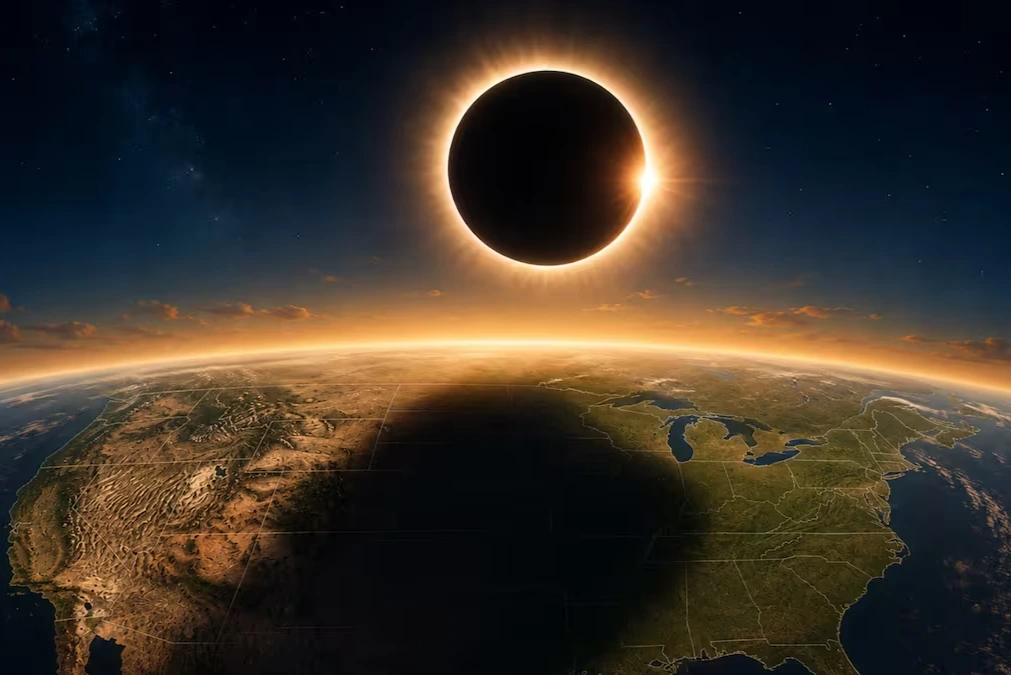
During the phenomenon, the Moon will interpose itself between the Earth and the Sun, casting its shadow over certain regions of the planet. The path of totality will cross areas in the north of Russia, Greenland, Iceland, and northern Spain, as well as a small portion of Portugal.

In other regions, the eclipse will only be observable partially. But its significance goes far beyond the astronomical spectacle: for researchers, those few minutes of darkness represent an extraordinary opportunity to analyze a region of the Sun that still poses numerous questions.

NASA's research will seek to investigate more details about the Sun's corona (NASA)

“From our unique perspective on Earth during a total solar eclipse, scientists can study the solar corona in a way that is not possible from anywhere else in the solar system,” explained Kelly Korreck, director of NASA's eclipse program in Washington.

“The Sun influences our daily lives, satellites, and astronauts in space, and we can take advantage of this moment to deepen our understanding of that influence,” added the specialist.

Why is the August 12 eclipse so important for NASA?

One of the main scientific objectives will focus on the solar corona, the outermost layer of the Sun's atmosphere. During a total eclipse, the Moon blocks the intense brightness of the solar surface, allowing for a more precise observation of this region.

One of the great enigmas that scientists seek to understand is why the corona reaches temperatures close to a million degrees, significantly higher than those recorded on the visible surface of the Sun.

Solar prominences, enormous structures of material that can remain suspended above the surface of the star, will also be studied, along with their relationship to solar wind, the constant flow of charged particles that spreads throughout the solar system.

The cameras will be able to capture at least 20 images per second, allowing for the recording of the structures of the corona, particle flows, and rapid changes that occur while the Moon completely covers the Sun.

A NASA plane will chase the Moon's shadow

The strategy will have a particularity: the WB-57 will not remain in one place, but will fly following the Moon's shadow to extend the period during which the instruments can study the corona.

From the Earth's surface, the maximum observation time during totality will be approximately two minutes and 18 seconds. However, by moving at about 740 kilometers per hour along the path of the eclipse, the plane will be able to extend that period to nearly three minutes.

One of NASA's high-altitude WB-57 aircraft will carry a set of cameras to an altitude of up to 15,000 meters (50,000 feet) to capture images of the solar corona during the total solar eclipse on August 12. (NASA)

Although the difference may seem small, each additional second is valuable to scientists due to the rapidity with which certain phenomena can occur in the solar atmosphere.

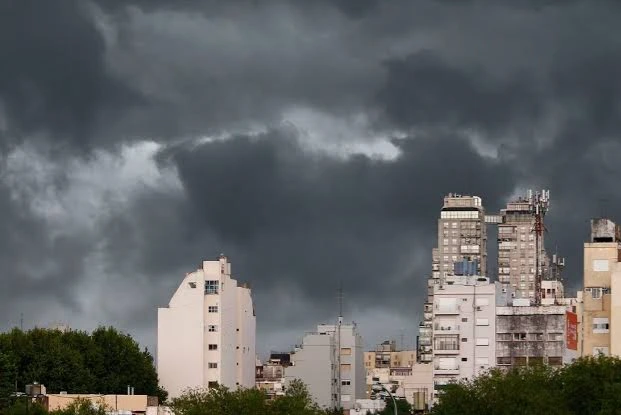
The WB-57 will also fly at about 15,000 meters altitude, which will help avoid clouds that could potentially ruin observations from the ground.

The altitude will have another scientific advantage. Some types of infrared radiation are absorbed by the lower layers of the Earth's atmosphere and do not reach the instruments installed on the surface. By being above much of that atmosphere, the cameras will be able to study wavelengths of the corona that have only been observed on rare occasions.