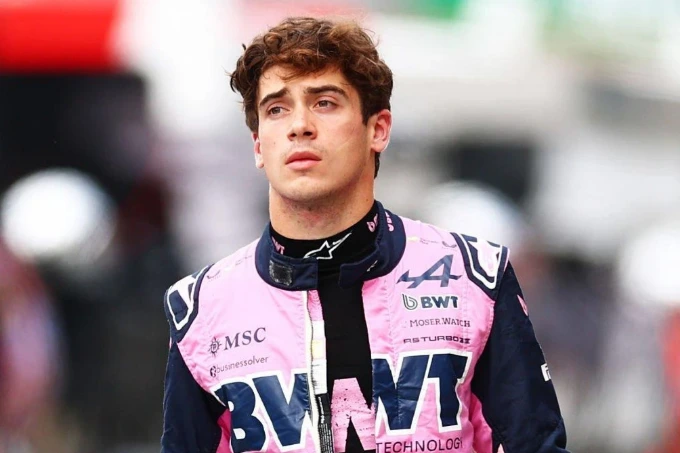

The controversy over the penalties received by Franco Colapinto and Arvid Lindblad at the Dutch Grand Prix continues to spark discussion in the world of Formula 1. One of those who spoke out was former driver and current F1 TV analyst Jolyon Palmer, who carefully reviewed the footage of the incident in Zandvoort and concluded that the penalties were excessive, especially in the case of the Argentine.
After the serious accident involving Max Verstappen at the end of the first lap, both drivers were penalized with a Drive-Through for overtaking under yellow flags. Colapinto was attempting to overtake Yuki Tsunoda, while Lindblad was doing the same with Pierre Gasly, in a maneuver that occurred practically at the same time as the Dutchman's crash.
Palmer analyzed the onboard cameras of all the protagonists as well as the external footage from the stewards' posts. His conclusion was clear: "Personally, I think both were quite harsh". In the case of the Alpine driver, the Brit commented: "If we get into Franco's car, you can see that at the moment Max hits the wall, we are already committed to the outside overtaking, so at that moment there is no yellow flag", he explained.
The analyst considered that the situation developed too quickly for the native of Pilar to safely alter his maneuver. "Verstappen just hit the wall, there is no way the driver can react to that with a yellow flag and start to slow down. You're just driving on instinct", he stated.
Additionally, he pointed out that Tsunoda had to brake sharply to avoid one of the pieces from the Red Bull that had remained on the track, which ultimately facilitated Colapinto's overtaking. "Yuki actually has to slow down quite a bit for that rear wheel that is on the track and, in doing so, he is going to lose a lot of momentum and Colapinto, in my opinion, absolutely has the right to maintain his line and pass. There is no yellow flag for him and now he is going to receive it on the board, and just after that we are going to have a green flag", Palmer asserted.
The former Lotus driver also focused on the exact moment when the signals appeared. According to his review of the external footage, Colapinto had already passed some of the stewards' posts when the yellow flag was shown. "There is no yellow flag at the second steward's post. It actually appears now, when Bortoletto is spinning. That's when the yellow flag appears", he explained. He later added that, at another post near the accident zone, "when all these drivers pass, there is no yellow flag, there is no yellow flag and now the yellow flag appears. Colapinto has already passed those stewards".
For Palmer, that temporal difference should have been considered as a mitigating circumstance. The stewards also acknowledged that the large amount of debris on the track complicated the situation and, therefore, reduced the penalty compared to the maximum sanction provided for this type of infraction. However, the penalty still had a decisive impact on the Argentine's race. "A Drive-Through is a huge penalty for a mid-field driver. A Drive-Through for these two completely destroys their race, because on a perfect day they can score points", the analyst noted.
To reinforce his position, Palmer referred to a recent precedent involving Lewis Hamilton at the British Grand Prix in early July. The driver received a reprimand (formal warning) without time penalty or points on the superlicense for an infraction under the same article of the FIA regulations, after the stewards considered that he had entered the sector before the physical yellow flag appeared and had very little time to react.
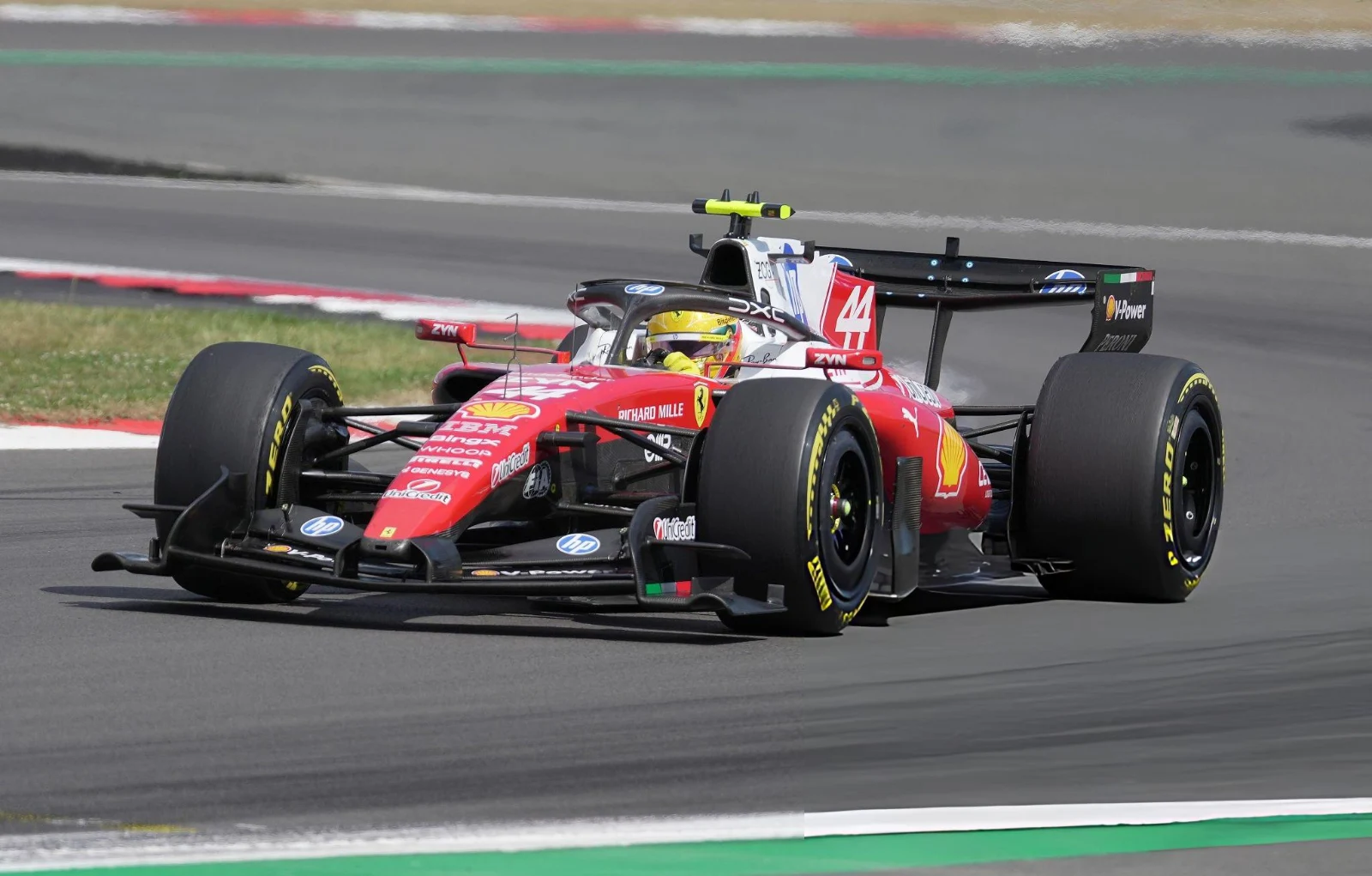
"Neither Lindblad nor Colapinto received a physical yellow flag. They did receive a yellow flag message on the board, but Lewis Hamilton had something similar at Silverstone and only received a reprimand for not slowing down, in conditions much less chaotic than these", he commented.
Palmer's reading thus aligns with the stance expressed by both Colapinto and Lindblad after the race: they do not question that the rules should be followed, but they believe that the exceptional context of Verstappen's accident and the narrow margin for reaction should have carried more weight when defining the penalties.