During his stay in Brazil, Páez remained under severe restrictions and claimed to have lived in fear, even when he went out on the street. He said that he should take constant precautions to avoid aggression and that his routine was limited to minimal travel. He also acknowledged acting inappropriately in the event that led to the complaint, and said he apologized
Argentinian lawyer Agostina Páez returned to the country after being held in Brazil for more than two months in a case of racial insult. His return came after the granting of habeas corpus by the Brazilian justice system and in the midst of diplomatic efforts promoted by the Argentine Foreign Ministry, which made it possible to unblock his situation
and guarantee his return.
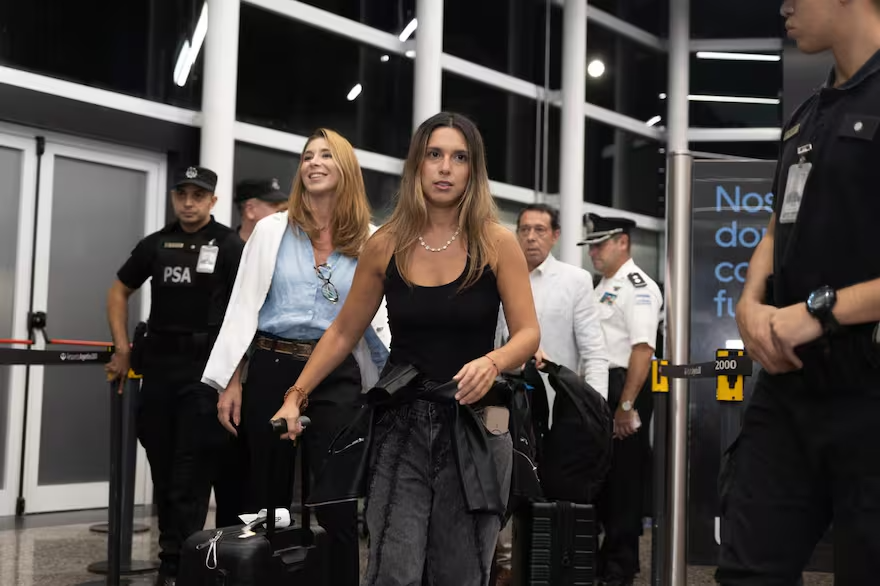
Páez arrived this Wednesday afternoon at Jorge Newbery Airport, where she was received after a judicial process that kept her in Rio de Janeiro since mid-January. In order to leave Brazil, he had to pay a deposit of $20,000, a requirement required by the court involved in the case
. Agostina returned to the country this Wednesday.
In her first statements, the lawyer expressed relief and emotion that she was able to return to the country. He noted that he went through weeks of distress and that his main concern was the possibility of facing a prison sentence. As she said, the fear of being arrested and the public exposure of the case profoundly marked her experience.
The cause originated after an episode that occurred in a bar in Ipanema, where she was reported for racial insult. The criminal offence includes sentences of between two and five years in prison, although in the last judicial instance the prosecution requested a sentence of two years, the minimum expected. In parallel, the defense made progress on an agreement that could result in a suspended sentence with compliance with alternative measures
.
The return was possible after the Brazilian justice system accepted the appeal presented by her defense, allowing her to wait for the ruling in Argentina. In this context, you may remain in Santiago del Estero, your province of origin, while the final resolution of the case is defined.
Agostina at the exit of Aeroparque.
The result was the product of sustained diplomatic efforts and coordinated work with the Argentine consulate in Rio de Janeiro. Government intervention was maintained at the institutional level, prioritizing formal channels to guarantee the protection of Argentine citizens abroad
.
The case also shows the contrast with previous attempts by opposition sectors to capitalizepolitically on the situation, which had been questioned by national officials. Finally, the outcome confirmed that the diplomatic channel was decisive in achieving the return of