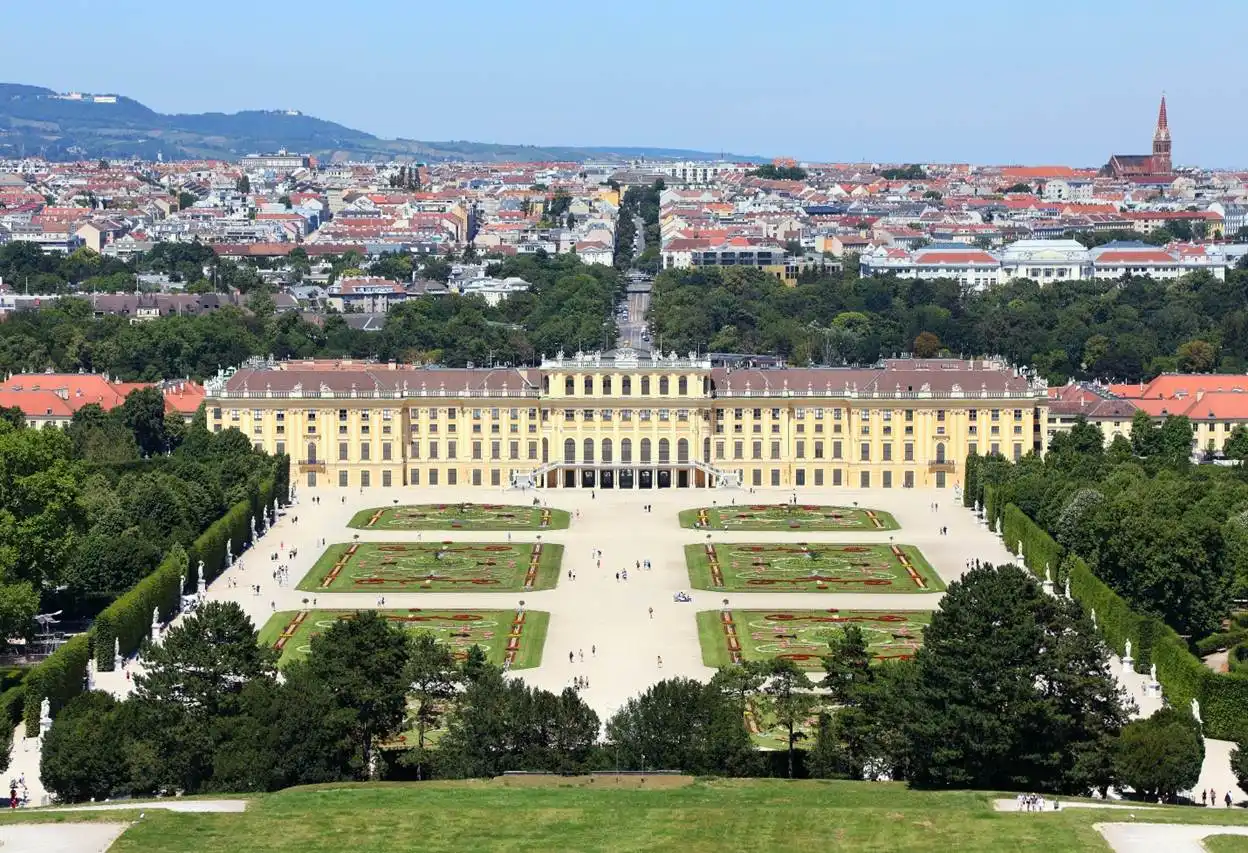
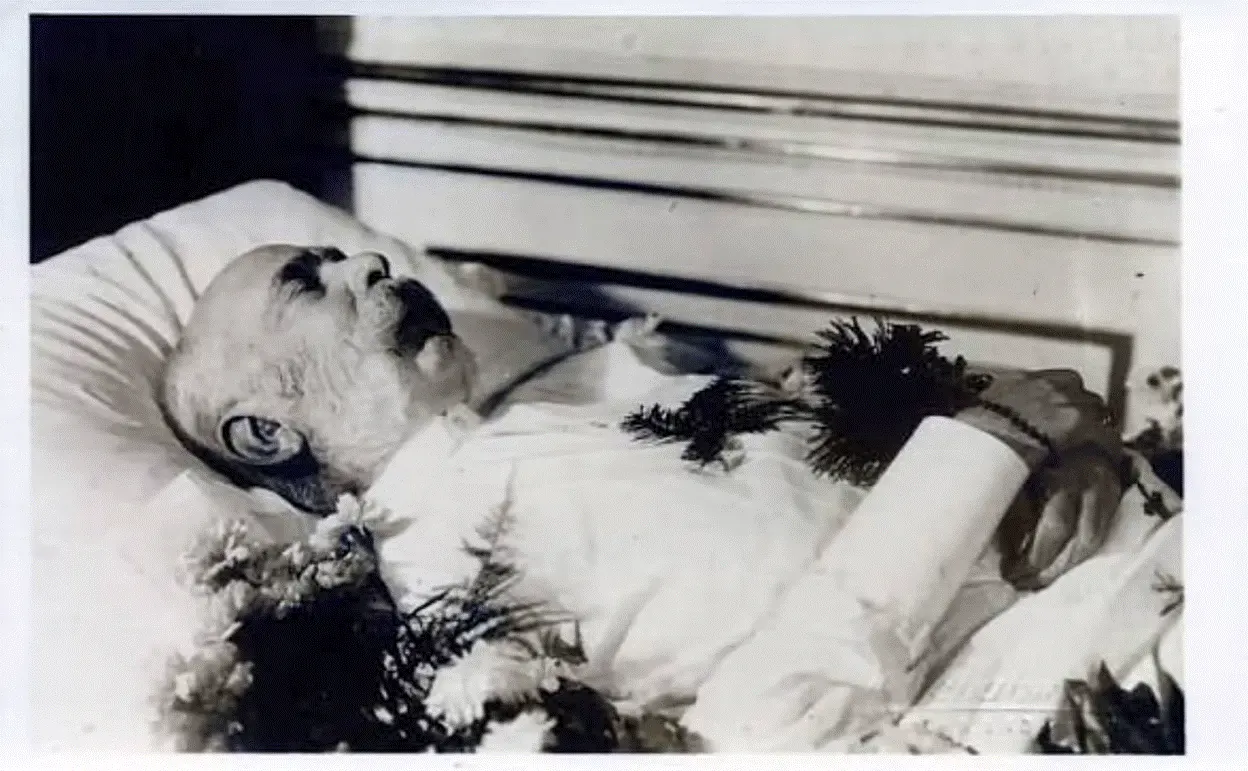
On November 21, 1916, at 21:05, in his austere bedroom at the Palace of Schönbrunn, on the outskirts of Vienna, Franz Joseph I of Habsburg-Lorraine, Emperor of Austria, Apostolic King of Hungary, King of Bohemia, and holder of a list of dignities so extensive that it included, among others, the title of King of Jerusalem, passed away. He was 86 years old and had spent 68 years on the throne. Hours earlier, already bedridden due to pneumonia, he had given his chamberlain, Eugen Ketterl, a final instruction, true to the custom of his entire life: «Bitte mich morgen um halb vier wecken; ich bin mit meiner Arbeit nicht fertig geworden», that is, «wake me tomorrow at three-thirty; I didn’t finish my work». He never woke up.
Palace of Schönbrunn
This phrase highlighted his famous obsession with duty and work. During his nearly 68 years of reign, Franz Joseph was known for his extreme bureaucratic discipline: he woke up every day at 3:30 in the morning to start reading documents and dispatching state matters by 4:00.
With him, something more than an old man faded away. The penultimate emperor of a dynasty that had ruled Central Europe for over six centuries was leaving, and he did so in the midst of World War I, a conflict to which, with much pain, he himself was drawn, and whose end he would not live to see. Two years later, his successor would sign the renunciation of state affairs, and his empire would crumble.
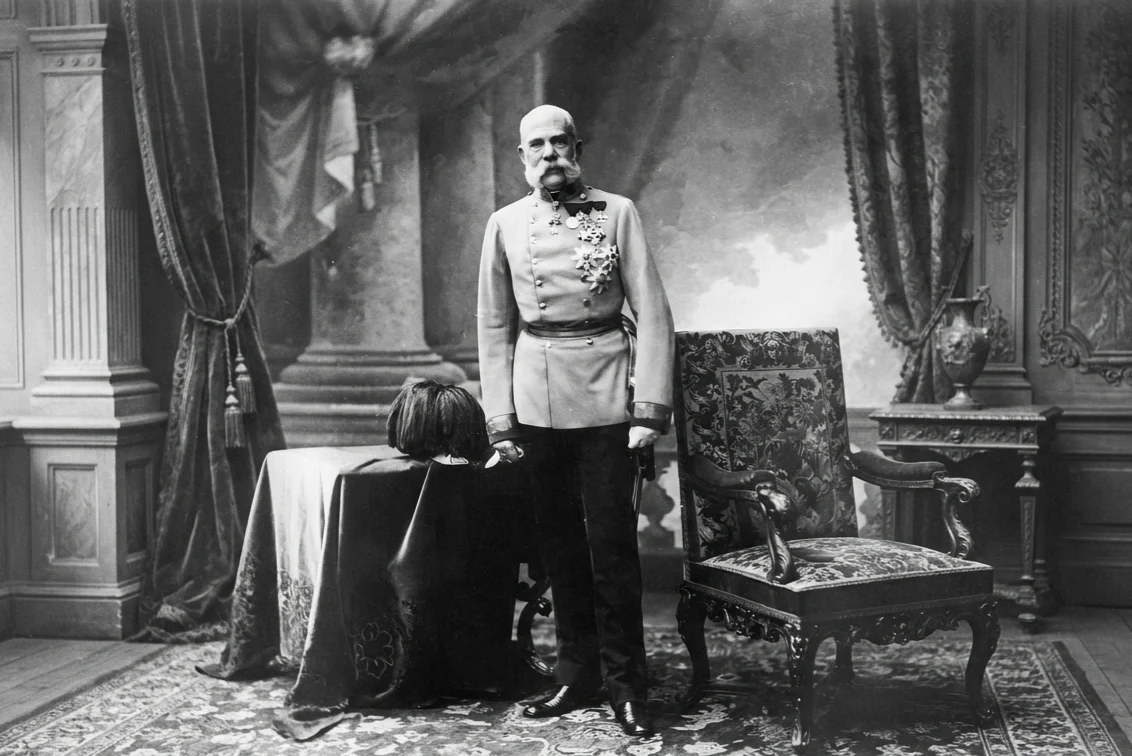
Who was this man whom popular memory remembers as the kind old grandfather with white sideburns, always in uniform? Well, his life is a succession of tragedies, lost wars, and curiosities that deserve to be remembered.
Last photograph of Emperor Franz Joseph I of Austria
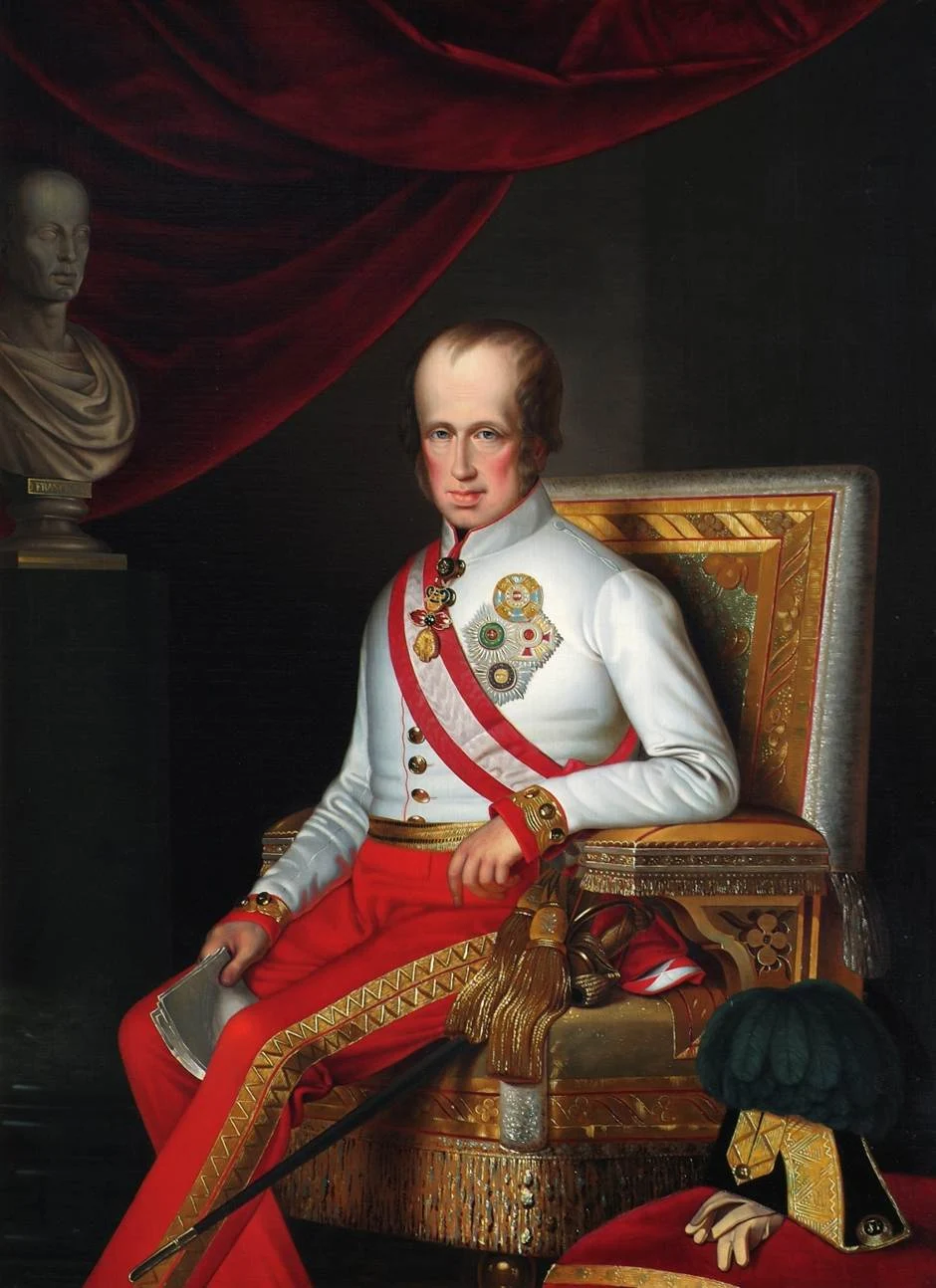
Franz Joseph was born in that same palace on August 18, 1830, exactly on the 65th anniversary of the death of his great-great-grandfather, Emperor Francis I of Lorraine, husband of Maria Theresa. He was the eldest son of Archduke Francis Charles and Princess Sophie of Bavaria, a woman of such iron character that she was nicknamed "the only man of the Hofburg" at court. He was not destined to reign so soon: the emperor was his uncle Ferdinand I, a kind man but incapacitated by epilepsy and severe neurological problems. However, the Revolution of 1848 shook the entire empire, and the Crown's advisors, led by Prince Félix of Schwarzenberg, decided that a new face was needed. On December 2, 1848, in the Moravian city of Olmütz, Ferdinand abdicated; his brother Francis Charles renounced his rights, and the young archduke, who had just turned 18, ascended to the throne. Until then, he was simply called Franz; to mark the beginning of his reign, he adopted the double name of Franz Joseph, in homage to his grandfather Francis I and his great-great-grandfather Joseph II.
Emperor Ferdinand I of Austria
His reign began with an iron fist. He crushed the Hungarian rebellion with the help of the Tsar of Russia and ruled in an absolutist manner. This came at a high cost. On February 18, 1853, while strolling through the bastion of the Carinthia Gate in the walls of Vienna, he leaned over the parapet to observe some soldiers exercising in the moat. At that moment, a 21-year-old Hungarian tailor officer, János Libényi, lunged at him from behind and stabbed him in the neck with a kitchen knife. Curiously, military fashion saved him: the high, stiff collar of his uniform, embroidered in gold, deflected the blade. His aide, Count Maximilian O'Donell, subdued the assailant with his saber, aided by a passing butcher, Joseph Ettenreich, whom the emperor rewarded with a noble title. Libényi, who shouted "¡Long live Kossuth!!" as he was taken away, was hanged eight days later. Franz Joseph, in a gesture that paints him in full, granted a small pension to the mother of his frustrated assassin.
Vienne on August 18, 1830, the emperor François was born...
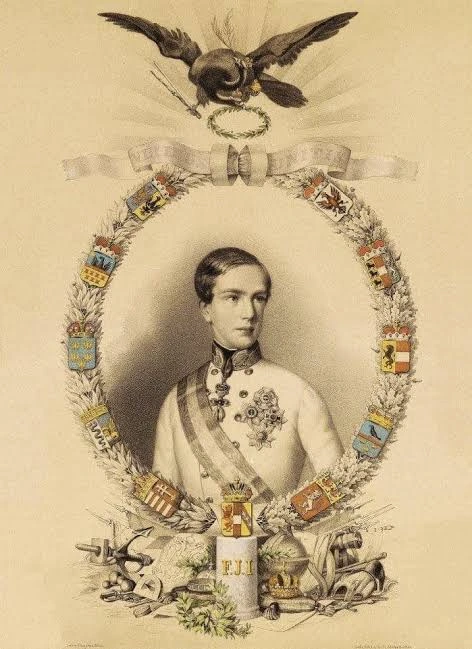
Emperor Franz Joseph I in his early years of reign
The assassination left a monumental mark in Vienna. His younger brother, Archduke Ferdinand Maximilian, organized a collection throughout the empire to build a temple in thanksgiving. Thus was born the Votivkirche (the "votive church"), an imposing neo-Gothic work that was consecrated in 1879, coinciding with the emperor's silver wedding anniversary.
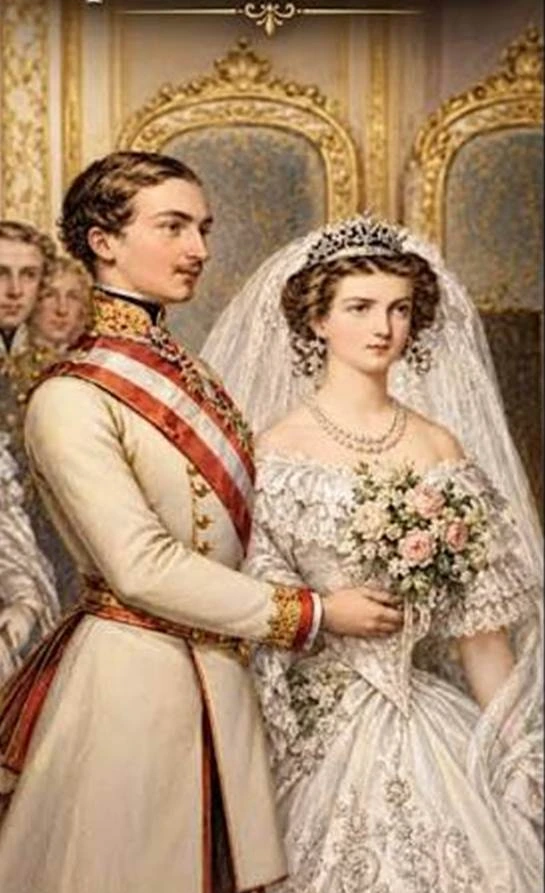
Because by then, Franz Joseph had already married, and he did so starring in a story that cinema would sweeten. In August 1853, his mother organized a meeting at the spa of Bad Ischl with his niece Elena of Bavaria, nicknamed "Néné," whom she had chosen as the future empress. But Elena arrived accompanied by her younger sister, Isabel, who was only 15 years old. The young emperor was smitten with her and announced to his mother that if he did not marry Isabel, he would marry no one. On April 24, 1854, they married at the Augustinerkirche, the court's parish church. She would go down in history as Sissi.
Did you know that Sisi and the emperor did not have a tour after their wedding around the city of Vienna in a carriage? Quite the opposite of what you think when you visit the Sönbrunn float museum in...
The fairy tale did not last long. Sissi detested Viennese protocol, clashed from the beginning with her mother-in-law, and gradually distanced herself from the court and her husband. They had four children: Sophia, who died at two during a trip to Hungary; Gisela; Rudolf, the longed-for heir; and Maria Valeria. The couple, however, maintained a relationship of affection and constant correspondence until the end.
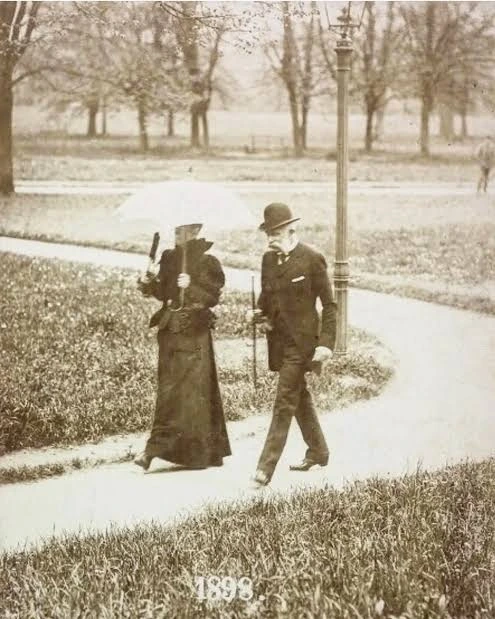
Dernière Promenade Impériale - 1898 Sur cette rare...
Emperor Franz Joseph with Empress Sissi, walking in 1898
Meanwhile, the empire was crumbling. In 1859, Franz Joseph, at 28 years old and without military experience, dismissed his chief general and personally took command of his army in Italy. On June 24 of that year, he faced Napoleon III and Victor Emmanuel II of Sardinia at Solferino. It was the last great battle in history where all armies were under the personal command of their monarchs. Austria lost and had to cede Lombardy. Curiously, that slaughter had an unexpected consequence: a Swiss merchant, Henry Dunant, who arrived at the site that same day, was so moved by the abandonment of the wounded that he wrote A Memory of Solferino, the book that gave rise to the Red Cross. Franz Joseph, for his part, never commanded troops on the battlefield again.
Worse was 1866. The defeat against Prussia at Königgrätz (Sadowa) definitively expelled the Habsburgs from German affairs and forced the emperor to negotiate with the Hungarians. Thus was born, in 1867, the Ausgleich ("compromise"), which transformed the empire into the Dual Monarchy of Austria-Hungary: two states with the same sovereign, a common army, and a common foreign policy. On June 8, 1867, Franz Joseph was crowned King of Hungary in the Matthias Church in Budapest. Sissi, in love with all things Hungarian, had a lot to do with that agreement.
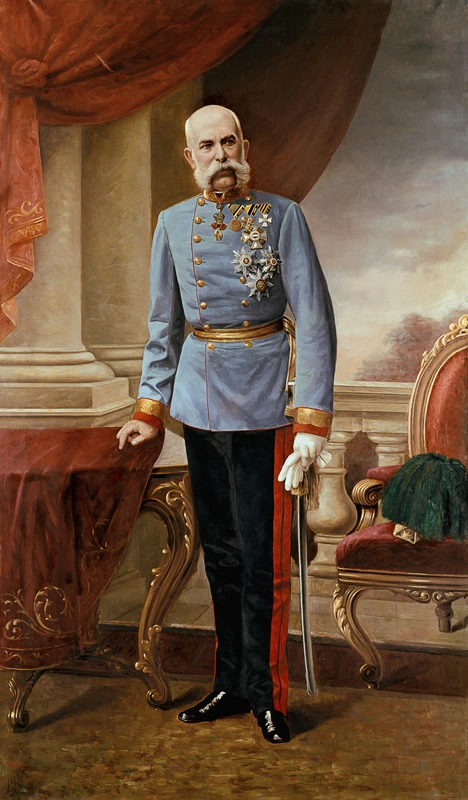
Emperor Franz Josef I of Austria by Julius von Blaas
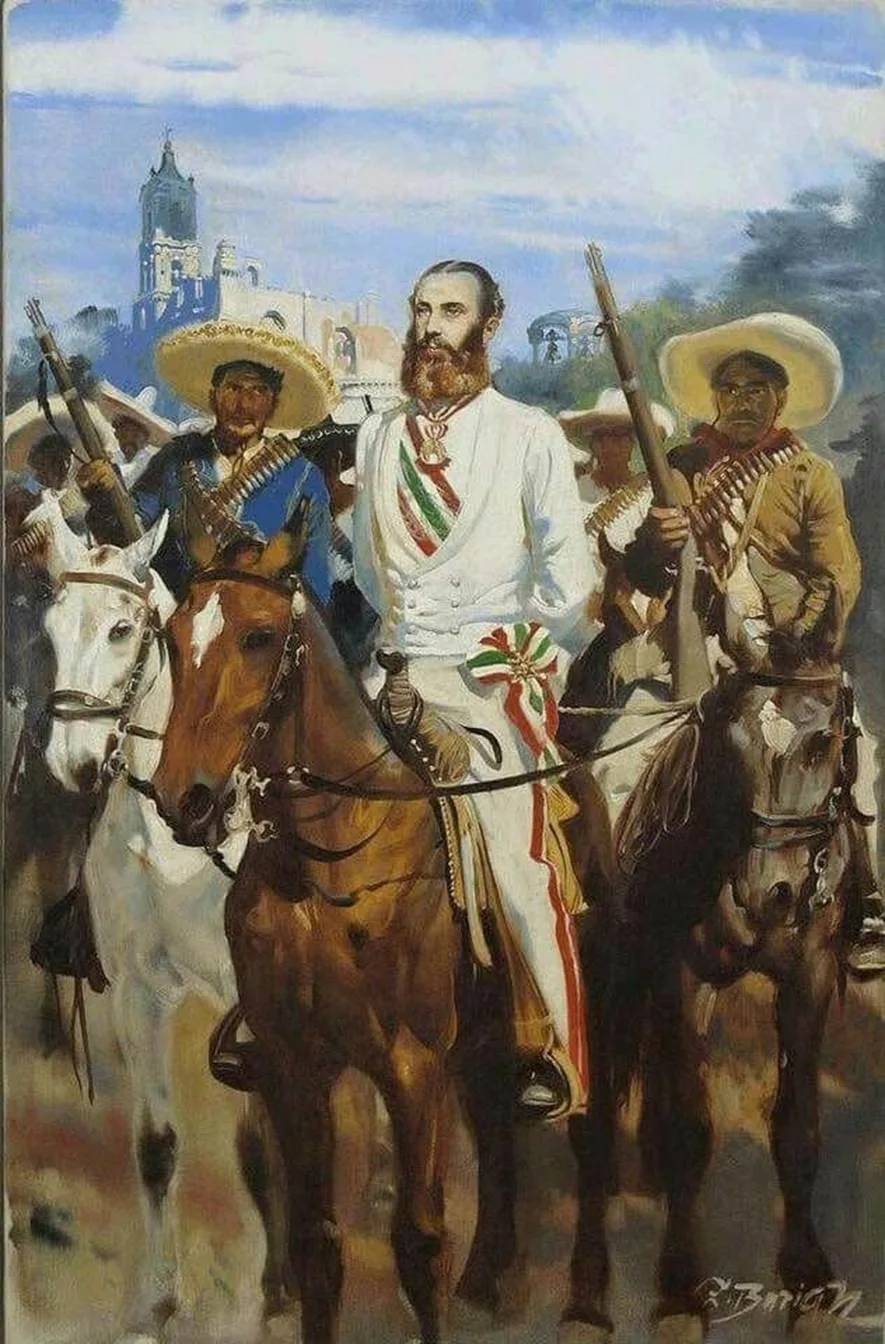
Just eleven days later, across the Atlantic, the first of the great family tragedies occurred. His brother Maximilian, the same one who had promoted the Votivkirche, had accepted the crown of the Second Mexican Empire, an adventure encouraged by Napoleon III and which Franz Joseph always viewed with suspicion, to the point of forcing him to renounce all his succession rights in Austria. Abandoned by the French, Maximilian was captured by the troops of Benito Juárez and executed on June 19, 1867, at Cerro de las Campanas in Querétaro. His remains returned to Vienna and rest in the Imperial Crypt.
There is no description of the photo available.
Capture of Emperor Maximilian I of Habsburg by Mexican revolutionaries (painting by Zdeněk Burian)
Not everything was misfortune in those years. In 1873, an Austro-Hungarian expedition to the North Pole, commanded by Julius von Payer and Karl Weyprecht, became trapped in the ice aboard the schooner Tegetthoff. After more than a year adrift, on August 30, 1873, they spotted a mountain range on the horizon. It was an unknown archipelago of 191 islands, which they named Franz Joseph Land. Today it belongs to Russia and constitutes its northernmost territory; its northernmost island, by the way, is called Rudolf Island, in honor of the crown prince.
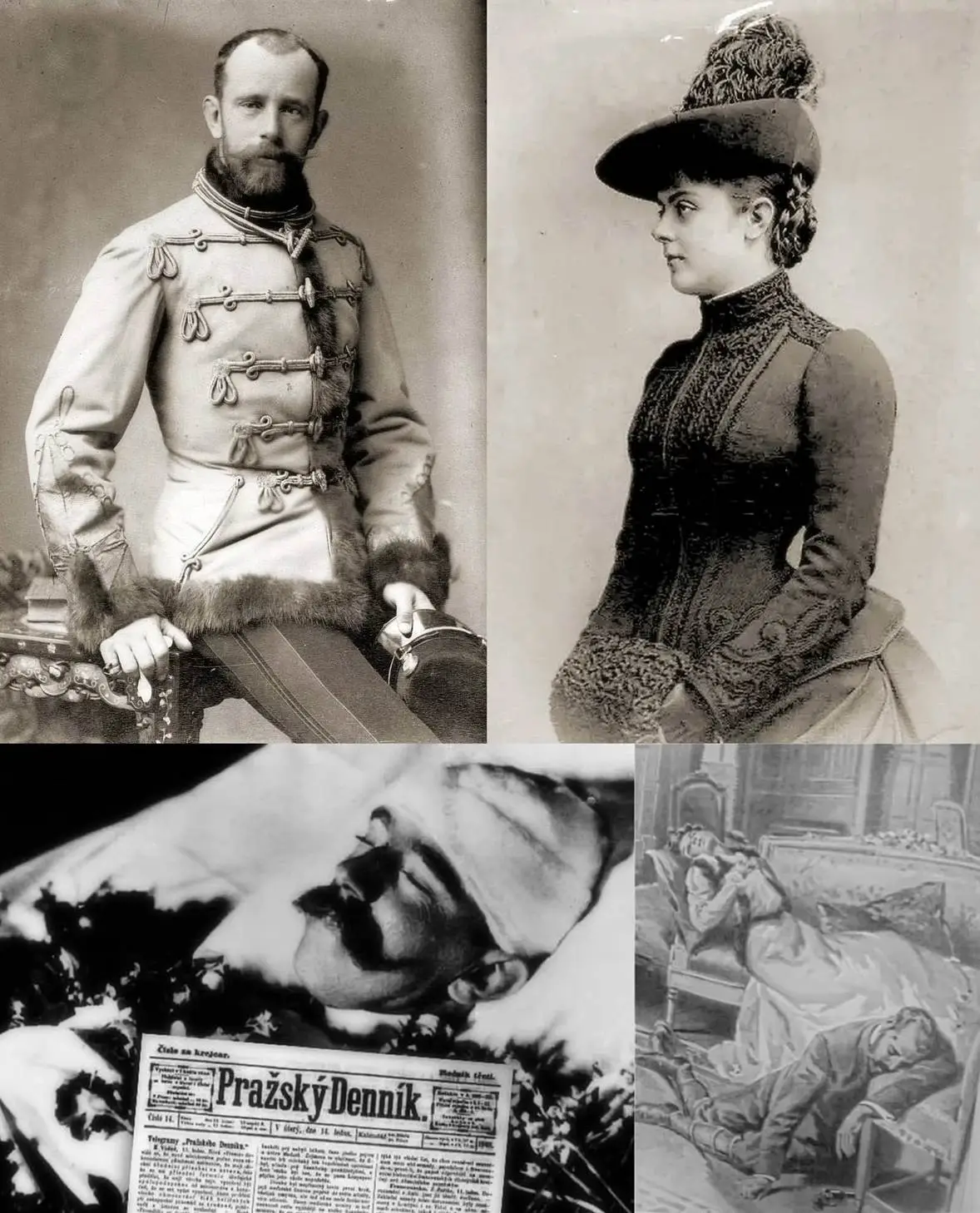
Precisely Rudolf would star in the second blow. Liberal, intelligent, and in constant conflict with his father, on January 30, 1889, he was found dead in his hunting lodge at Mayerling, alongside his young lover, Baroness Maria Vetsera, in an apparent pact of homicide and suicide. The emperor converted the lodge into a convent of Carmelite nuns. The succession passed to his nephew, Archduke Francis Ferdinand.
There is no description of the photo available.
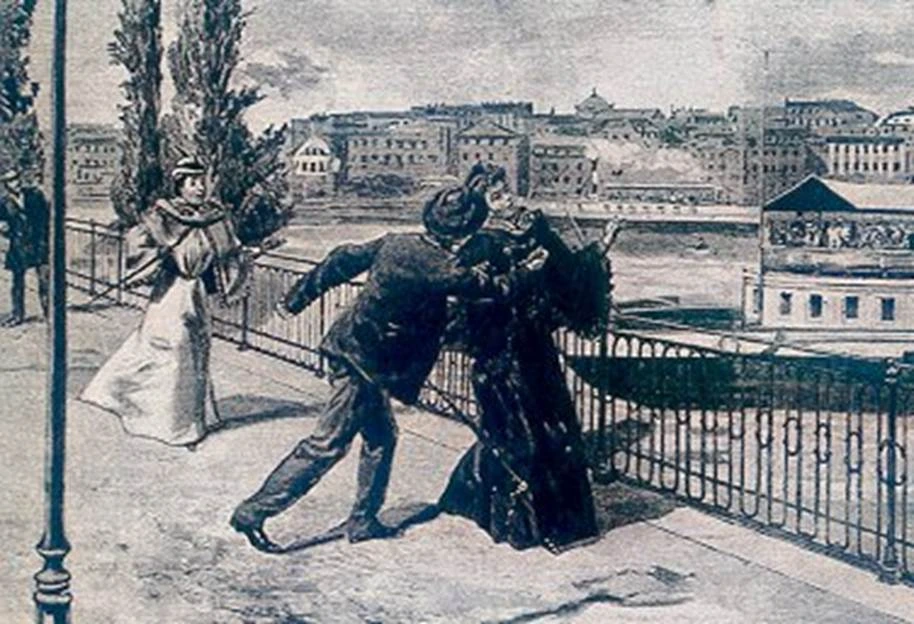
The third blow came on September 10, 1898. Sissi, who was traveling incognito and refused to take a guard, was heading to board a steamer on Lake Geneva when an Italian anarchist, Luigi Lucheni, stabbed her in the chest with a sharpened file. The empress did not even notice the wound; she walked to the boat and collapsed there. Lucheni, who sought fame, asked to be sentenced to death, but in Geneva, the death penalty had already been abolished. Upon receiving the news, Franz Joseph reportedly exclaimed: «You have no idea how much I loved this woman!». He is also attributed the phrase that summarizes his life: «Mir bleibt doch nichts erspart» («nothing is spared to me»).
Assassination of Empress Sissi in Geneva
What consolation was left for the old emperor? A very peculiar one. Since 1885, he had maintained a close friendship with the actress of the Burgtheater Katharina Schratt, whom he affectionately called «Kathi». The curious thing is that it was Sissi herself who fostered that relationship: she even commissioned the court painter, Heinrich von Angeli, to paint a portrait of the actress to give to her husband.