Under the slogans of "education and the cost of living," leftist terrorists mobilized in more than 30 cities and ended with attacks on the police, looting, and bombs
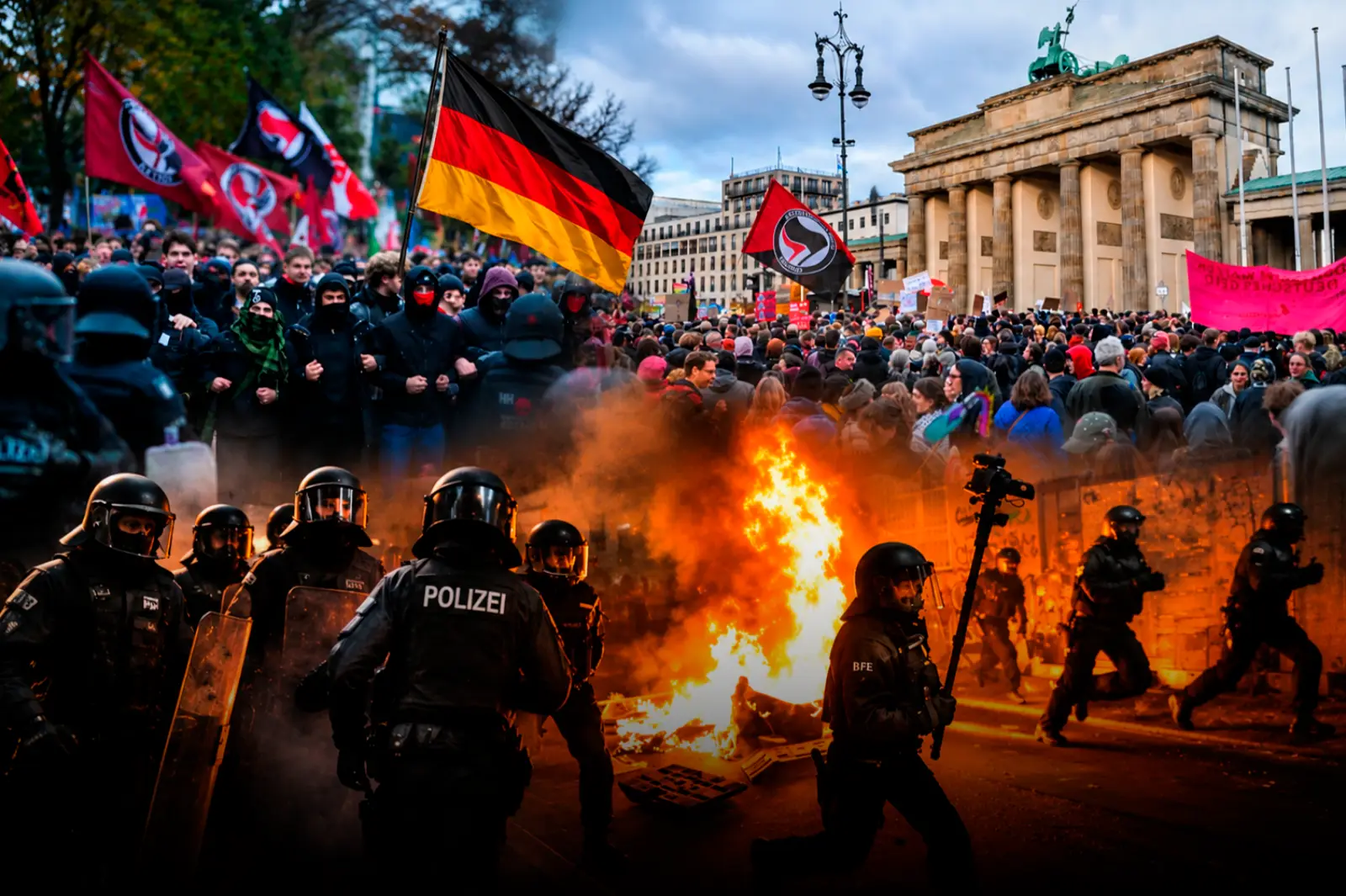
The virus of extreme left street violence that has already devastated various nations in Europe has found its new battleground in Germany. On this October 31, the stability of the largest European economy was shattered as more than 180,000 people mobilized in 34 German cities. What was presented under the guise of student and climate claims quickly degenerated into a scene of looting, destruction of businesses, and urban terrorism instigated by radicals and foreign extremist elements. The tepid institutional response from the Federal Ministry of the Interior and the government collapse has left citizens defenseless against the advance of groups seeking to sow systematic disorder.
This insurrectional onslaught was initially articulated through the massive call of the initiative GenZ-regelt —“GenZ fixes it”—. Under the pretext of demanding funds for education, social security, healthcare, and climate protection, as well as a firm rejection of the possible return of mandatory military service, the marches took to the streets of Berlin, Hamburg, Mainz, Munich, Nuremberg, Erfurt, Magdeburg, Dresden, Leipzig, and Cologne.
Protests in Germany with flags of the USSR
However, the peaceful proclamation was exposed as a mere operational shield for the infiltration of radical sectors of the violent left. In places like Nuremberg, the protesters displayed the ideological delirium that guides these mobs by openly marching with flags of the Soviet Union —the oppressive regime that divided and impoverished its own country— and of Palestine.
The epicenter of criminal vandalism took place in Frankfurt, the financial heart of Germany, where the demonstration degenerated into fierce clashes against security forces. Groups of vandals with their faces covered attacked the officers using stones, bottles, firecrackers, and Molotov cocktails, destroying shop windows and even executing the looting of an armory. In response to the escalation of urban terrorism, the police had to deploy pepper spray and water cannons.
After 10 PM (local time), the Frankfurt Police issued a distressing statement through their official channels: “In the city center area, windows of several businesses have been broken. Additionally, Molotov cocktails are being thrown at intervention forces. We call on all people not involved in the conflict to avoid or leave the city center area”.
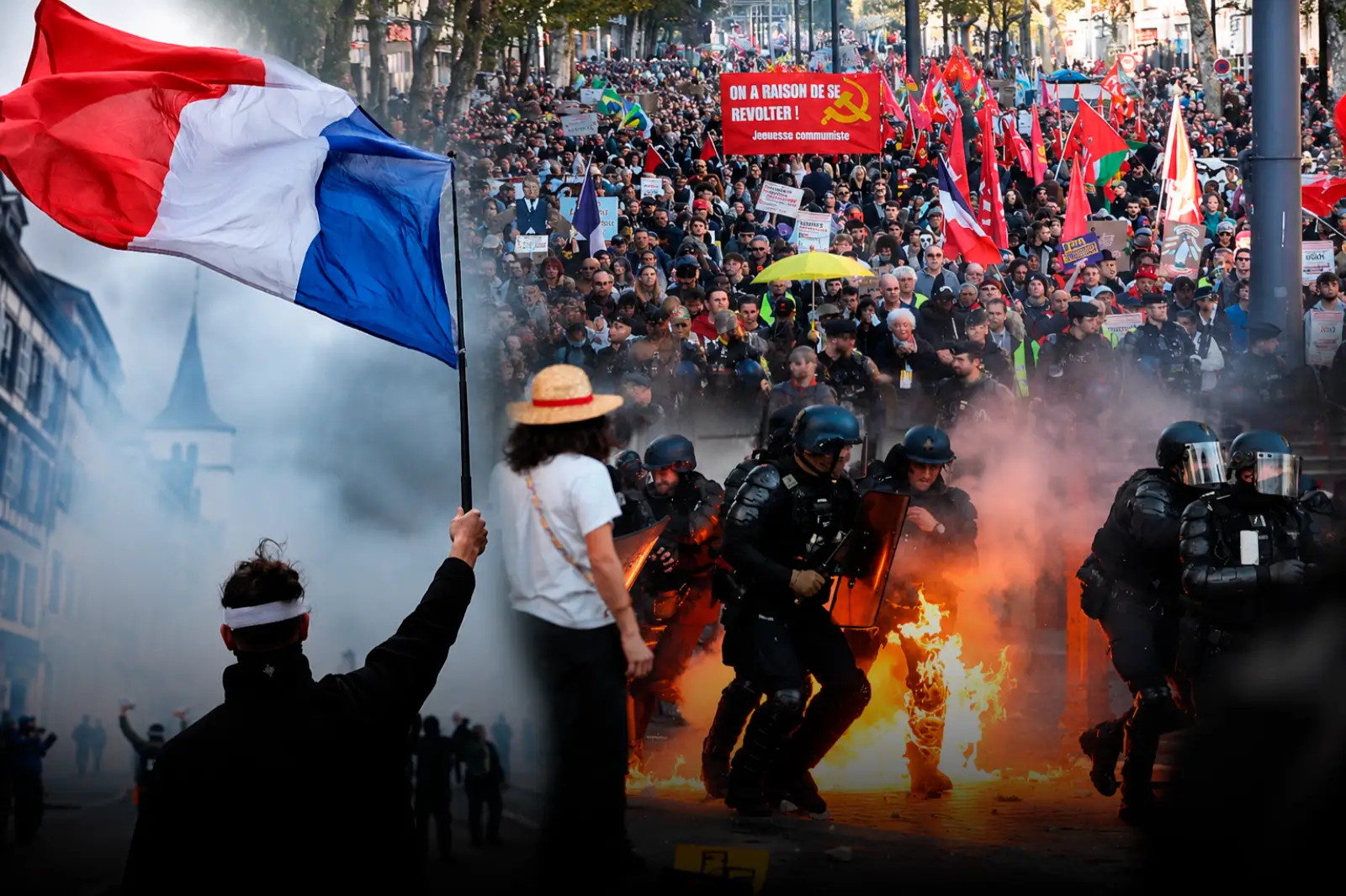
The level of violent devotion displayed on the streets raised alarms among regional authorities. The Interior Minister of the state of Hesse, Roman Poseck, warned about the imminent danger of contagion from the French insurrectional model: “We all have those images of France in mind: looting, houses on fire, police vehicles in flames, and assaults on police officers”. The official concluded firmly, stating that “France should not serve as a model in this regard”. The psychosis of destruction forced merchants in the main arteries of the country, including the exclusive boulevard Kurfürstendamm in Berlin, to reinforce and board up their shop windows in advance.
In the capital, Berlin, the day turned into an open extremist provocation. After the GenZ-regelt march concluded at the Brandenburg Gate at 5 PM (4 PM GMT), a second extremist mobilization promoted by anti-Israeli circles and factions of the radical extreme left began at 5:30 PM (4:30 PM GMT) at Rosenthaler Platz under the slogan “For Lebanon and Palestine”, as detailed by the newspaper Tageszeitung.
Meanwhile, in Cologne, the police had to intervene and decree the immediate suspension of the march due to the rampant use of pyrotechnics and covered faces, employing water cannons to encircle a contingent of between 200 and 300 extremist protesters who continued to attack officers with bottles and firecrackers, according to reports from the ntv network.
The social discontent generated by state inaction has stoked the embers of protest. From Munich, the young Steve, aged 18, directly attacked the government leadership embodied by Friedrich Merz: “The Government has given no response to our concerns, other than continuing to apply cuts and imposing more burdens on us”, adding firmly: “We will continue to exercise our fundamental right to assemble until it stops ignoring us”.
In the educational sphere, the infrastructure crisis is alarming; Sean Baker, a student at the Technical University of Berlin, denounced the decay of public facilities stating that “When you enter and access the classrooms, it looks like an abandoned building”, then adding: “And yet, we are supposed to study here regularly”. For its part, the BSK (national organization of secondary school students), through its secretary general Amy Kirchhoff, chose to distance itself from the organizing platform declaring: “We distance ourselves from 'Gen Z regelt', but not from the students themselves, who have legitimate concerns”, announcing a march of its own for November 20.