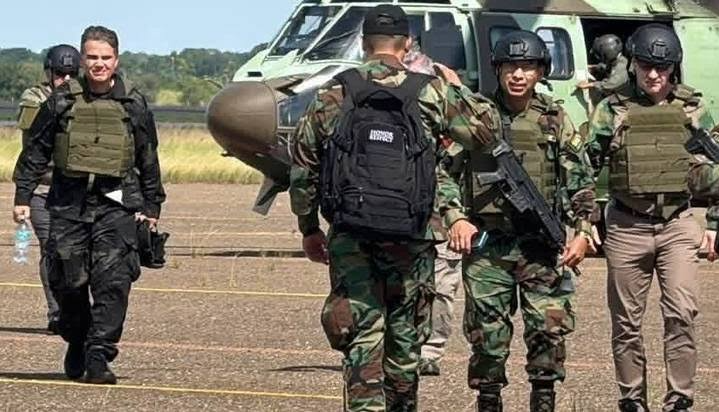
The rapprochement with the United States had already begun months earlier when Bolivia officially restored operational cooperation with the DEA after 17 years of interruption. Since then, U.S. agents have participated in intelligence exchange and technical coordination tasks alongside Bolivian forces.
One of the most significant episodes of this new cooperation was the capture of Uruguayan drug trafficker Sebastián Marset, considered one of the most wanted criminals by the DEA. Marset was arrested in Santa Cruz and subsequently extradited to the United States in an internationally coordinated operation.
The Bolivian government asserts that cooperation with the United States will be limited to technical and intelligence tasks, under the supervision of national authorities. Additionally, it claims that drug trafficking has become much more sophisticated and now uses international financial mechanisms and cryptocurrencies to move illicit money.
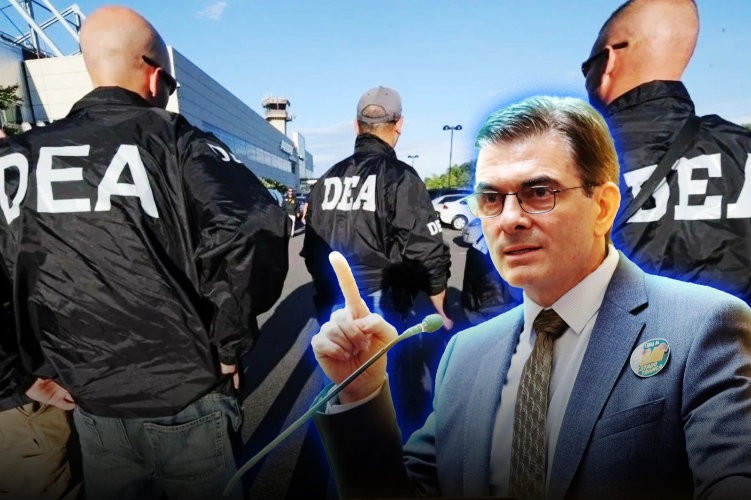
DEA troops in Bolivia
The establishment of DEA offices also confirms the diplomatic rapprochement between La Paz and Washington since Rodrigo Paz came to power. In recent months, both governments have resumed political ties, security cooperation, and economic agreements after nearly two decades of tense relations.
The government of Bolivia confirmed that the Drug Enforcement Administration of the United States (DEA) will establish permanent offices in La Paz as part of a new bilateral anti-drug cooperation agreement promoted by President Rodrigo Paz. This decision consolidates one of the most significant changes in Bolivian foreign policy and security since the end of Evo Morales' political cycle.
The Bolivian Minister of Government, Marco Antonio Oviedo, explained that the presence of the DEA will aim to strengthen intelligence tasks, training, and international cooperation against drug trafficking and money laundering networks. He stated that the offices will be located in La Paz and will work in coordination with Bolivian forces and international organizations.
The measure represents a historic shift from the policy promoted by Evo Morales, who expelled the DEA from Bolivia in 2008, accusing the U.S. agency of espionage and political interference. For years, the MAS dictatorship turned the expulsion into one of its main symbols of sovereignty against Washington.
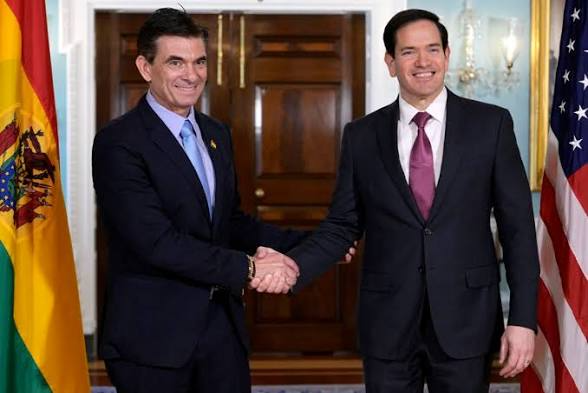
Rodrigo Paz alongside Secretary of State Marco Rubio
However, the government of Rodrigo Paz maintains that the advance of drug trafficking and organized crime necessitates rebuilding international alliances. Bolivia is currently one of the main producers of cocaine in South America and a key transit point to European and North American markets.