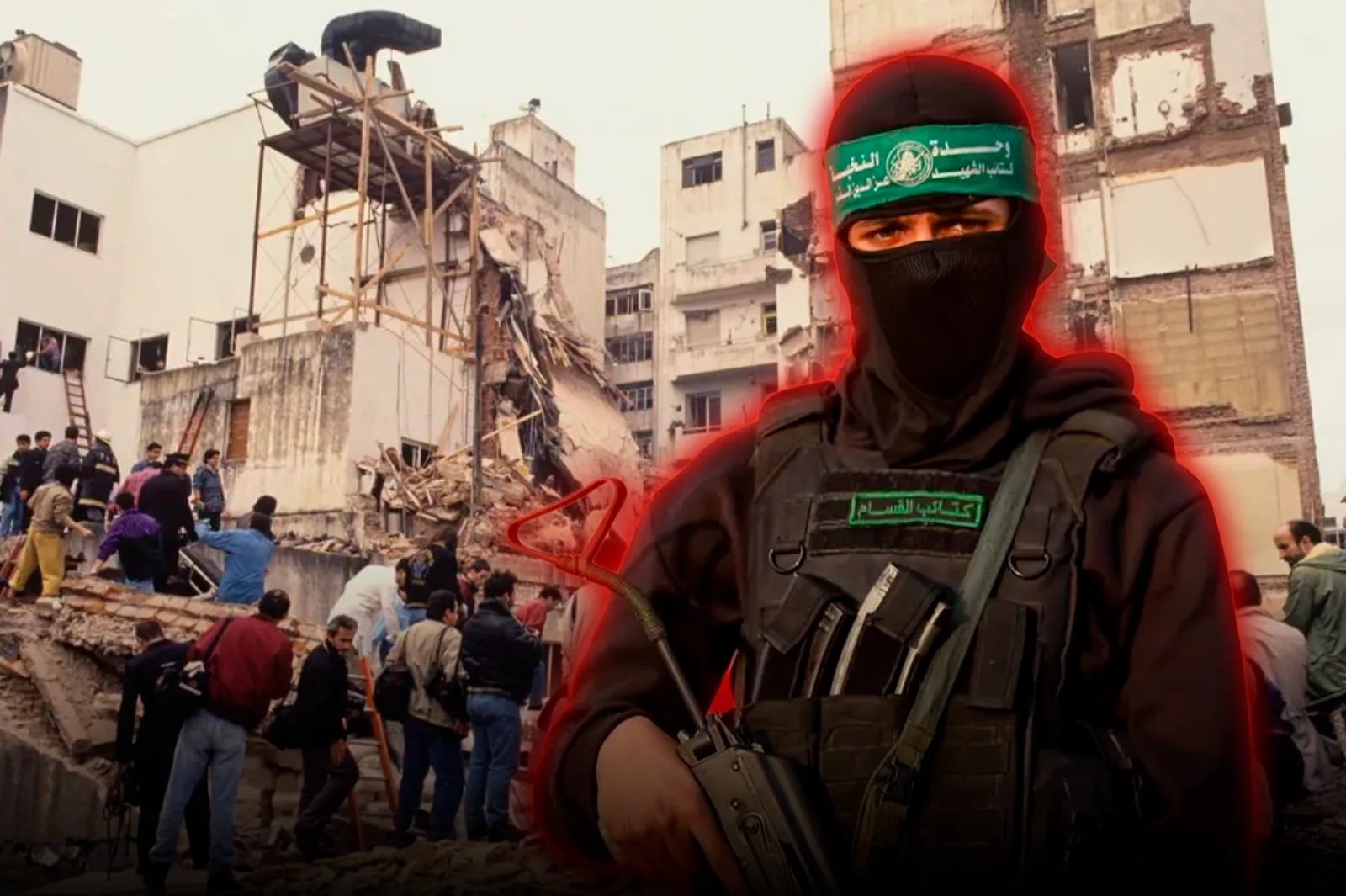
Argentina was the scene of two of the most serious Islamist terrorist attacks in Latin America, while over the last few decades, security forces have investigated various networks of jihadist extremism, alleged attack plans, and recruitment operations linked to organizations such as ISIS and Hezbollah.
The most serious incidents were the attack on the Israeli Embassy on March 17, 1992, which left 29 dead, and the attack on AMIA on July 18, 1994, which resulted in 85 fatalities. In April 2024, the Federal Criminal Cassation Court attributed both attacks to Hezbollah and pointed to Iran's responsibility in their planning.
In September 2018, Brazilian authorities arrested Assad Ahmad Barakat in the Triple Frontier, identified as one of Hezbollah's main financial operators in Latin America. The Argentine Financial Information Unit investigated alleged money laundering schemes through casinos in Puerto Iguazú, linked to a network dedicated to financing the terrorist organization.
That same year, two Argentines were arrested for allegedly planning a bombing against the LGBT Pride March in Buenos Aires, using a vehicle loaded with explosives. The investigation identified contacts with recruiters linked to ISIS and discussions about possible attacks. Their prosecutions were confirmed by the Federal Court in 2019.
In 2023, following an alert from the FBI, the Federal Police arrested Daniel Antonio Agüero in Santiago del Estero, investigated for maintaining communications with networks linked to the Islamic State via Telegram. The judiciary charged him with preventive detention for possession of explosive materials and participation in groups aimed at imposing ideas through force or fear.
During February 2024, a joint investigation with Spanish authorities led to the arrest in Santa Fe of an individual accused of spreading jihadist propaganda and terrorist threats. In August, the Federal Police made seven arrests linked to an alleged Islamist cell in Mendoza, investigated for planning attacks against the Jewish community. In August 2026, the Cassation Court upheld the extension of preventive detention for two accused.
In January 2025, the Naval Prefecture arrested David Nazareno Ávila in Río Negro, investigated for his links to ISIS. According to the Prosecutor's Office, the accused stated: "I want to be a martyr in Argentina" and requested instructions to make explosives. He was subsequently charged, and the Public Prosecutor's Office requested his elevation to trial.
David Nazareno Avila.
The most recent case reviewed occurred in July 2025, when an FBI alert prompted raids in La Plata and Ensenada. The investigation involved a 17-year-old teenager who allegedly contacted networks linked to ISIS dedicated to recruiting individuals for lone wolf attacks. During the operations, a shotgun, ammunition, and electronic devices were seized.
The evidence shows that Islamist terrorism represents a concrete threat to Argentina's security, which is not limited to the attacks of the 1990s. From the attacks carried out by Hezbollah to the cells linked to ISIS investigated in recent years, extremist organizations have attempted to extend their activities within national territory. The detection of recruitment, financing, and attack planning networks highlights the importance of intelligence and prevention efforts to prevent new attacks.