The Kirchnerist governor hardened his statements after avoiding an explicit definition in New York, amid the rise of Myriam Bregman among the far-left electorate
In the context of the national political landscape heading towards 2027, the crossroads of Kirchnerism has been laid bare by the stark contrast of leadership models. On one hand, the administration led by Javier Milei maintains a clear direction, defining Prime Minister Benjamin Netanyahu as "one of the greatest leaders in history". On the other hand, Axel Kicillof has shown severe instability in his foreign policy, navigating in less than a week through elliptical allusion, awkward silence, and explicit condemnation regarding the situation in Gaza.
This erratic behavior responds to a domestic urgency: to contain the loss of progressive and young voters towards the leadership embodied by the leftist figure, Myriam Bregman. According to the data, the collapse of Axel Kicillof's credibility reveals how the contest for a disenchanted electorate has forced the provincial leader to correct his course at any cost.
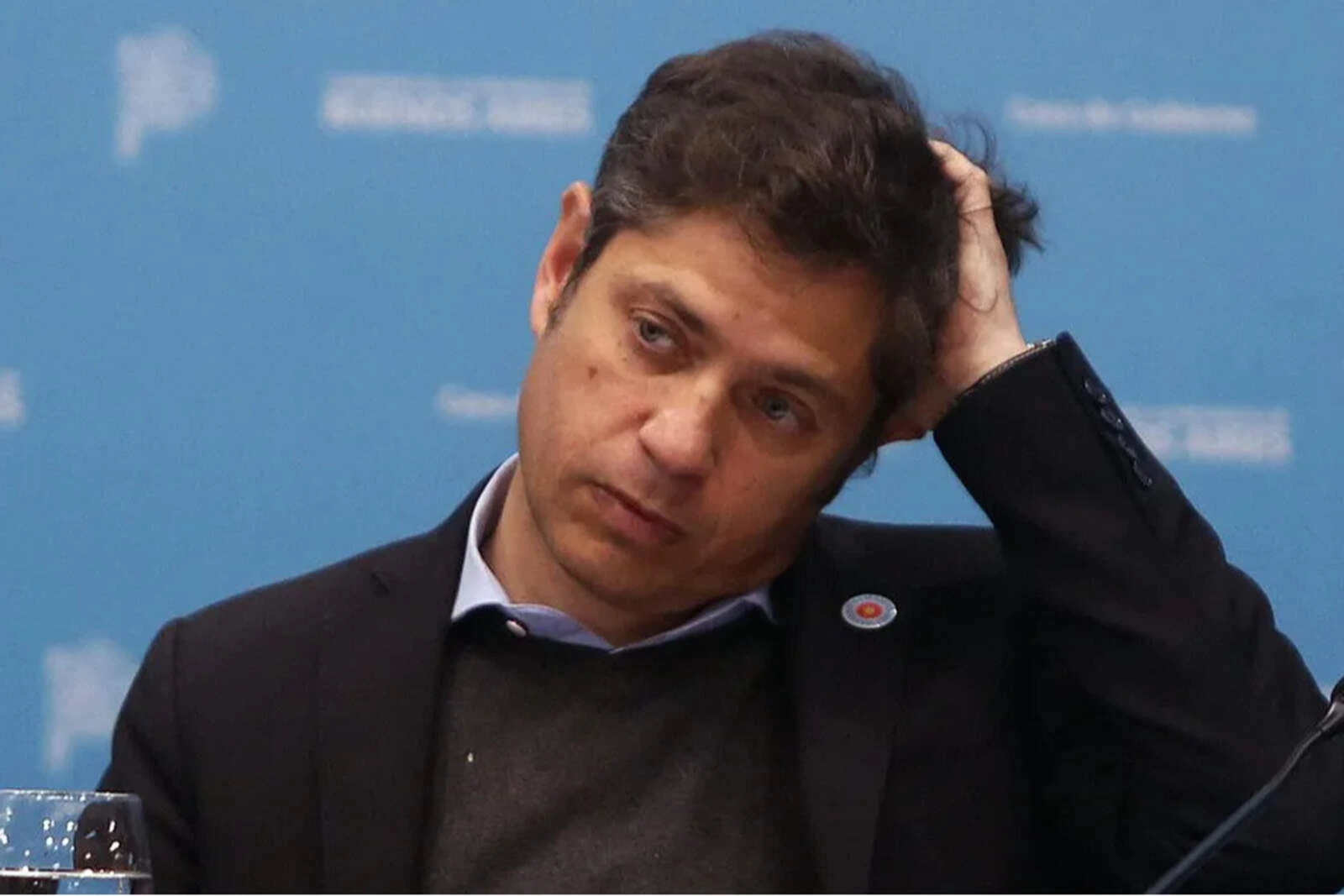
Axel Kicillof, governor of Buenos Aires.
Cornered by the loss of voters, Axel Kicillof had to capitulate days later during an interview with journalist Gustavo Sylvestre on the screen of C5N. In a desperate attempt to provide the answer he had evaded in New York, the governor exclaimed "Of course we condemn it" in reference to Palestine, trying out a proposal of neutrality and peace to distance his profile from Javier Milei's alignment with Donald Trump and Benjamin Netanyahu.
The speculation spree began on September 19 in Avellaneda, during the closing of the Movement for the Right to the Future plenary. Seeking to differentiate himself from the national government, Axel Kicillof promised that in the event of a presidency he would not support "either genocides or invasions".
Although he avoided explicitly naming Israel, the phrase inaugurated an electoral calculation that quickly crumbled during his tour of New York. In that city, the governor aimed to present himself as a leader with international projection through two opposing agendas. On Tuesday, he held private meetings with bondholders from the province of Buenos Aires —including Vanguard, Eaton Vance, and GoldenTree— with the notable presence of businessman José Luis Manzano.
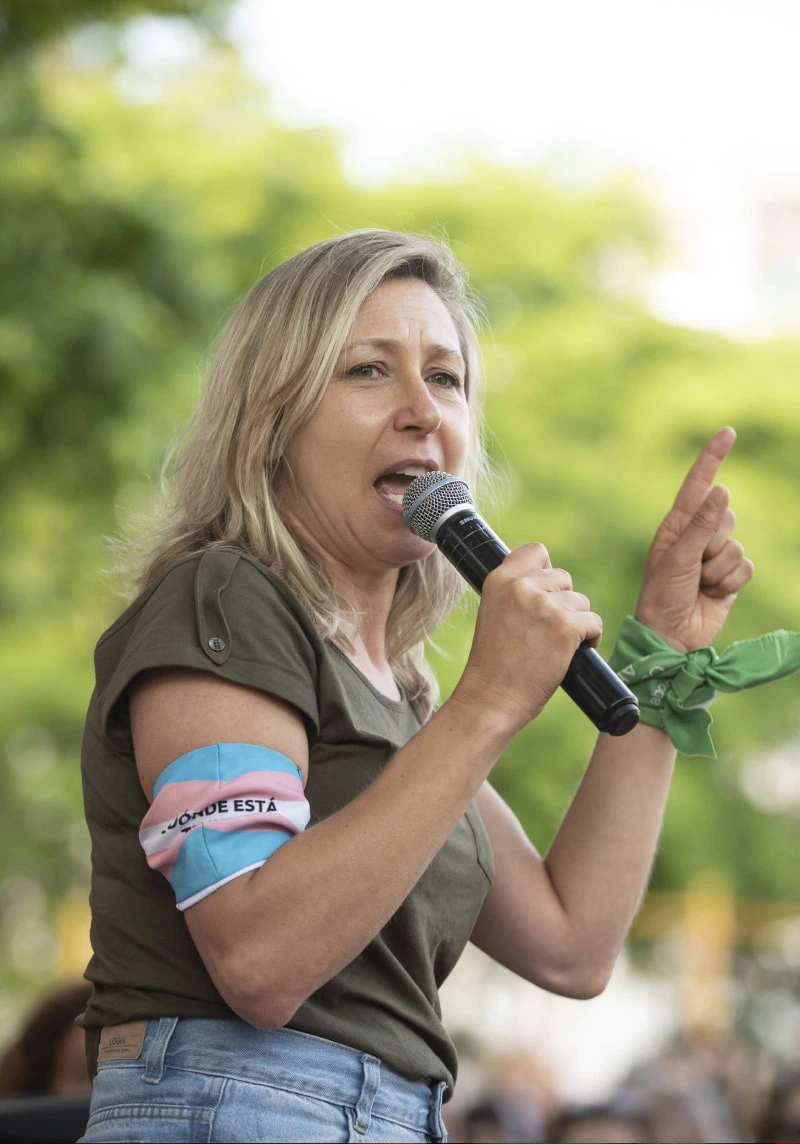
Myriam Bregman
Subsequently, on Wednesday, he participated in a breakfast at Gracie Mansion alongside Mayor Zohran Mamdani, a figure of American democratic socialism, accompanied by Spanish President Pedro Sánchez, the head of the European Council, Antonio Costa, and the Prime Minister of Barbados, Mia Mottley. In that international space, Axel Kicillof attacked the management of Javier Milei, denied the "economic miracle" he labeled as a catastrophe, and accused the President of dragging the country into foreign conflicts.
However, the elaborate narrative of the Buenos Aires tour collapsed dramatically at the Institute of Latin American Studies at Columbia University. At the end of his lecture, journalist Silvina Sterin Pensel reminded the governor that the lukewarm position on Gaza was a determining factor in the defeat of American candidate Kamala Harris, and inquisitively asked for his personal definition.
Far from executive firmness, Axel Kicillof evaded the question by responding "Wait for me, I already answered that yesterday" as reported by El Día, labeling the inquiry as a "trap". To aggravate the episode, his Communication Minister, Jesica Rey, had to terminate the exchange arguing that the governor did not want to respond. The viralization of the video exposed the scene that the Kirchnerist environment feared the most: a candidate trapped in his own contradictions in front of the very international progressivism.
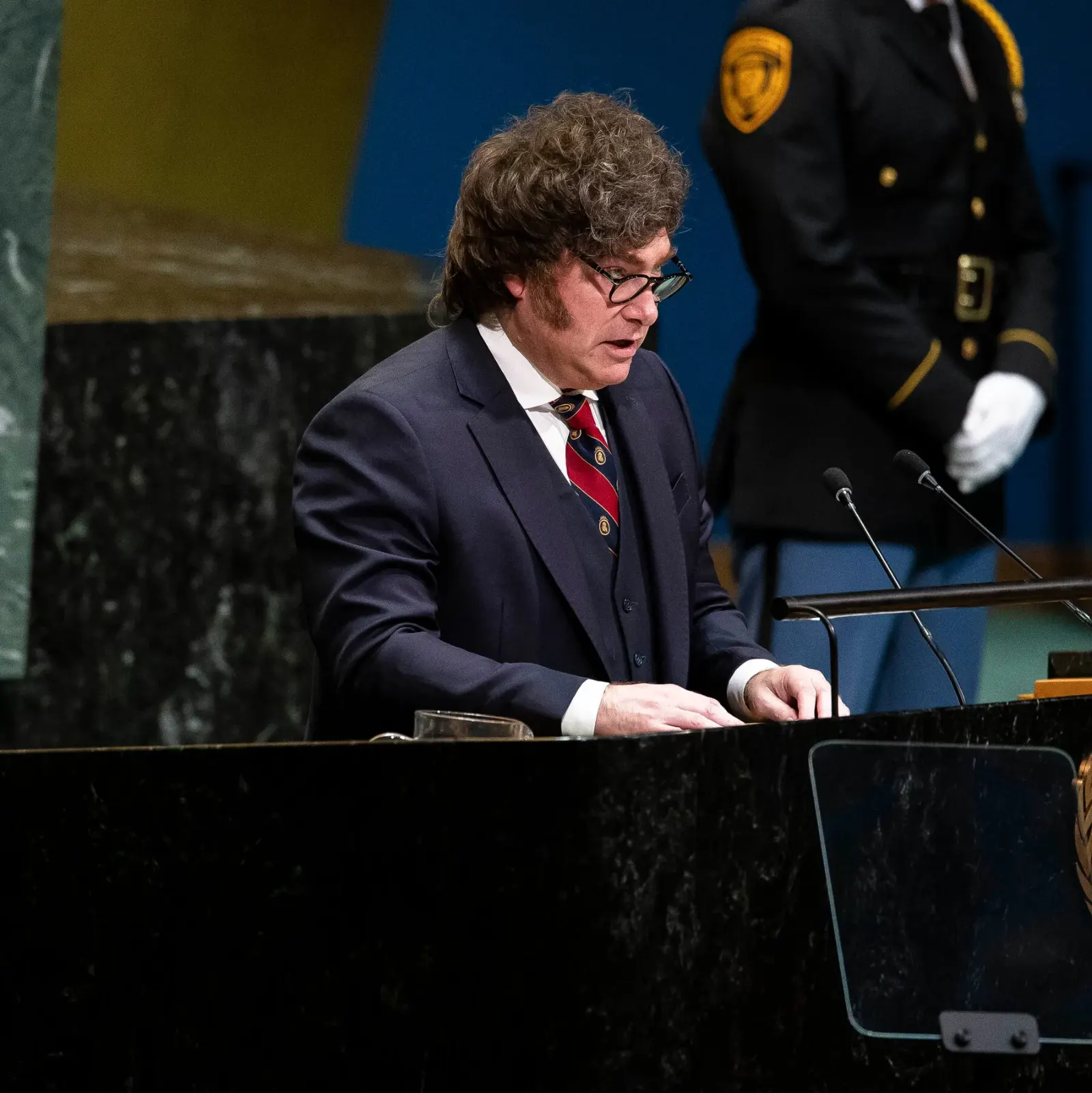
The president, Javier Milei
The diplomatic stumble was immediately seized by the Left Front. Deputy Juan Carlos Giordano, a member of the Global Sumud Flotilla, reminded the governor that asking about Palestine"is not a trap" and that shying away from the term genocide constitutes an act of "complicity".
At the same time, the PTS media, La Izquierda Diario, dedicated multiple articles to exposing the inconsistency between the words in Avellaneda and the evasion in Columbia. The Kirchnerist concern is grounded in harsh public opinion figures. Myriam Bregman, who in the 2023 elections had garnered a modest 2.7%, has recorded a rapid growth.
The consulting firm Tendencias revealed that in August the voting intention for Bregman rose to 10.2%, placing her behind Axel Kicillof, with a potential vote of 23.6%. Previously, in May, the same polling company gave the leftist leader a 42.3% positive image, while the firm Opina Argentina positioned her at 44%, matching the governor's own line. The demographic profile of this electorate is especially critical for Peronism: two-thirds are women and more than half are under 35 years, with economic difficulties that in 2025 had mostly opted for Fuerza Patria.