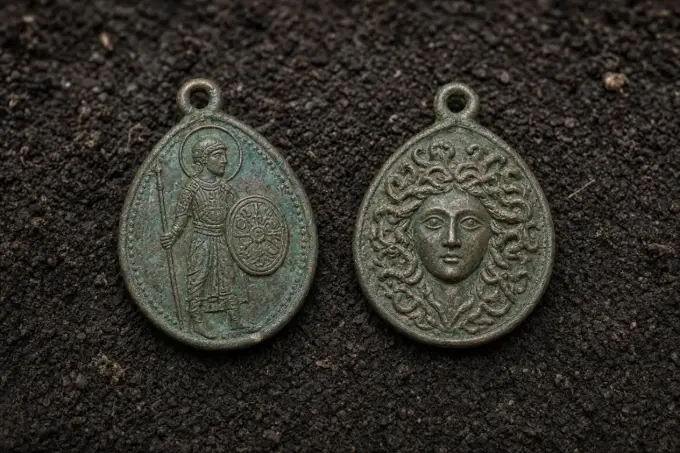

A copper alloy pendant dated to the 11th century was unearthed in the town of Staraya Russa, in northwestern Russia. The find, reported by Live Science, shows on one side the image of a possible Christian warrior saint holding a spear and shield, and on the other a figure resembling Medusa with snakes.
So far, four similar pendants were known in the same area, although those examples date from the 12th to 14th centuries. This new object is particularly interesting due to its antiquity and the mix of motifs it presents.
“The main characteristic of the serpentine pendant is its combination of images that are incompatible from a strictly dogmatic point of view,” said Sergey Toropov from Novgorod State University. According to his interpretation, the warrior depicted could be the Christian saint Theodore Stratelates, known for having killed a giant serpent in his homeland of Asia Minor.
It is not entirely clear whether the figure on the reverse was meant to represent Medusa, the pagan character from Greek mythology. Toropov suggests that these “incompatible” images could symbolize the victory of the forces of light over the forces of darkness.
A sign of early Christian influence
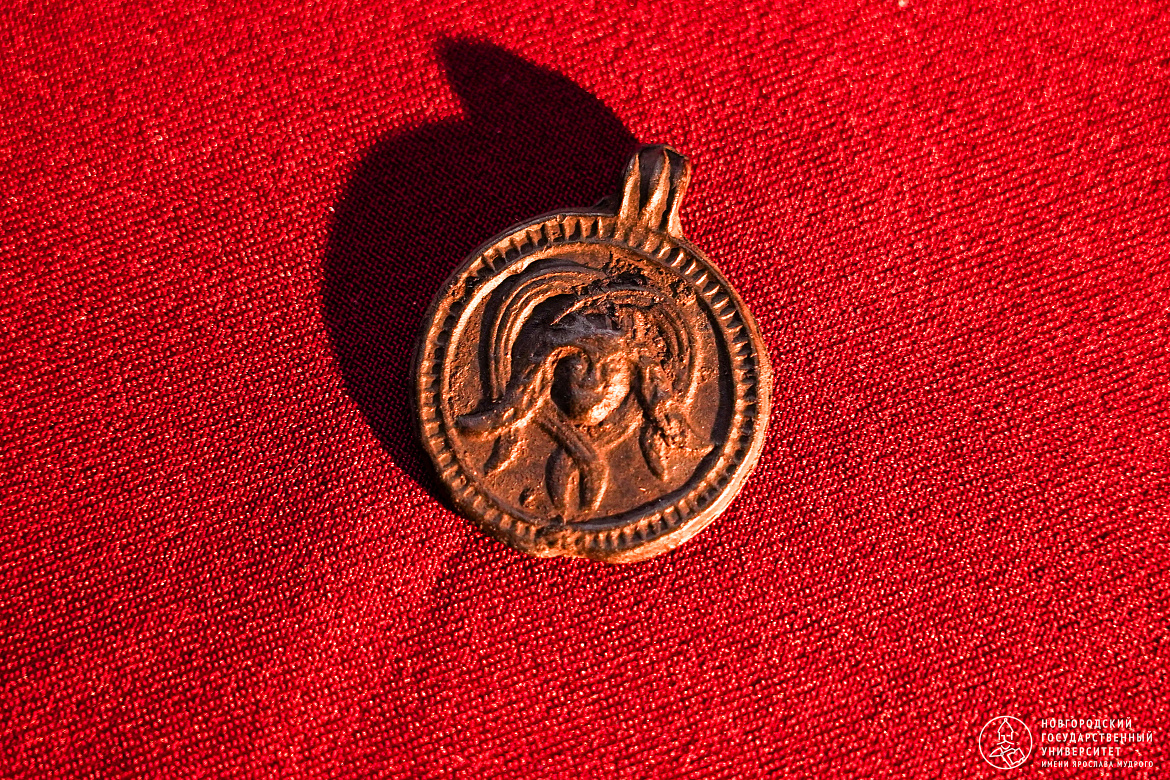
The researcher argues that the 11th-century pendant indicates that Christianity was already exerting some influence in this region of northwestern Russia earlier than previously thought. The presence of a warrior saint alongside a serpentine motif raises questions about how beliefs were mixed at that time.
Staraya Russa is located in an area with a rich medieval history. The discovery adds to other findings that help reconstruct the religious and cultural life of the region during the early centuries of the local Middle Ages. The object not only provides data on metallurgical techniques of the time but also on the symbolic imagery that circulated among its inhabitants.