"He set the standard for Williams champions: a fast and uncompromising driver with a challenging mindset who loved motorsport and dedicated his life to it. He will be sorely missed, and we send our love and thoughts to his family and friends", they added.
The clash with Carlos Reutemann that marked his history
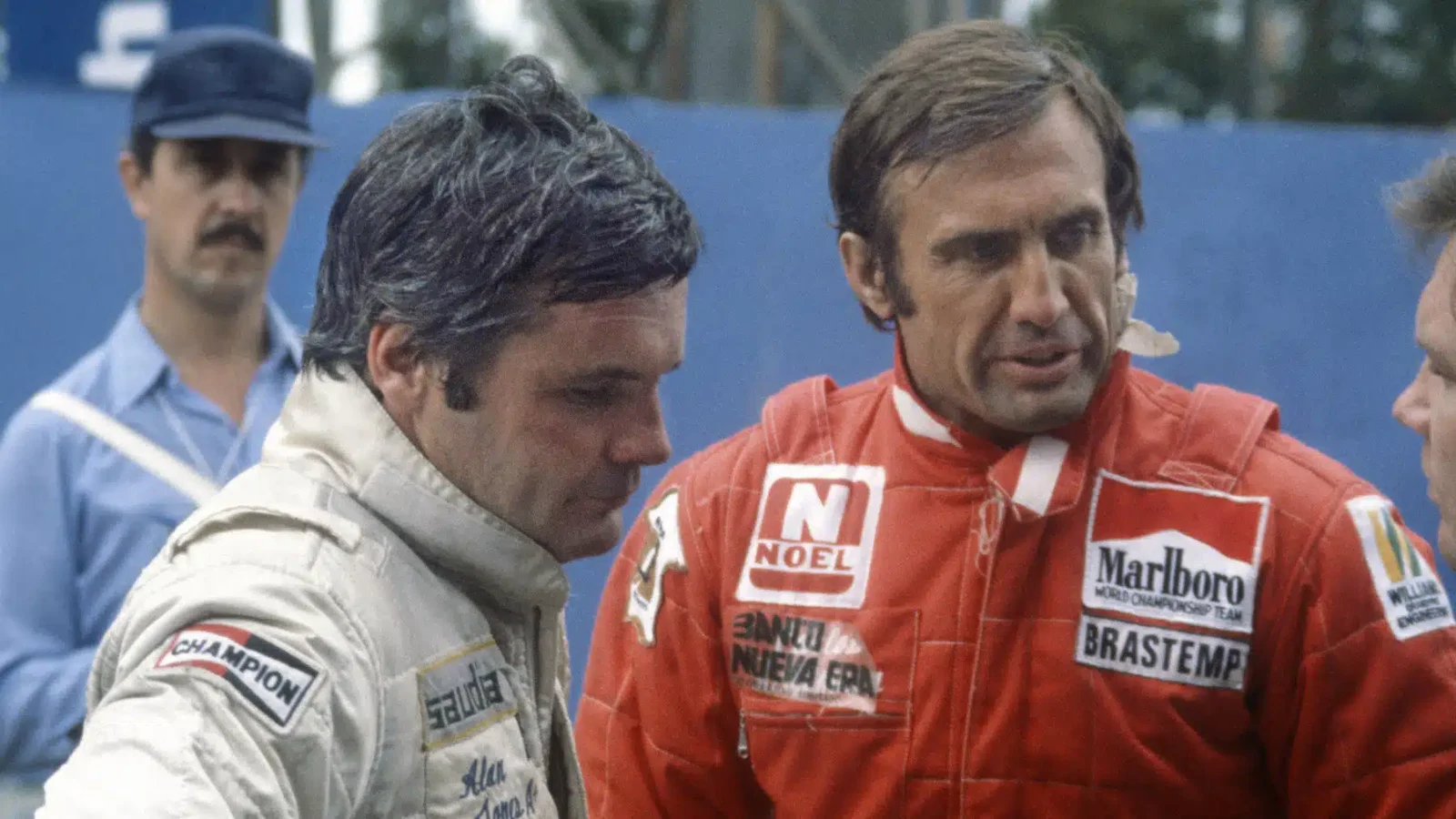
Beyond his sporting results, Alan Jones's name is also associated with one of the most remembered episodes by Argentine fans: his clash with Carlos Reutemann during the 1981 Brazilian Grand Prix.
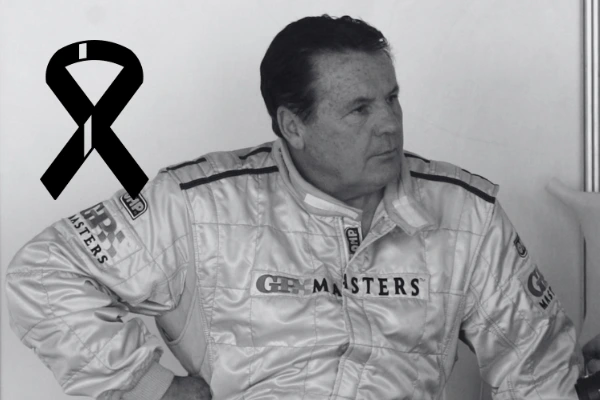
TheFormula 1lost one of the names that marked its history and the last Australian champion of the category. Alan Jones died a few days after turning 80, after a brief illness, as confirmed by a statement released by the Australian public broadcaster ABC on behalf of his wife, Amanda Butler-Davis.
"We are deeply saddened to announce the passing of our beloved Alan, who died on November 5 after a short illness", the message expressed. It also highlighted the legacy he built throughout his career: "Alan dedicated his life to motorsport, building a legacy that will endure through the countless people he touched along the way. Through his achievements, his passion, and his unmistakable character, both on and off the track, he left a lasting mark on the sport".
Jones was the first Formula 1 champion with Williams
Born in Melbourne, Jones inherited his passion for racing from his father, Stan, winner of the 1959 Australian Grand Prix. In 1970, he decided to move to Great Britain to develop his professional career and, after making his way in European motorsport, reached Formula 1.
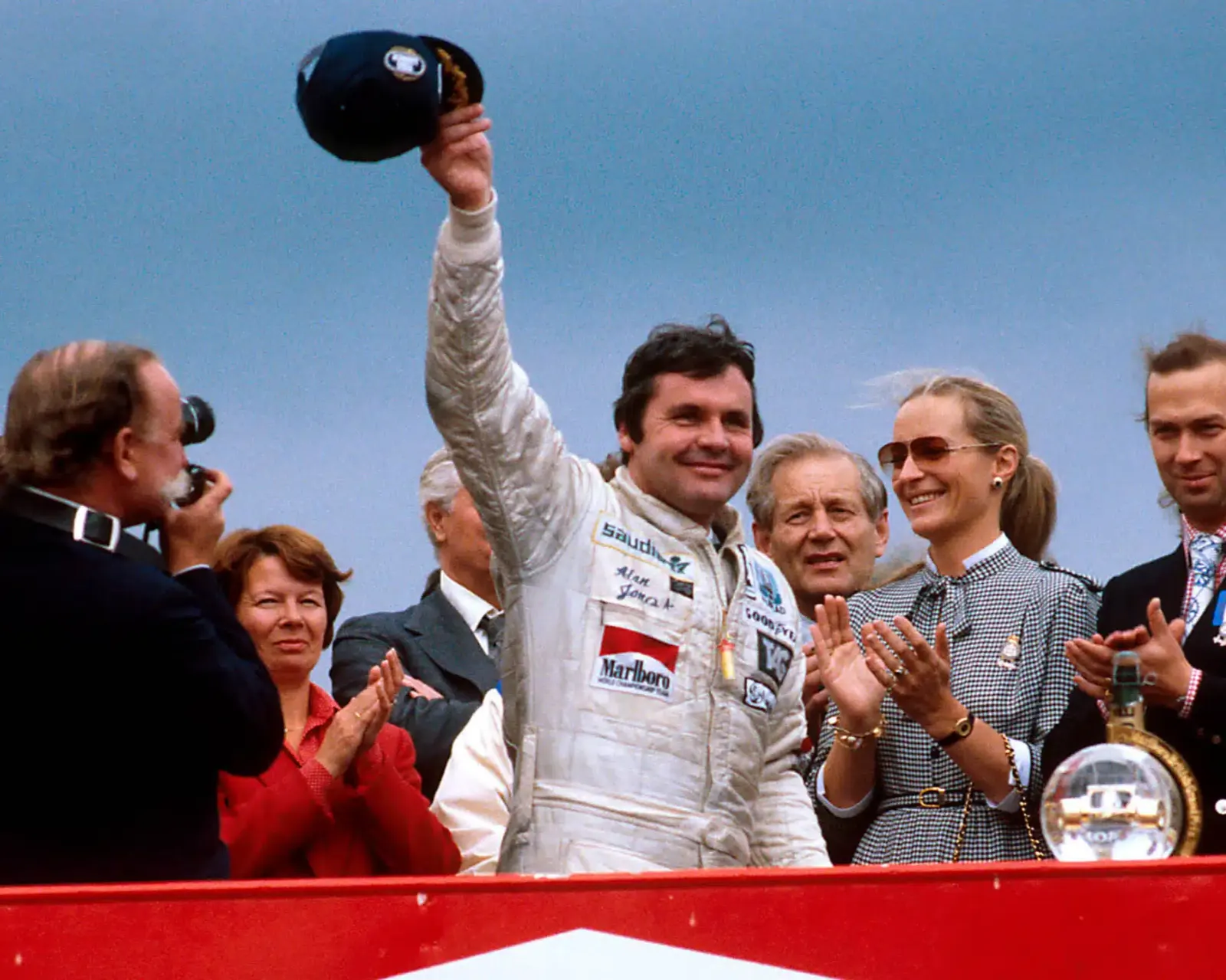
His breakthrough came in 1980 when he was crowned world champion driving for Williams. In this way, he became the second Australian to win the title, after Jack Brabham, and one of the central figures of the British team during that time. In total, he achieved 12 victories, 24 podiums, and five pole positions in the top tier. Jones retired definitively from competition in 1986, although he remained connected to motorsport through various media and broadcasting engagements.
After the news broke, the organization of the Australian Grand Prix dedicated some words to him and emphasized the influence he had on the development of the sport in his country. "His world title in 1980 inspired a generation of motorsport fans in Australia", it stated.
Additionally, it recalled a record that still stands: "His victory in the Australian Grand Prix that same year remains the last time an Australian driver has won their home grand prix". It concluded: "He leaves an extraordinary legacy in Australian motorsport and will be deeply missed by the motorsport community worldwide".
For its part, Williams also published a heartfelt message. "We are deeply saddened by the passing of Alan Jones. A true Williams legend, Alan formed an extraordinary bond with Frank Williams and Patrick Head and made history by winning our first Drivers' World Championship in 1980", commented the British team.
On March 29 of that year, at the Jacarepaguá circuit in Rio de Janeiro, both drivers were teammates at Williams. The driver from Santa Fe arrived with the expectation of fighting for the championship and had his teammate, the reigning world champion, as one of his main internal rivals.
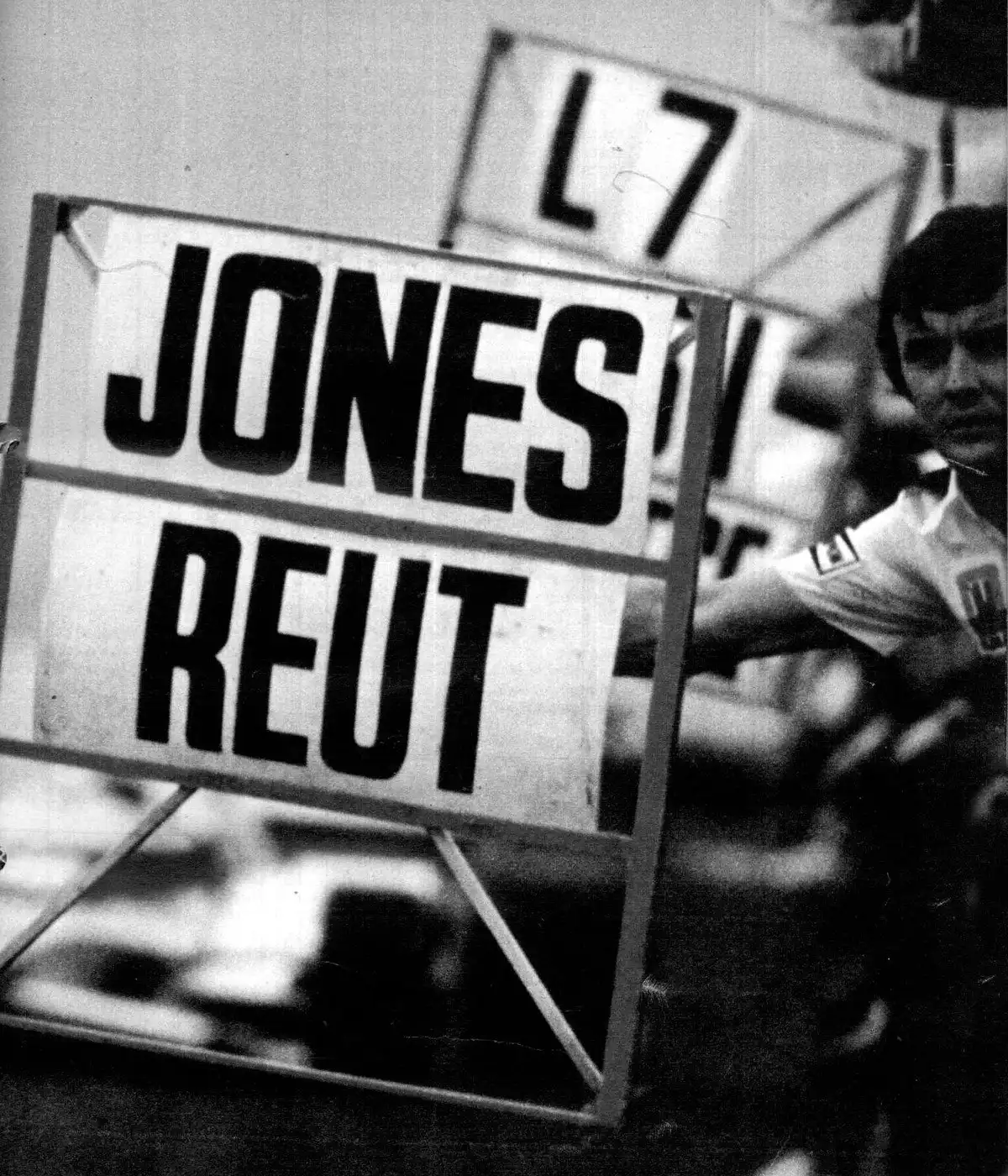
The race took place under heavy rain, and with seven laps to go, from the pit wall came a team order via the sign "Jones-Reut", indicating that Reutemann was to yield the lead to the Australian. However, the Argentine decided to stay in front and crossed the finish line in first position.
The cartel that sparked the controversy between Jones and Reutemann
The decision caused a break in the relationship between the two. Jones refused to share the podium with his teammate and made his displeasure clear about what had happened. Reutemann, for his part, claimed that he had never seen the team indication. "I never saw any sign. The race was difficult because it was raining all the time, and I had to focus on the car to avoid making the slightest mistake", the Argentine stated after the race.
The Australian's response was blunt and showed that the conflict would not be left behind: "I think Carlos made a very short-sighted decision to win the race. I was waiting for the team's decision, and that's why I never attacked his position. Now I know that, from this race on, Reutemann is for me the same as racing against Nelson Piquet, Gilles Villeneuve, or Jacques Laffite. He is just another enemy".
After the race in Brazil, the relationship between Jones and Reutemann never recovered
The rivalry between the two continued throughout the season and became one of the most emblematic chapters in Williams's history. A year later, Reutemann raced at that same Jacarepaguá circuit in the last race of his Formula 1 career.