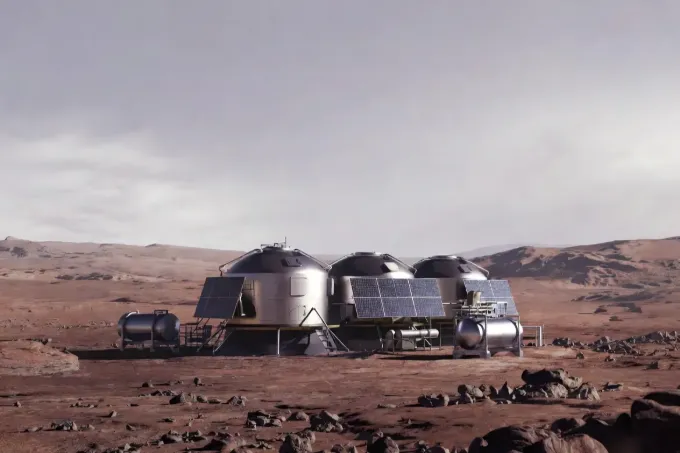
NASA is searching for four people willing to live for a full year in an environment that simulates the harsh conditions of a trip to Mars, all without leaving Earth. This study aims to better prepare for future crewed missions to the red planet and also to the Moon, where improvisation has no place.
Space travel requires thorough preparation, especially in inhospitable places like Mars. Therefore, the space agency will launch the Moon and Mars Exploration Analog mission, which combines elements from previous simulations such as HERA and CHAPEA.
This initiative will allow for testing prolonged confinement and the management of limited resources, key for any base on the lunar or Martian surface. The simulation would start in 2027, no earlier than August, and the call for volunteers is already open.
A facility that replicates the journey and the base
The setup combines a smaller module of 60 square meters, inspired by HERA, that mimics the confined space of the spacecraft during the journey, with a larger area of 158 square meters similar to CHAPEA. There will be private rooms, common work areas, a recreation room, food cultivation, a medical sector, a kitchen, an airlock, and bathrooms.
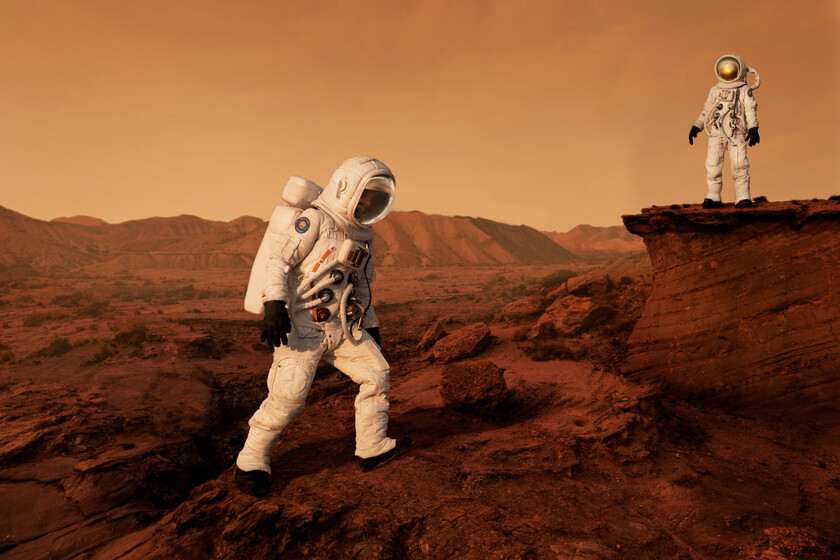
Participants will not be professional astronauts, but they will meet very similar requirements. They must be U.S. citizens or have a green card, be between 30 and 55 years old, be up to 1.88 meters tall, and have a good command of English.
Additionally, preference will be given to those with advanced degrees in engineering, biological sciences, physics, or mathematics. They cannot have special dietary needs, sleep issues, or be sleepwalkers. Passing rigorous physical and psychological evaluations is mandatory.
Training and a year of total isolation
Before and after the main one-year mission, there will be data collection phases. Volunteers will receive prior training lasting about two months. During the confinement, they will simulate both the interplanetary journey and activities on the surface, including spacewalks.
This experience will help fine-tune details of programs like Artemis and pave the way for the long-awaited colonization of Mars. The results will help better understand how prolonged isolation affects humans and how to optimize life in resource-scarce environments.
The four selected individuals will work and live in complete isolation, replicating the daily routines they would face in a real mission. Preparation is essential to avoid unnecessary risks in space.