In relation to the criticisms of the “brutal adjustment”, the Government defended its economic policy and stated that the fiscal order made it possible to “reduce primary spending by 8.8% in real terms”, while highlighting improvements in social indicators: “retirees grew 1.8% in real terms and the AUH increased 11.3% in real terms
”.
In that sense, he argued that this is “the first time in Argentine history” that the adjustment does not fall primarily on the population, but on the accounts of the State.
The
statement also responded to the “fall in wages”, recalling that this deterioration occurred during previous administrations
.
“The real fall in wages occurred during all the years of the governments it was part of,” they said, while defending the current economic course that seeks to end structural inflation that affected purchasing power for decades.
The Government's response.
Investments
Finally, the Government questioned the negative view of the investment climate and assured that recent data deny
this diagnosis.
In this context, the Response Office mentioned announcements worth more than $16 billion in strategic sectors, a direct result of the policies implemented by the libertarian administration to regain international trust.
In the closing, the Milei Government remarked that the starting point was an economy “with three-digit inflation, negative reserves and almost a decade and a half without growth”, and concluded that the criticisms of the corrupt former president hide this context.
“This Government is rebuilding fiscal order, macroeconomic stability, respect for the law and conditions for growth, MAKING ARGENTINA THE FREEST COUNTRY IN THE WORLD,” they concluded.
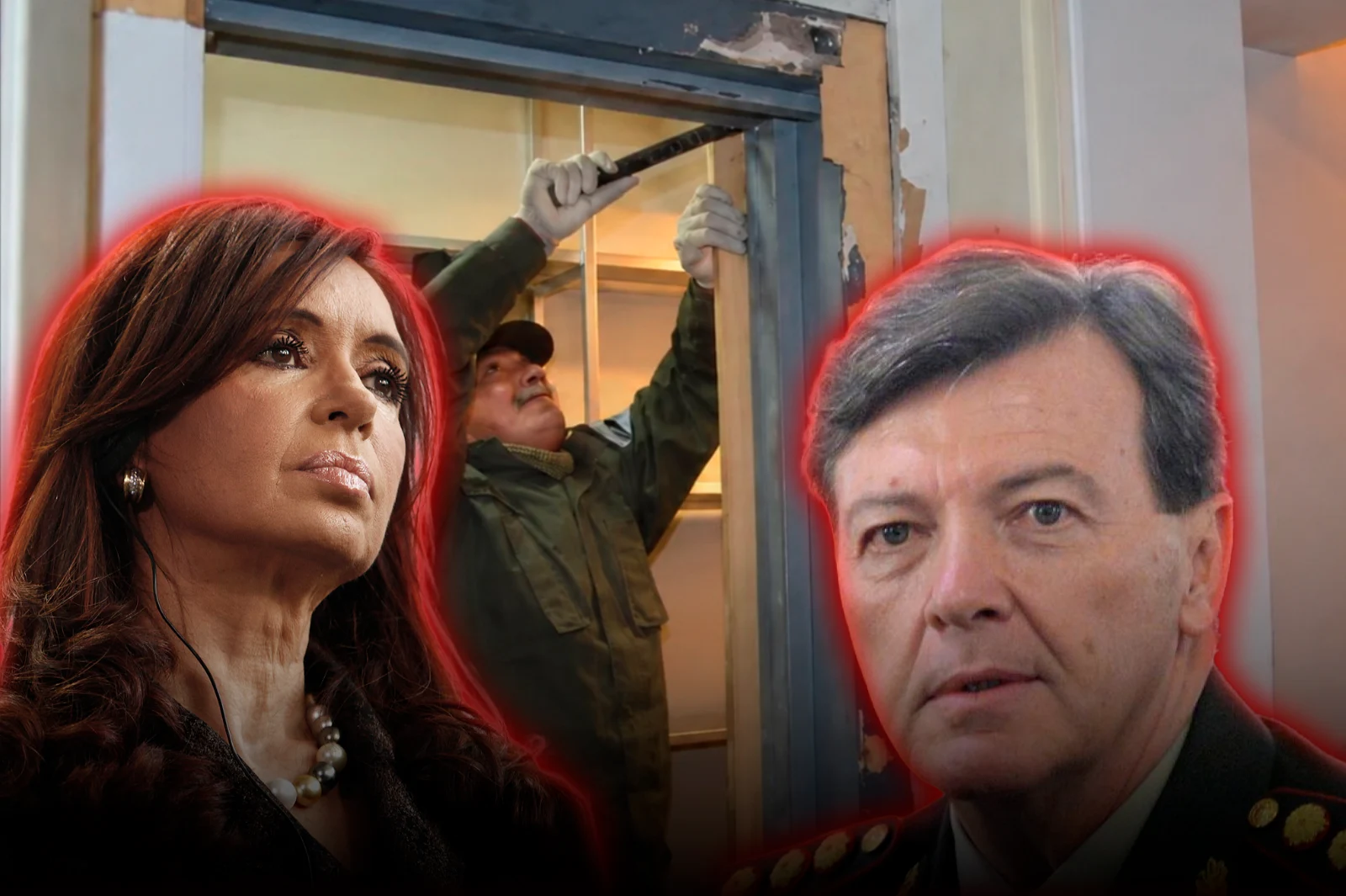
The Official Response Office of the Government of Javier Milei ridiculed the corrupt and convicted Cristina Fernández de Kirchner, who returned to criticize, with lies, the economic direction and expressed himself about his judicial case known as “Cuadernos”
.
From the Response Office, Javier Milei's administration strongly rejected his statements and pointed directly against Kirchner's attempt to install a “narrative” to justify his judicial situation.
Under the title “CRISTINA KIRCHNER AND THE STORY OF THE 'CATASTROPHE'”, the statement states that the corrupt former president “tries to describe an alleged 'social and economic catastrophe' in Argentina as an excuse for her conviction and house arrest.”
Along these lines, the Government maintained that its statements are not isolated, but that they respond to a clear political strategy: “It is part of a coordinated political and media offensive against a Government that for the first time is doing what Kirchnerism never wanted to do: ordering the Argentine economy and ending decades of waste.”
The corrupt Cristina Kirchner.
The “factories closed or taken over” Faced
with the sayings of the former president about “closed or taken over factories”, the official response was categorical, recalling that “for years Kirchnerism naturalized union blockades, takeovers of companies and extortion of production”, and she
assured that this scenario remained in the past.
In this context, the current administration “recovered public order, restored prominence and respect to the Federal Security Forces and guaranteed compliance with the law”, which today allows for more favorable conditions for production and investment.
Inflation
Another of the central axes of the intersection revolved around inflation. The libertarian administration stated that Cristina Kirchner speaks “without any shame” when she mentions current levels, and countered that the governments in which she was part left “an uncontrolled inflationary spiral”, together with “chronic fiscal deficits and a bankrupt State financed by monetary issuance”
.
In contrast, the statement notes that currently “Argentina is experiencing flat inflation and in a downward spiral, accompanied by a solid fiscal surplus.”