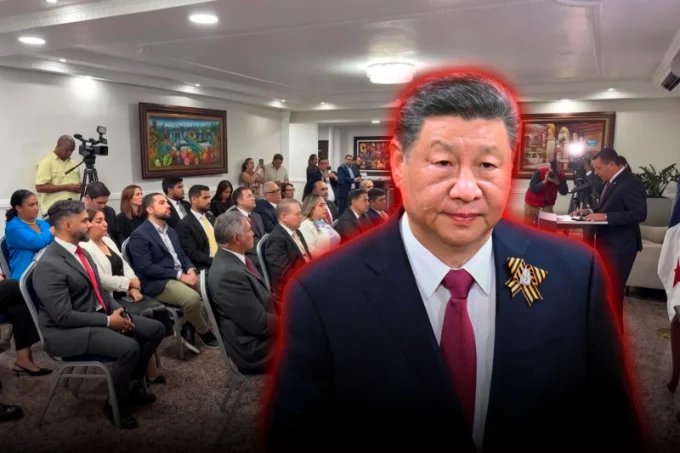
Panamanian lawmakers accused China of exerting strong interference in the decisions of the National Assembly after the Embassy of that country rejected the creation of the ''Multidisciplinary Group for Parliamentary Exchange Panama-Taiwan'' and demanded its members to rectify their position.
The legislators defended the Assembly's right to establish links with other parliaments and emphasized that Panama is a democratic, free, and sovereign country. Although they acknowledged that the conduct of diplomatic relations corresponds to the Executive, they maintained that the Legislative has the independence to promote parliamentary exchanges without receiving instructions from foreign governments.
The controversy began after the Chinese diplomatic representation expressed its ''strong discontent and vigorous rejection'' regarding the formation of the group. Beijing urged the deputies to adhere to Panama's foreign policy, abandon their approaches with Taiwan, and stop ''obstructing and undermining'' the relations that Panama maintains with the People's Republic of China.
Several Panamanian lawmakers accused Xi Jinping's dictatorship of interfering in the internal affairs of the Latin American country
The president of the new group, deputy Medin Jiménez, rejected the Embassy's proposal and assured that the initiative has a strictly parliamentary character. He explained that the bloc does not intend to assume diplomatic functions or modify Panama's official relations, but rather to establish channels of exchange with the Legislative Yuan of Taiwan.
Jiménez pointed out that 45 legislators signed the formation of the group, while others expressed their support but could not sign the document during its circulation in the plenary. The Panameñista deputy asserted the Assembly's autonomy and questioned why a foreign representation would seek to determine with which parliaments Panamanian legislators can relate.
''We are a democratic country, where the first organ of the State is the Assembly,'' Jiménez stated, while defending the capacity of the deputies to establish international links within the parliamentary sphere.
The legislator also maintained that Panama can maintain exchanges with any territory regardless of geopolitical disputes between third countries. In his opinion, the conflict between Beijing and Taipei should not prevent Panama from seeking investment, trade, technology, and knowledge opportunities that could generate benefits for its population.
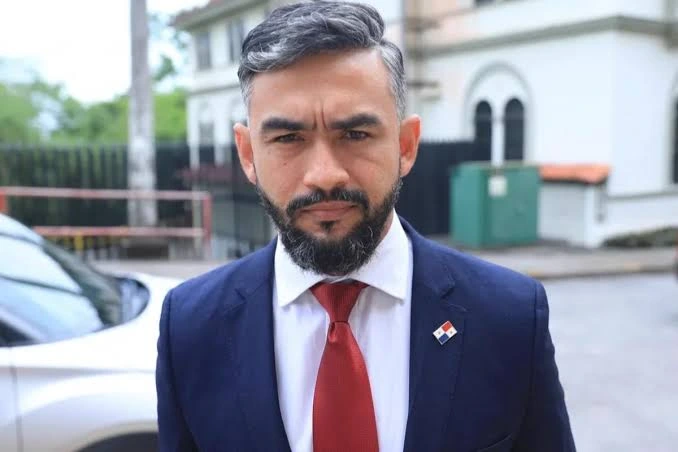
Deputy Medin Jiménez emphasized that the initiative does not aim to establish a parliamentary character while assuring that 44 other deputies supported the initiative
Among the group's objectives are to strengthen parliamentary exchange, promote trade relations, take advantage of the free trade agreement, and improve conditions for national exporters and producers. Jiménez also highlighted the importance of Taiwan for Panamanian exports, especially in the white shrimp sector.
According to the data cited by the deputy, during the last fiscal period Panama traded more than 158 million dollars in seafood and other products with Taiwan. For the group members, these economic ties constitute an additional argument to maintain communication channels with the island despite Beijing's objections.
The independent deputy Luis Duke agreed in questioning the Chinese position and considered that the statement constitutes an intervention in the Assembly's own affairs. He explained that the approach with the Legislative Yuan also responds to Panama's interest in learning from Taiwan's experience in strategic sectors such as semiconductors, technology, innovation, and public policy development.
Duke linked this relationship to Panama's efforts to develop capabilities within the semiconductor industry. He explained that Taiwan occupies a central position in that global chain and its experience could contribute to the development of knowledge and capabilities that Panama seeks to incorporate into its economic strategy.
The deputy clarified that the group does not intend to alter the country's official diplomatic relations. ''We are not interfering in the State's diplomatic relations,'' he stated, emphasizing that this is an exchange between legislative institutions.
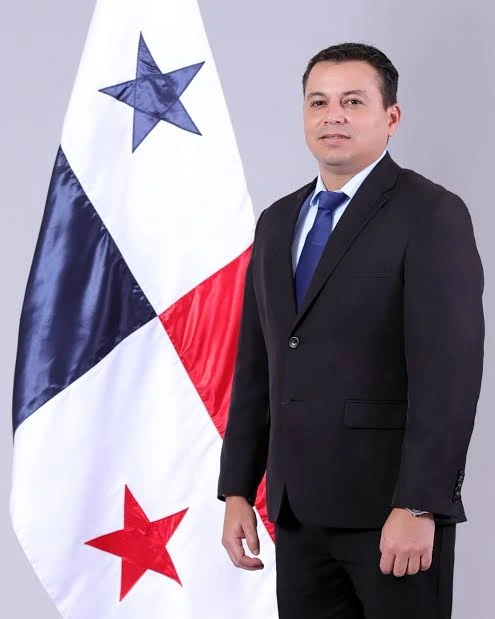
Deputy Luis Duke strengthened Panama's ties with Taipei to develop the semiconductor sector
José Pérez Barboni, from the Another Path Movement, was also critical of Beijing's reaction and described the statement as a ''very reactive'' and unfortunate response. He questioned why the Chinese Embassy demanded that Panamanian legislators rectify their position, arguing that they are democratically elected representatives.
Pérez Barboni acknowledged that the Executive has the authority to direct foreign policy, but maintained that each deputy can form their own opinion and relate to other parliaments. In his view, a foreign representation seeking to decide how legislators should act constitutes interference that must be rejected.
The president José Raúl Mulino, for his part, has maintained that foreign policy corresponds to the Executive Branch and has distanced himself from parliamentary trips to Taiwan, clarifying that those delegations do not officially represent his government.
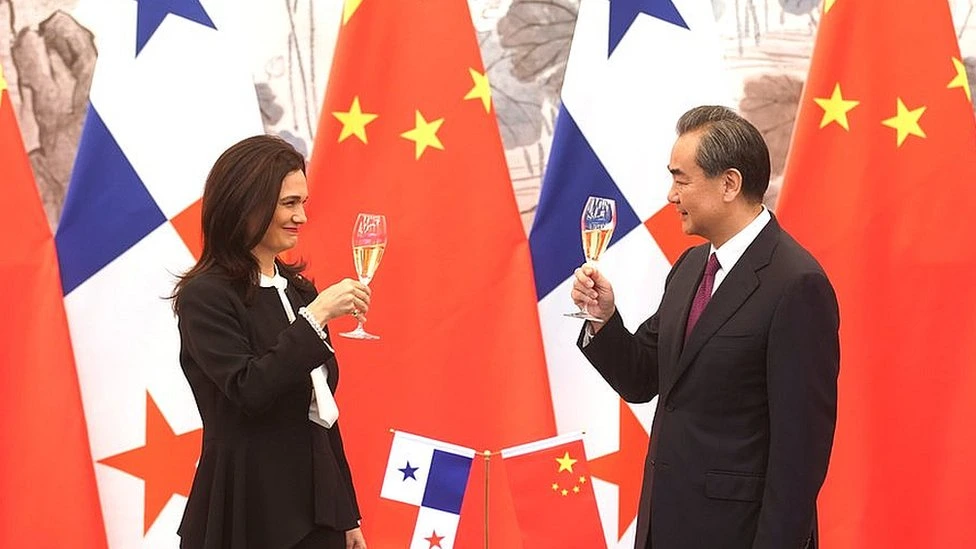
Panama broke diplomatic relations with Taiwan in 2017 and has recognized the principle of one China since then. However, the deputies defend that commercial, academic, and parliamentary ties with the island can be maintained without altering the official foreign policy.
Panama severed its diplomatic ties with Taiwan in 2017 and began to develop a deep relationship with Xi Jinping's regime