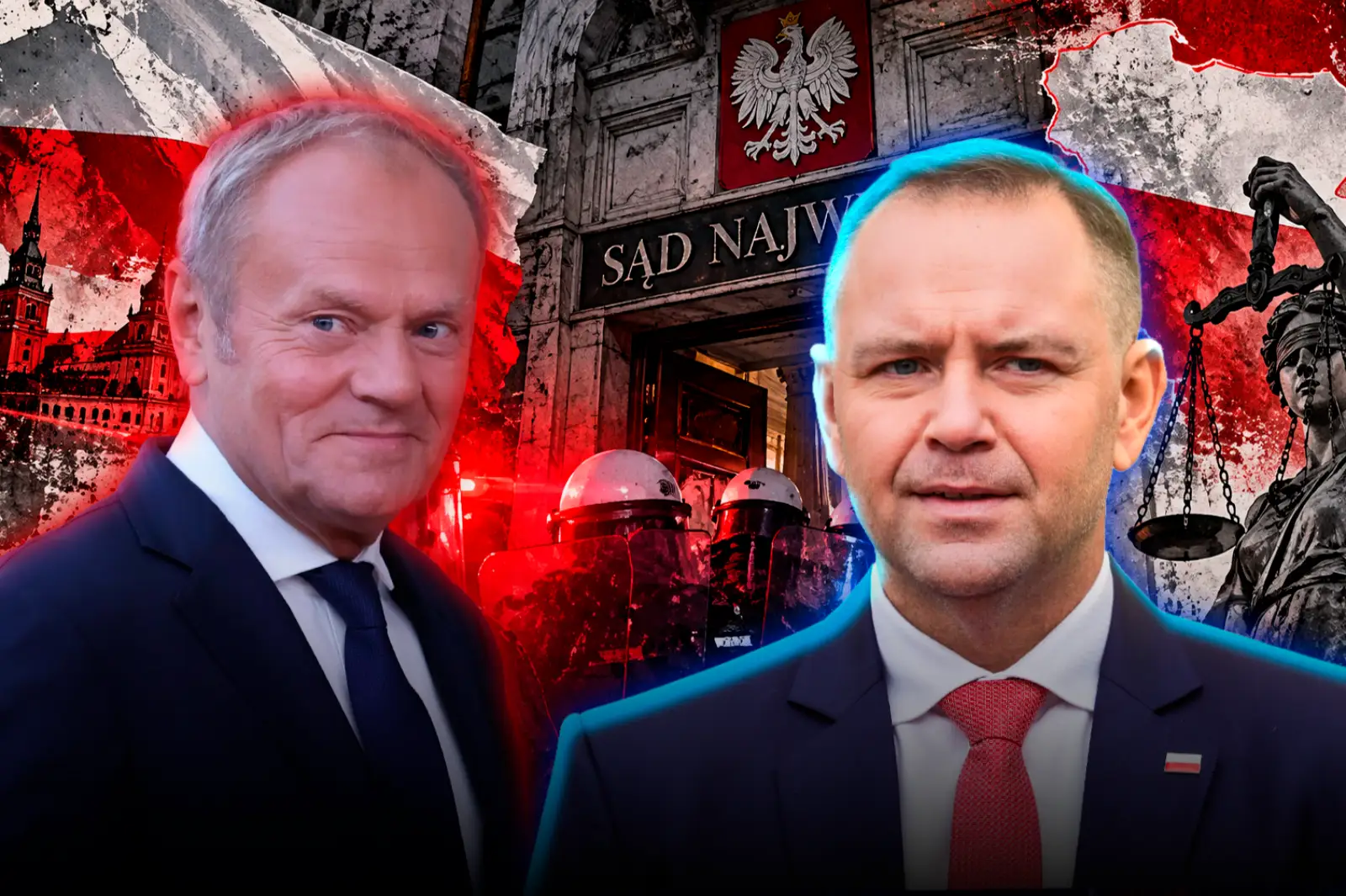

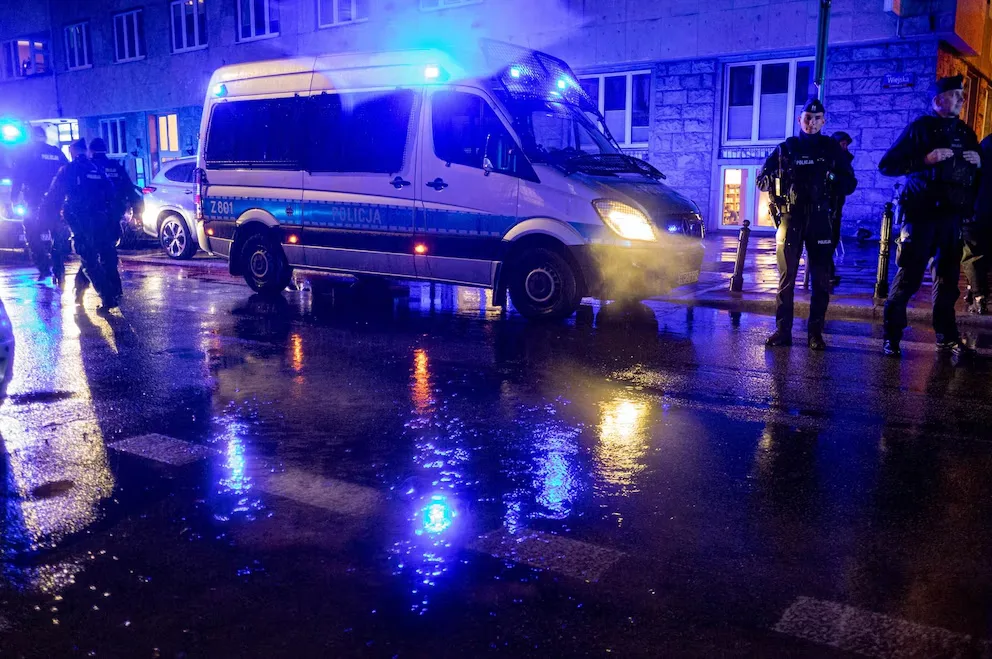
Democracy in Poland is going through the darkest hours of its recent history due to the consummation of an institutional outrage perpetrated by the leftist regime of Prime Minister Donald Tusk. During the night, forces of the Polish Police surrounded and besieged the building of the Constitutional Tribunal in the capital, Warsaw, triggering an open takeover of the judiciary by the executive power. The serious blow against the republican order provoked unanimous denunciations of a coup d'état from the legitimate judiciary and the conservative opposition, accusing the government of Donald Tusk of establishing an imminent police state oriented towards authoritarianism and totalitarianism.
In the face of the deployment of institutional violence, President Karol Nawrocki, a right-wing leader and staunch defender of judicial independence, urgently suspended his official trip to Senegal and ordered his plane to turn back mid-flight to return to the capital. “At a moment like this, the president must be in Poland”, asserted the Head of State as he interrupted his international agenda.
In what constitutes an unprecedented illegal takeover on a global scale, Judge Anna Korwin-Piotrowska —one of the magistrates promoted by the leftist parliamentary majority of the Sejm in March 2026— executed an arbitrary measure to suspend for a period of one month the legitimate president of the court, Bogdan Święczkowski, and his vice president, Bartłomiej Sochański. Immediately, the official agency PAP confirmed that the identities of both authorities were removed from the official website of the institution.
The high court reacted by warning on its official channels that the institutional platform suffered an illegal takeover by unauthorized elements and categorically emphasized that anyone participating in these maneuvers “is committing the crime of coup d'état”. This coup maneuver was instigated openly by the Minister of Justice and Attorney General of the regime, Waldemar Żurek, who sent writings to coordinate the siege of the security forces.
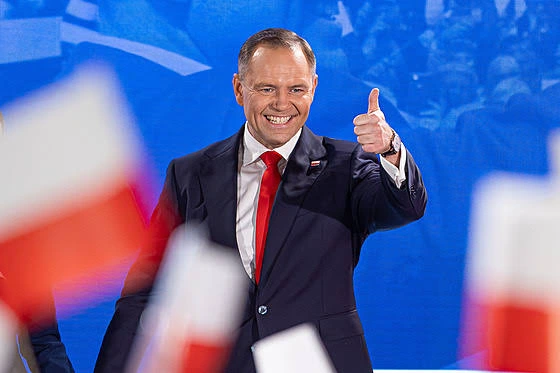
From the vicinity of the besieged court, the leader of the Law and Justice party (PiS) and former prime minister, Jarosław Kaczyński, denounced that the court was suffering a direct “attack” perpetrated by “Tusk's services”. In a forceful statement, Jarosław Kaczyński warned about the collapse of democratic freedoms: “From today, Poland becomes a police state, and from there, there is a direct path to authoritarianism, and then to totalitarianism. The Tribunal is the guarantee of our freedom and sovereignty. The trampling of the law by Tusk knows no bounds”.
In that same line of international denunciation, MEP Arkadiusz Mularczyk described the police incursion as an illegal entry of government troops to consummate a coup d'état at the top of the judiciary. For his part, Prime Minister Donald Tusk attempted to justify the dismantling of the court by posting on social media that the intervention of the body “is a duty” and “a difficult, sometimes painful process that requires decisive action” asserting unyieldingly that “there is no other way” after supposed “years of arbitrariness”.

The police operation and the official provocation quickly ignited tension on Szucha Avenue in Warsaw, resulting in incidents in public spaces and popular gatherings. The Polish Police confirmed the detention of three people for attempting to breach the protective perimeter to safeguard the constitutional headquarters, while international agencies such as Reuters reported the throwing of objects at the officers on the scene. Although the police chief claimed to limit their deployment to the external area responding to the requests of Waldemar Żurek and Anna Korwin-Piotrowska, the judicial headquarters remains completely cordoned off, preventing the free exercise of the judiciary.