Putin confirmed that the Satan II will enter service by the end of 2026 after a successful new test, with the promise of surpassing any existing or future missile defense shield.
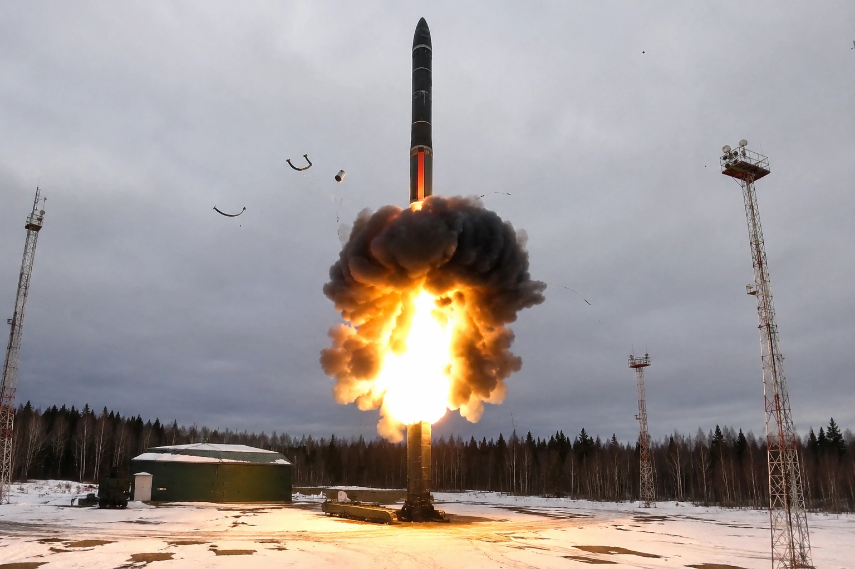
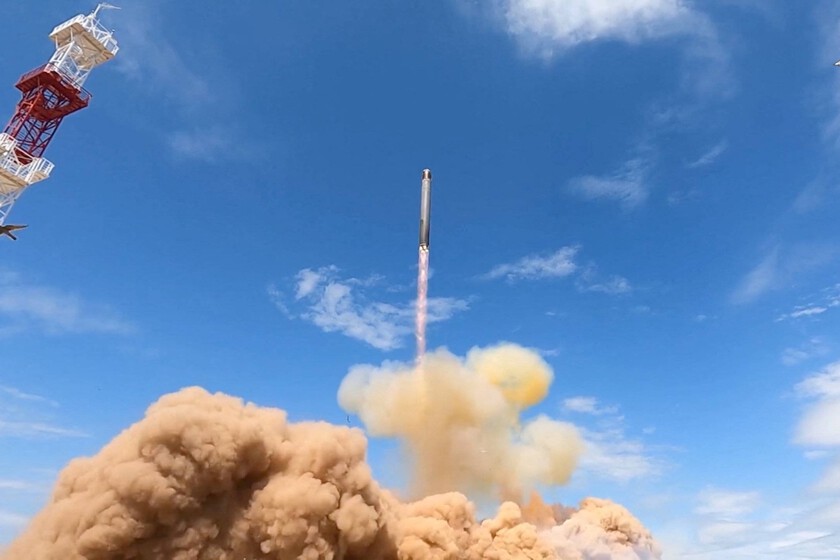
Russia has once again resorted to one of its classic Cold War strategies: announcing an intercontinental missile as the ultimate weapon capable of breaking through any defense. Vladimir Putin confirmed that the RS-28 Sarmat, known to NATO as Satan II, will be operationally deployed by the end of 2026 following a successful test that included the dissemination of images.
Moscow does not present it as just another missile, but as the most powerful missile system in the world, specifically designed to evade missile defense shields. The message aims to instill in the West the idea that, even with the best defensive technology, Russia retains the capability to guarantee a devastating nuclear response.
The Sarmat combines ballistic and suborbital trajectories, with a range exceeding 35,000 kilometers. According to Russian authorities, it can carry multiple nuclear warheads and maneuverable hypersonic vehicles like the Avangard, allowing it to saturate or confuse defense systems.
This insistence on its invulnerability is not coincidental. It is part of a broader narrative aimed at reinforcing deterrence through fear.
History of Delays and Technical Problems
However, the path of the Sarmat has not been straightforward. The program has accumulated years of delays: it was supposed to enter service in 2020, but faced failed tests and even the destruction of a test silo in 2024. These setbacks reflect both technological challenges and the impact of international sanctions and pressure on the Russian military industry following the invasion of Ukraine.
Precisely for this reason, the latest test holds significant political value for the Kremlin. It needs to demonstrate that it can still develop cutting-edge strategic weaponry despite isolation and economic difficulties.
The international context is also key. The disappearance of the limitations of the New START treaty allows Russia to replace old Soviet missiles with more advanced systems without the previous numerical restrictions. At the same time, the United States is facing its own delays in the development of the Sentinel, its next ICBM.
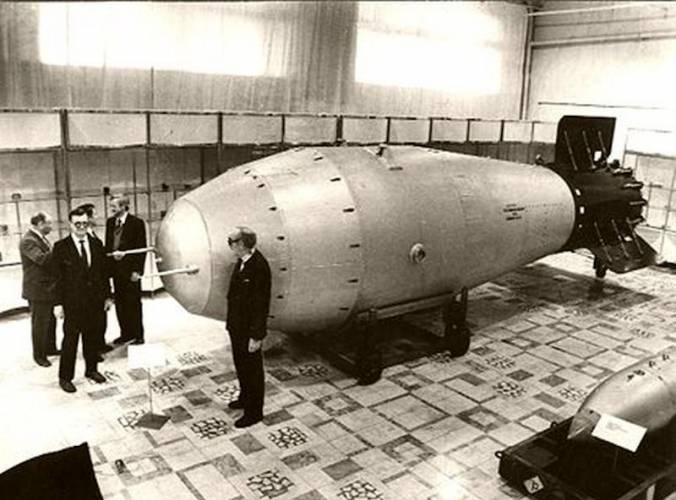
The Tsar Bomba (Tsar Bomba / AN602) was detonated by the Soviet Union on October 30, 1961.
A Primarily Psychological Battle
Beyond the technical specifications, the true objective of the announcement is psychological. Russia has been using this type of presentation for years to convey that it possesses “unstoppable” weapons that alter any Western military calculation. The perception of invulnerability matters almost as much as actual capability.
By instilling the idea that no missile defense shield is completely reliable, Moscow forces its adversaries to assume that total security does not exist. This is the essence of modern nuclear deterrence: maintaining uncertainty about the effectiveness of enemy defenses.
This announcement recalls the logic of the Cold War, with gigantic weapons and public displays of power. While many believed that future confrontations would revolve around artificial intelligence, drones, or cyberattacks, Russia reaffirms that nuclear weapons remain central to the geopolitical landscape.
The Tsar Bomba of 1961, detonated over the Arctic, had already set a precedent: a test more psychological than military, with a shockwave that was felt around the globe. Today, the Sarmat continues that tradition of announcing “the ultimate weapon” to send a clear message to the West.