The decrease in inflation, the recovery of activity, the fiscal surplus, and the return of credit strengthen the expectation of a sustained growth cycle
Argentina currently has the best conditions in decades to begin a process of sustained growth. This is a healthy expansion, supported by internal and external balances, driven by investment and exports, and not by sustained consumption through monetary issuance. The country's catch-up margin compared to the rest of the world is significant, after a period in which the economy remained stagnant for more than ten years.
The most recent data began to question the skepticism about Argentina's ability to organize its economy. In this context, the indicators show a possible regime change: inflation is declining, activity is recovering, the external sector is strengthening, fiscal consolidation is taking place, and there are signs of a better assessment of sovereign risk. On this basis, the necessary conditions are emerging to sustain an expansive cycle driven by investment and exports.
Next, we analyze the data that allows us to affirm that the country has begun to enter a virtuous circle.
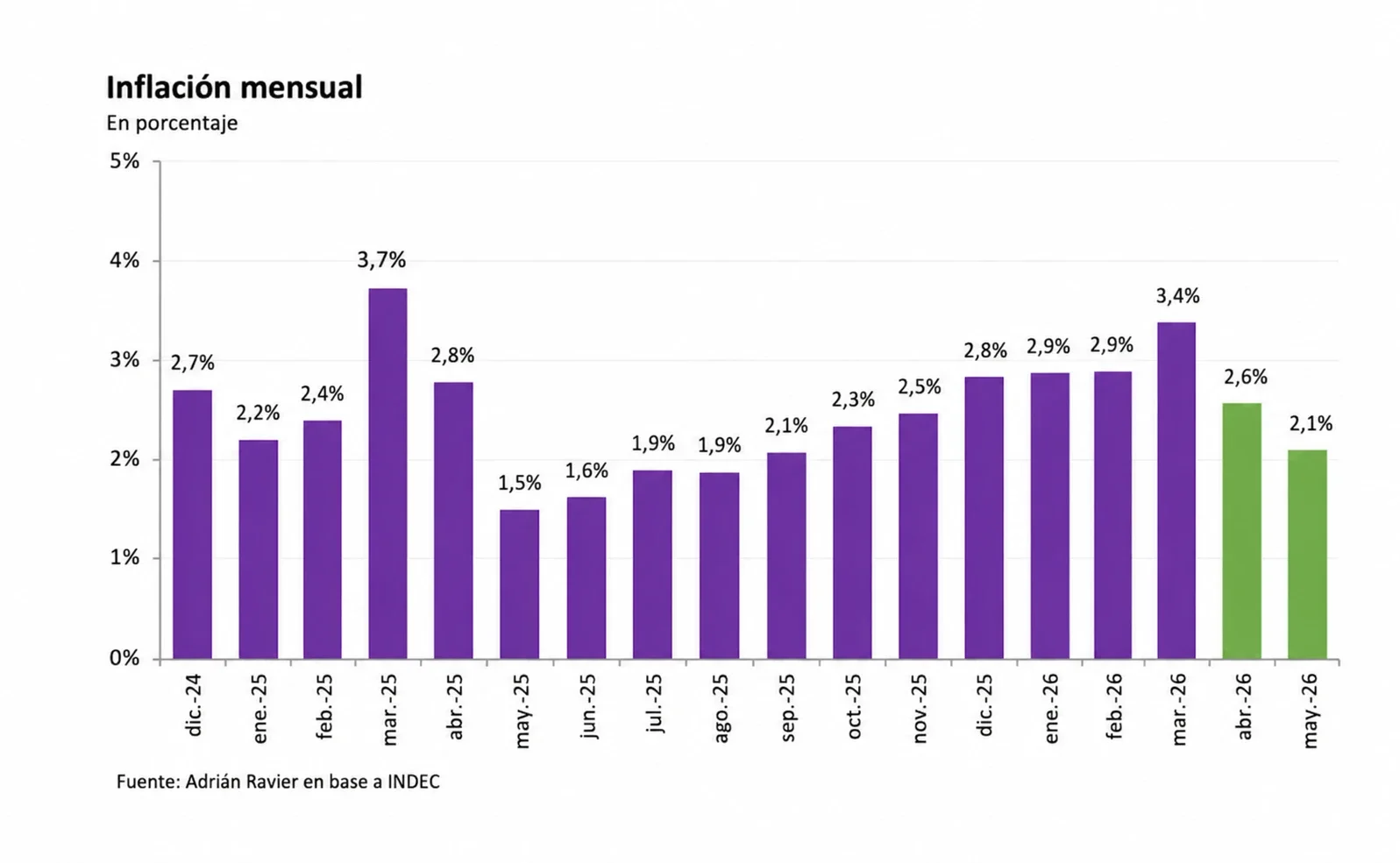
Inflation, which in recent years was the main cause of economic instability and loss of purchasing power, has strengthened its deceleration: the monthly index decreased to 2.1% in May and since April the upward trend that had begun in 2025 due to electoral uncertainty has been interrupted.
It is true that between March and April of last year there was also a strong deceleration. However, this year there are two differences: there is no ongoing electoral process and the scenario shows greater progress in the recomposition of relative prices, fiscal order, and monetary normalization.
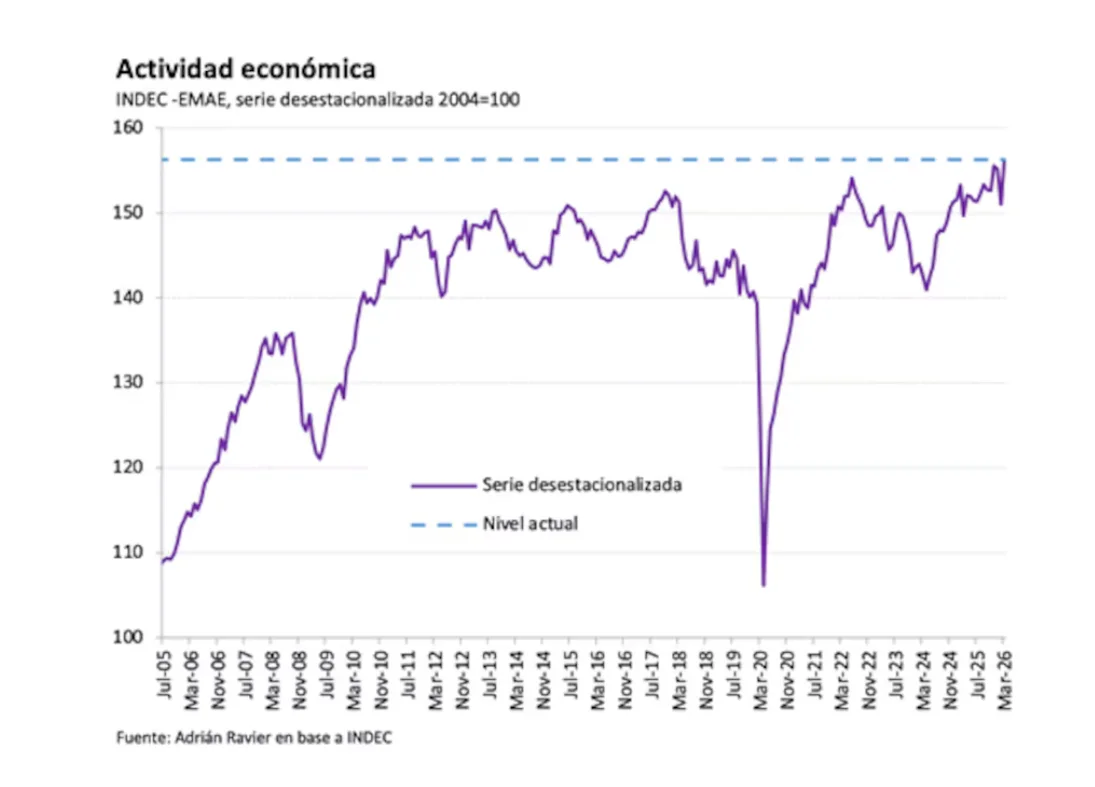
The fundamental aspect is that the decrease in inflation was not accompanied by a prolonged contraction of activity. On the contrary, various indicators reflected a solid recovery.
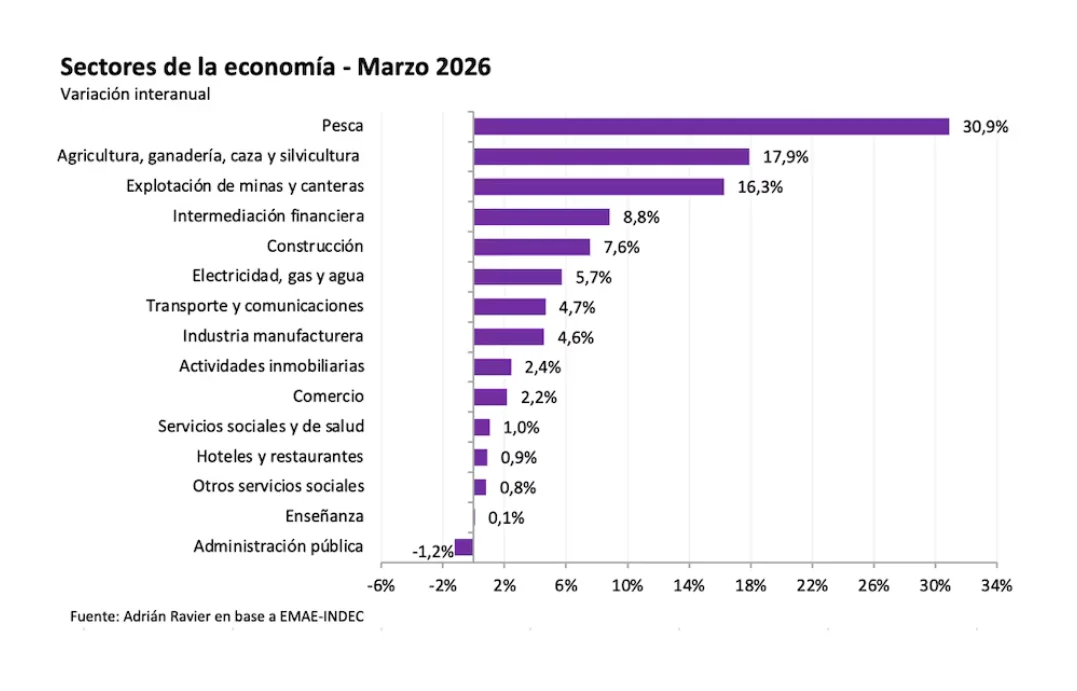
Economic activity showed a growth of 3.5% monthly and 5.5% year-on-year in March, reaching the highest level in the entire seasonally adjusted historical series. Since the minimum recorded in April 2024, the economy has accumulated an expansion close to 11%.
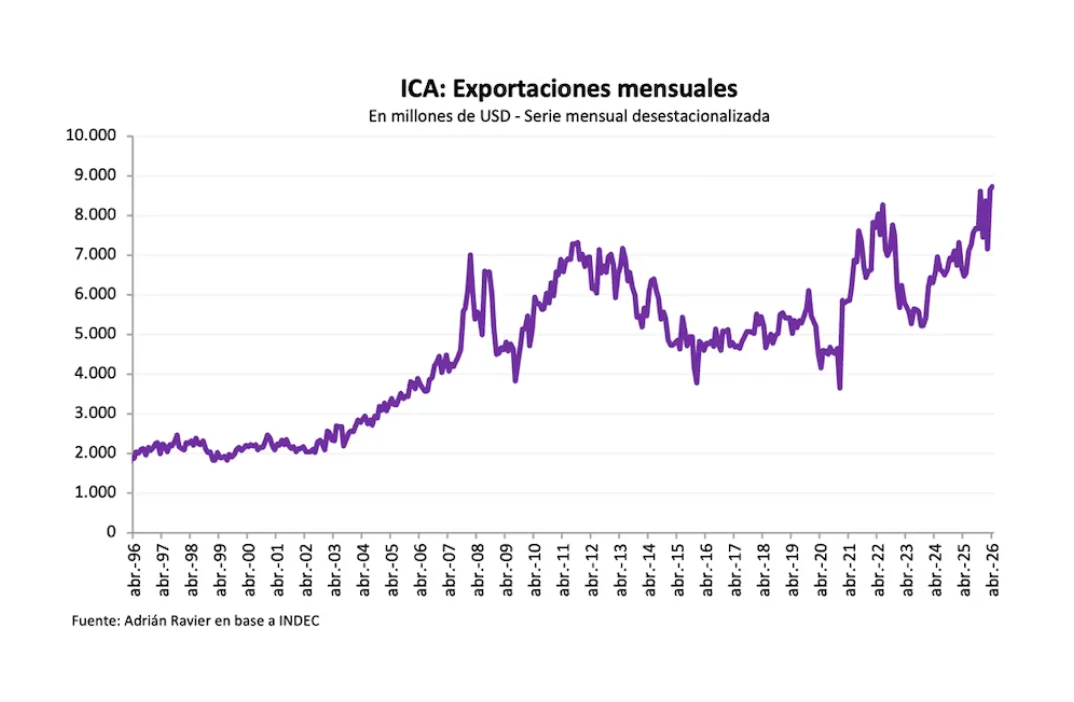
In parallel, the external sector began to consolidate as one of the main drivers of growth. During April 2026, exports totaled USD 8.914 billion and marked a historical record for a single month.
Imports reached USD 6.204 billion, resulting in a trade balance surplus of USD 2.711 billion.
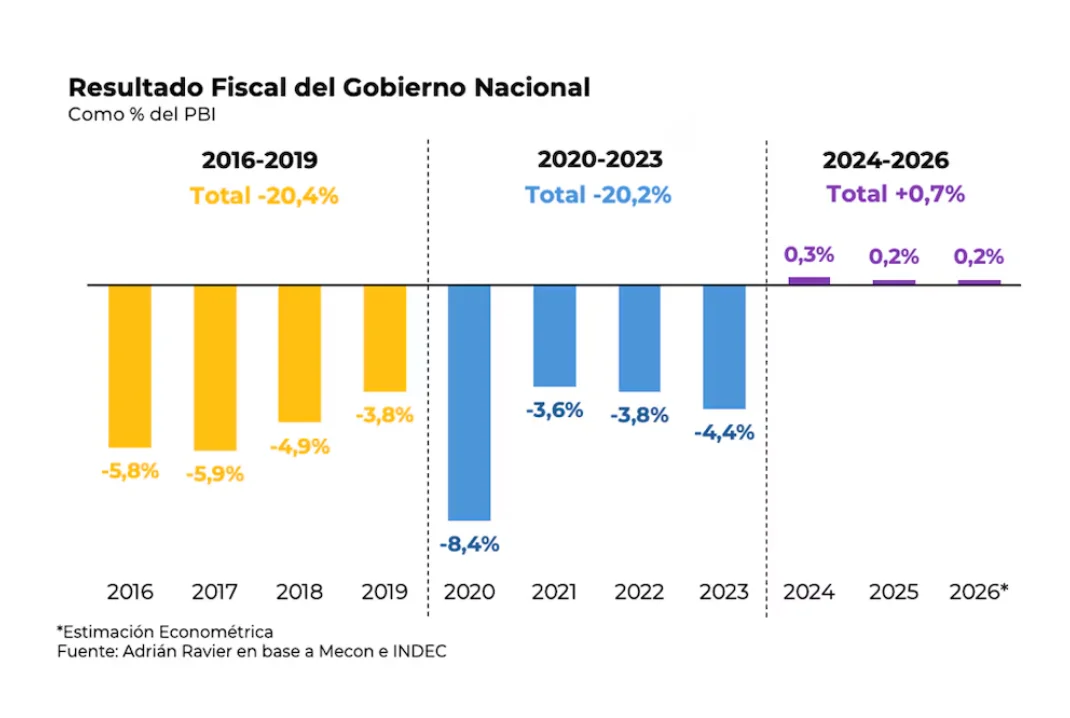
The evolution of foreign trade is also supported by macroeconomic balances that for years seemed difficult to achieve: fiscal and current account surpluses in the balance of payments at the same time, along with a strong reduction in monetary issuance intended to finance the Treasury.
Signs of normalization: decrease in country risk, IMF support, and lower interest rates
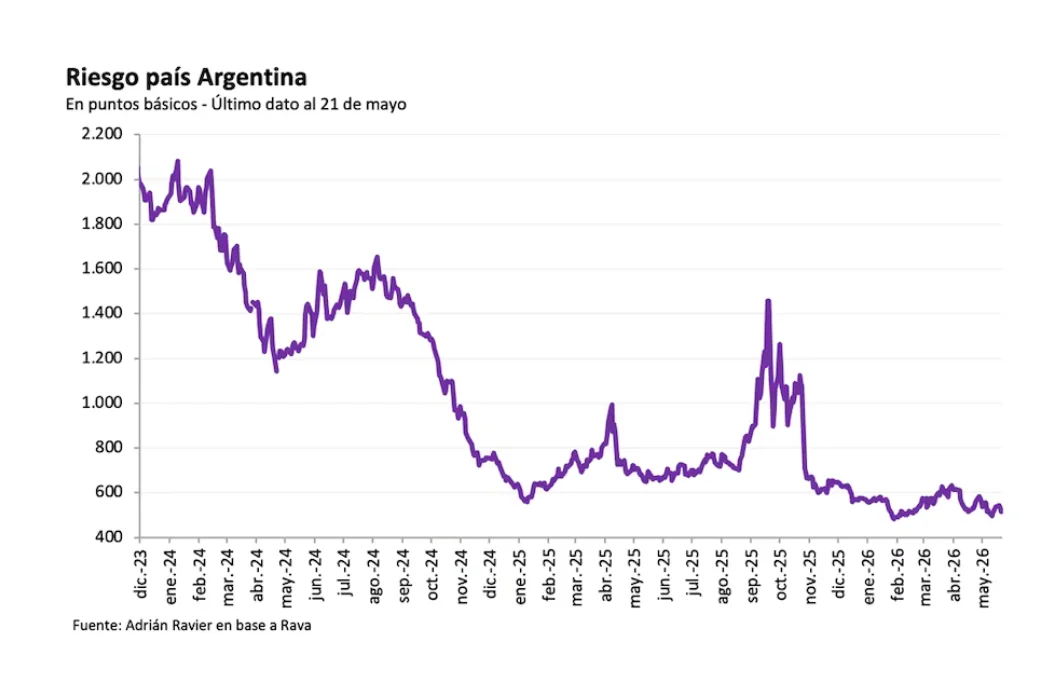
The economic regime change also began to manifest itself in international perception. Credit rating agencies raised Argentina's credit outlook, while the International Monetary Fund approved the second review of the current program.
The market began to value a macroeconomic consistency that the country had lost over several decades.
One of the main turning points was observed in the reduction of interest rates and the recovery of credit. Since the end of February, rates began a process of sustained and endogenous decline. Currently, the Tamar rate, one of the most important references in the financial system, has remained stable around 20% nominal annual for over a month.
This context of lower rates and greater macroeconomic stability began to generate better conditions for private sector financing, whose expansion had moderated during the electoral period and now shows signs of reactivation.
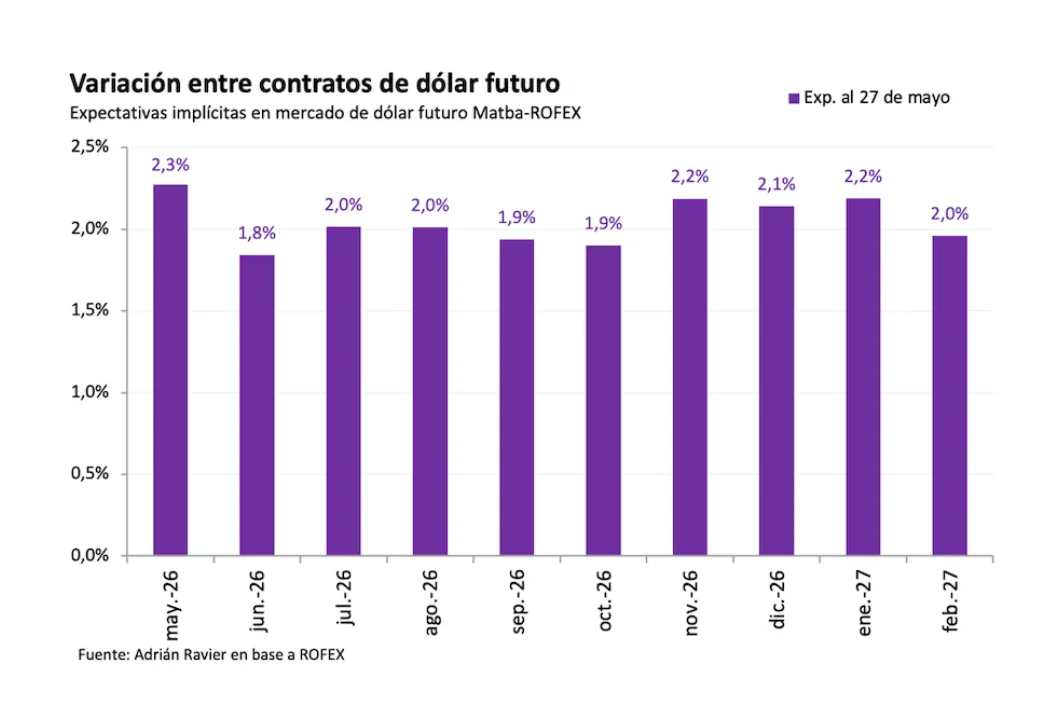
The stability of interest rates also had effects on the exchange rate: the perception of devaluation risk decreased, something that can be observed in the dollar futures market, which incorporates in its prices an expectation of exchange rate stability for the coming months.
Simultaneously, a process of genuine appreciation of the exchange rate continued, explained not by controls or discretionary interventions, but by a greater influx of capital mainly aimed at exporting sectors and medium- and long-term investment projects.
Within this scenario, the Central Bank moved beyond the management of foreign currency scarcity and began to steadily rebuild its international reserves. The accumulation of dollars now arises from the new macroeconomic balance and not from artificial restrictions applied to the exchange market.
With a declining inflation, lower volatility, and more predictable real rates, credit began to expand again and accompany the recovery of different sectors of the real economy.
Productivity and reforms: the space for convergence
Probably, one of the most important elements of this stage is that a considerable part of the structural reforms recently applied has not yet shown all its effects on investment and productivity.
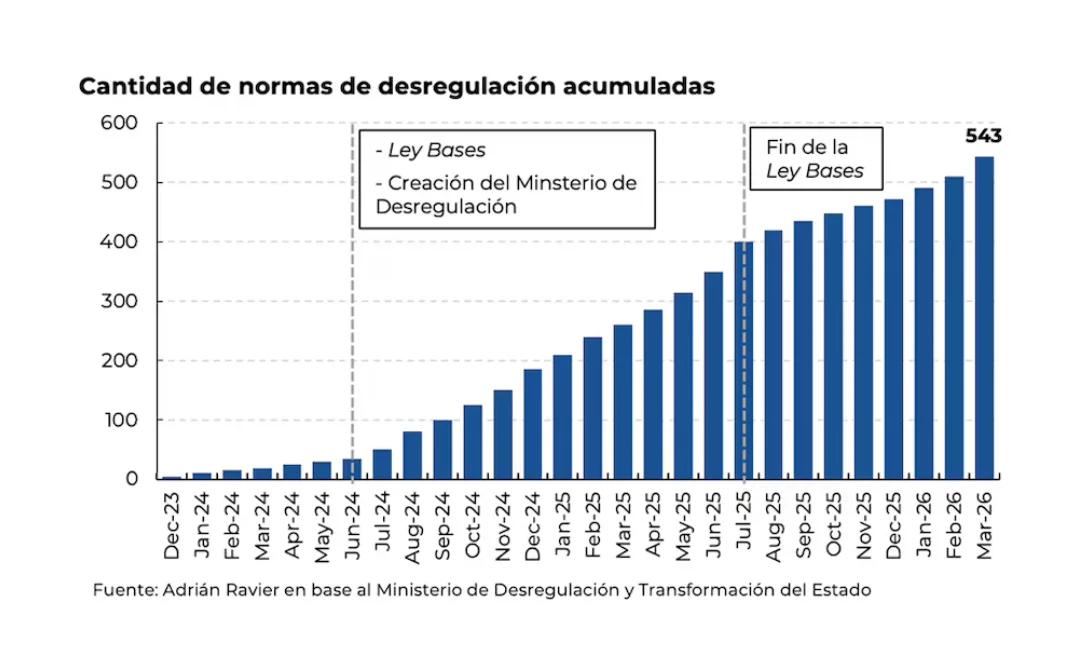
The deregulations, the progressive opening of sectors that historically remained closed, and the recomposition of economic incentives create a different landscape than that observed over the last twenty years. Additionally, Argentina starts from low levels of capitalization, productivity, and credit compared to other countries.
In this context, the potential for catch-up is relevant. The concept of economic catch-up describes the process by which a lagging country grows for an extended period at rates higher than those of developed economies and manages to reduce income, productivity, and quality of life gaps.
This phenomenon usually occurs when an economy conditioned by poor policies corrects its imbalances and begins to incorporate capital, technology, and institutional improvements. Under these circumstances, potential growth can be high, as the country starts from low levels of productivity and resource utilization.
Argentina retains abundant natural resources, competitive human capital, and sectors with high productivity potential. For a long time, these assets were limited by a disordered macroeconomy and inconsistent rules of the game.
The growth that has begun to be recorded has different characteristics from other recent expansionary cycles. It is not sustained by consumption financed with monetary issuance or by exchange rate lag, but by a combination of fiscal balance, monetary stability, investment, and growth in exports.
Those who consider that the current scenario represents only a cyclical rebound may be underestimating the magnitude of the ongoing transformation. The fundamentals that are beginning to solidify allow for thinking about a deeper process: the possibility that Argentina initiates a cycle of stability and sustained growth not seen in decades.