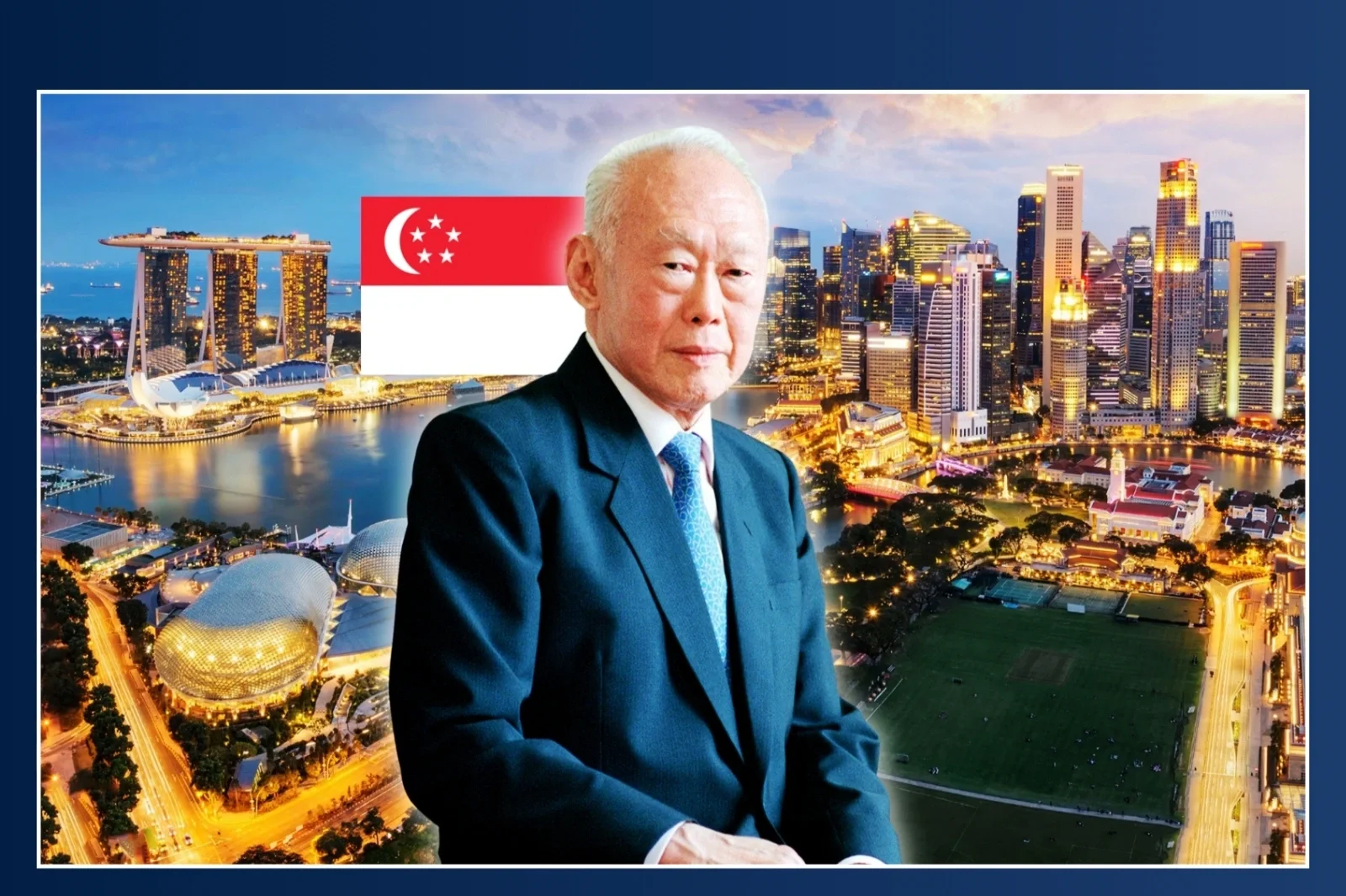

Singapore and Lee Kuan Yew: lessons for a growing Argentina

Singapore and Lee Kuan Yew: lessons for a growing Argentina
Imagen de Editorial Team
porEditorial Team
Argentina

The story of Singapore shows how economic openness, legal security, and investment in human capital transformed a small resource-less island into one of the most prosperous economies in the world

Nuevo
Agregar La Derecha Diario en
Compartir:

In 1965, when the Cold War was at its most intense, a tiny island south of the Malay Peninsula declared its independence. After more than a century as a British colony, and having suffered the brutal Japanese occupation during World War II, the Republic of Singapore took its first sovereign steps. Thus began one of the most significant success stories of the 20th century. A case that, in light of the recent approval of the free trade agreement between Mercosur and Singapore, is worth paying attention to.

According to official data, in just over sixty years, Singapore's GDP per capita rose from $1,300 to $141,000, the second highest in the world. Life expectancy increased from 67 to 84 years. Currently, the unemployment rate is almost nonexistent, and 90% of its residents are homeowners. Today, Singapore ranks 9th in the world on the Human Development Index, with a score of 0.949[1]. In summary, numbers that are hard to comprehend in a country like ours, which is struggling to emerge from a long decline.

The question inevitably arises: How did this nation of just 640 square kilometers, with no natural resources and surrounded by significantly more powerful nations, achieve such a feat? The answer has a name and surname: Lee Kuan Yew.

In 1959, at the age of 35, he became Singapore's first Prime Minister when the Empire granted the island a greater degree of autonomy as a precursor to emancipation. He quickly got to work, knowing he inherited control of a nation mired in poverty and that the British intended to leave them to their fate in a hostile world.
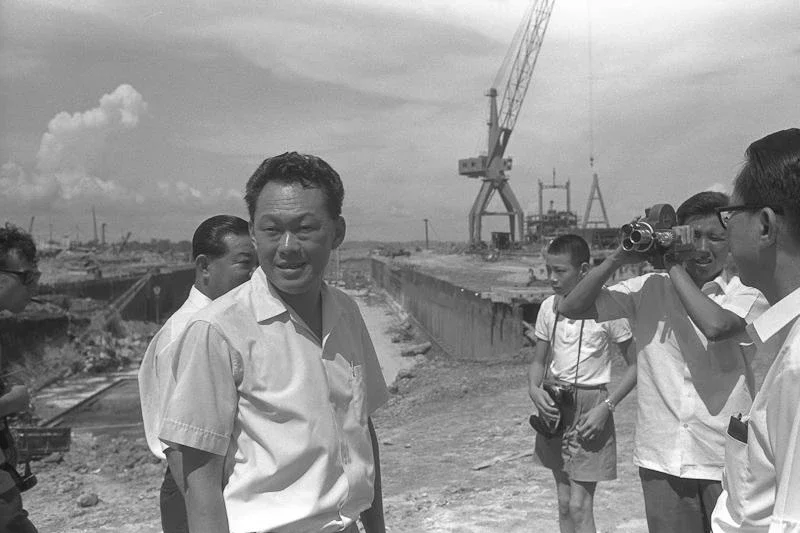
Lee Kuan Yew
Lee Kuan Yew

In 1960, he created the Housing and Development Board to replace the millions of precarious homes that made up the slums of the port city with apartment buildings. This was soon complemented by a key measure that allowed workers to use their accumulated savings from the Central Provident Fund (a mandatory retirement insurance established earlier by colonial authorities) to cover 20% of the down payment for a home, and pay the remaining mortgage balance in monthly installments over 20 years.

It is worth noting that, unlike pension systems like the Argentine one, where current active workers pay the pensions of retired workers, the CPF consists of an individual account made up of contributions from both the employee and the employer. That is, each worker accumulates capital during their working years that generates interest over time, until retirement when they can access their savings. This aims to “avoid shifting the burden of the current generation's welfare costs to the next generation,” as the leader expressed in his autobiography[2].

Another of his successes was the creation of the Economic Development Board in 1961, dedicated to attracting foreign direct investment concentrated in specific sectors such as ship dismantling and repair, metallurgical engineering, chemicals, and electrical equipment and appliances. They offered, among other things, tax exemptions and minimal bureaucracy. Their agents worked tirelessly, as if the survival of the nation depended on them, reaching out to companies worldwide to convince them to invest in Singapore. This is comparable to the goal of President Milei's RIGI, which seeks to boost investments in vital sectors for our country's infrastructure and balance of payments.

Sometimes, it took forty or fifty calls to arrange a visit. Once a potential investor landed, the government did everything possible to make a good first impression, to the point of “ensuring that the roads from the airport to their hotel and to my office were clean and well-kept, lined with shrubs and trees,” according to LKY himself. In this way, without saying a word, foreign visitors would know that Singaporeans were competent, disciplined, and trustworthy.

On the other hand, there is no development and stability without the full rule of law. In this regard, Singapore immediately adopted a pragmatic yet firm stance in combating crime, starting from a strong skepticism regarding the theory, so popularized in this hemisphere, that the criminal is a victim of society.
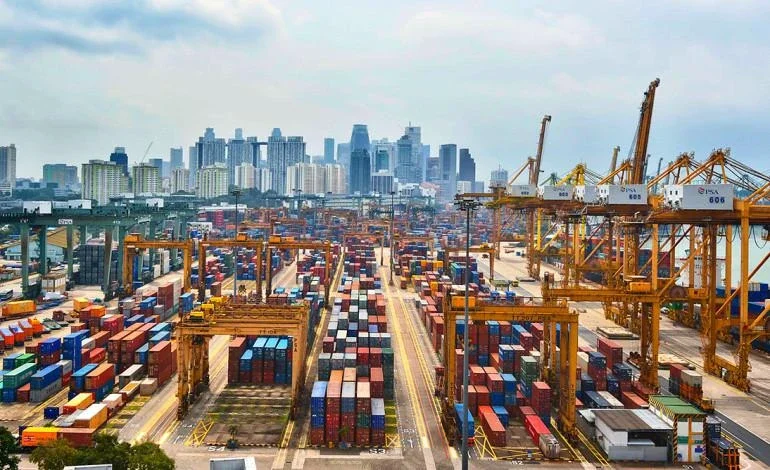
Port of Singapore
Port of Singapore

Their provisions, which include the death penalty for drug traffickers and corporal punishment through caning for certain offenses, have not been without controversy. Their “tough on crime” methodology has drawn protests from numerous international human rights organizations, such as Amnesty International, to which LKY always responded firmly: “I only care about how I am judged by the people I govern.”

In addition, there is a fundamental understanding of the role that human capital plays in the development of a country. Singapore had no oil, fertile land, or minerals. LKY understood this quickly: the only asset was its people, and thanks to that understanding, he made a controversial decision: to impose English as the working language over Mandarin, Malay, and Tamil, because he understood that connecting to the world was more important than linguistic identity. Investment in education was massive, and a meritocratic system was implemented that filtered and enhanced talent regardless of ethnic origin or social class. Today, Singapore leads international education rankings.


This opened the door to unprecedented developments for the time. Take, for example, drinking water: Singapore depended on Malaysia for almost all its drinking water, an existential vulnerability. Decades of investment in desalination and water recycling (the NEWater program) turned that weakness into total independence.

The same long-term spirit drove the creation of Singapore's international financial center. In 1968, LKY sent his chief economic advisor to London to meet with a senior executive from Bank of America. In a meeting room, in front of a large globe, his interlocutor explained the problem: financial markets followed the sun from Zurich to Frankfurt, from Frankfurt to London, from London to New York, and from New York to San Francisco. When San Francisco closed, the world was shrouded in a veil until nine in the morning Swiss time. "If we put Singapore in the middle," he said, "for the first time in history, we will have uninterrupted financial service twenty-four hours a day." LKY understood the opportunity and acted immediately: they abolished withholding taxes on non-resident deposits and launched the Asian dollar market.

But building an international financial center is not just a matter of tax incentives. It requires something harder to legislate: reputation. And reputation is built case by case, especially when it is costly to build. As we say in Argentina: trust goes up the stairs and down the elevator. The system that LKY built was robust from its inception, and that robustness was tested in uncomfortable moments.

In the mid-1970s, Jim Slater, one of the most reputable investors in the City of London, had used Haw Par Brothers, a company listed on the Singapore stock exchange, to drain assets toward his own companies to the detriment of shareholders. The question that landed on LKY's desk was politically delicate: Should he investigate a big name from London? His answer was yes, without hesitation. The British establishment ended up protecting Slater and did not extradite him, but Singapore had sent the message it wanted to send: the law is enforced without exceptions.

The same principle was applied when the Bank of Credit and Commerce International, backed by royal houses from the Gulf and present in 73 countries, applied for a banking license in Singapore. They were denied three times, even when the bank mobilized none other than former Prime Minister Harold Wilson as a lobbyist. When the BCCI collapsed in 1991 in the largest fraud in banking history, with eleven billion dollars in creditor claims, Singapore lost not a cent. As LKY wrote, the foundations of the financial center were "the rule of law, an independent judiciary, and a stable, competent, and honest government." When the Asian financial crisis devastated currencies and stock markets across the region in 1997, no Singaporean bank faltered.

If we could reduce the life and work of this true modern hero to one phrase, it would be “I always try to be right, not politically correct,” words worthy of someone who dedicated his entire life to serving his people, not to political speculation. His greatest lesson for all of us who want a better country is clear: doing things right has its rewards, and greatness awaits anyone willing to stay the course in the most difficult times.

Today, Singapore represents one of the most dynamic and advanced economies in the world, basing its prosperity on high-value manufacturing and a services sector that accounts for nearly 75% of its GDP. Manufacturing, which contributes between 20% and 25% of the gross domestic product, is experiencing a boom driven by semiconductors, electronics for artificial intelligence, and biomedicine, while wholesale trade, finance, maritime and air transport, and logistics serve as fundamental pillars thanks to its strategic position in Southeast Asia.

President Milei, who in terms of conviction has nothing to envy from the Singaporean leader, has shown us the way, and the Argentines have given their vote of confidence. A commitment to an unprecedented fiscal surplus, thousands of deregulations, and a vocation for trade openness are clear evidence of this government's transformative zeal. Adding to this the most reformist Congress in Argentine history, there is no doubt that we too can, like Singapore, move from the Third World to the First.


[1] The index is based on the measurement of three main factors: life expectancy, education level, and quality of life. Argentina ranks 47th, the United States 17th.

[2] From Third World to First: The Singapore Story: 1965-2000


La Derecha Diario logo
ESX logoInstagram logoYouTube logoTikTok logoFacebook
ARGENTINABOLIVIAECUADORISRAELMEXICOURUGUAYDERECHA DIARIO TV
  • ES
    XInstagramYouTubeTikTokFacebook
  • DERECHA DIARIO TV
  • Secciones
  • ARGENTINA
  • BOLIVIA
  • ECUADOR
  • ISRAEL
  • MEXICO
  • URUGUAY
  • Países
  • La Derecha Diario logoLA DERECHA DIARIO
  • La Derecha Diario México logoLA DERECHA DIARIO MÉXICO
  • La Derecha Diario Uruguay logoLA DERECHA DIARIO URUGUAY
  • La Derecha Diario Ecuador logoLA DERECHA DIARIO ECUADOR
  • La Derecha Diario Israel logoLA DERECHA DIARIO ISRAEL
  • La Derecha Diario Estados Unidos logoLA DERECHA DIARIO ESTADOS UNIDOS
  • Temas
  • GUERRA EN IRÁN
  • El Diario
  • QUIENES SOMOS
  • AUTORES
  • PUBLICIDAD
  • DONAR
La Derecha Diario logo
TwitterInstagramYouTubeTikTokFacebook
Derecha Diario TV

Nosotros

  • Quienes Somos
  • Autores
  • Donar

Privacidad

  • Protección de datos
  • Canales
  • Sitemap
  • RSS

Contacto

  • info@derechadiario.com.ar
PUBLICIDAD

Noticias relacionadas

Barcelona Grand Prix: Hamilton returned to victory and ended Mercedes' streak; Colapinto finished eighth

Barcelona Grand Prix: Hamilton returned to victory and ended Mercedes' streak; Colapinto finished eighth

Chaos in New York after the Knicks' victory: destruction, fires, and arrests

Chaos in New York after the Knicks' victory: destruction, fires, and arrests

María Becerra revealed the health drama she went through for years: “There was a real possibility that I wouldn’t survive”

María Becerra revealed the health drama she went through for years: “There was a real possibility that I wouldn’t survive”

Excellent: Israel resumed the offensive against Hezbollah in Lebanon

Excellent: Israel resumed the offensive against Hezbollah in Lebanon

The Smile of Evil

The Smile of Evil

The CIA is said to have provided the key intelligence to eliminate the terrorist Niño Guerrero

The CIA is said to have provided the key intelligence to eliminate the terrorist Niño Guerrero