










Vicente Fidel López continues: “And indeed, the influence and power transferred to the men of Cádiz were synonymous, in Buenos Aires, with the influence and power of the reactionary party that had been defeated by the Patricians on the battlefield, and by The Representation of the Landowners, in the realm of science and justice. The Regency of Cádiz was, therefore, as odious and as insulting as could be imagined for the aspirations and rights that exalted our public spirit at that moment.
This coincidence was, for Spain, the last of its misfortunes in the River Plate. In the irritability of the passions stirred by events, everyone remembered that from the first appetites with which the essentially productive and commercial nature of the River Plate provinces had revealed itself: when Buenos Aires and Córdoba only asked for permission for two small ships to enter per year, and two hundred tons of return in agricultural products, the Commerce and the Consulate of Cádiz had been relentless in denying it in the name of the monopoly they enjoyed in the supply of the Two Fleets. Cádiz had not lost a moment or opportunity to oppose with all its influence the franchises that Buenos Aires had claimed, however small they were: and this dark tradition of economic and social tyranny had created deep resentments, which, as the River Plate had gained, through the strength of its territory and geographical position, social vigor and wealth, had intensified the antipathies of the children of the country against that port of Spain, to which they attributed all the responsibilities and injustices of the Colonial Regime.
For the antagonism to be mortal and supreme, Cádiz had, at this moment, a living and acting representative in Buenos Aires, Don Martin de Alzaga and his party. Recognizing the Regency and yielding to it was to renounce the victory of January 1, 1809, and submit to the power of the reaction. Impossible!”
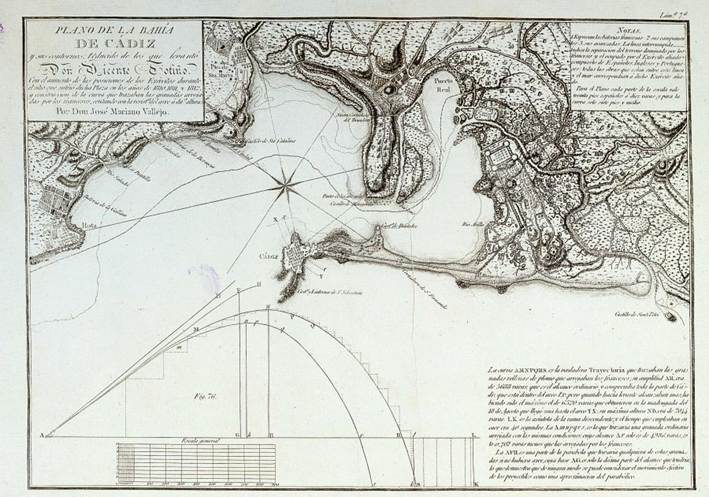
Then, fate wanted the last Spanish government of resistance in the Península to be established precisely in Cádiz, a city then detested in the River Plate. Cádiz was held responsible for the delay and colonial subjugation of centuries. Perhaps, if the Hispanic resistance had concentrated in a different locality, the events of May would not have unfolded with the determination that they did.
Manuel Belgrano, in his Autobiography, recounts: “Many and lively were our efforts to unite spirits and proceed to remove the authorities, which had not only expired with the events of Bayonne but were now expiring, since our recognition of the Central Junta ceased with its dissolution, a recognition the most iniquitous that had begun with the arrival of the wicked Goyeneche, sent by the indecent and ridiculous Junta of Seville. It is not surprising, then, that there was not a Spaniard who did not believe himself to be the Lord of America, and the Americans looked at them then with little less astonishment than the Indians at the beginning of their horrific massacres called conquests.”
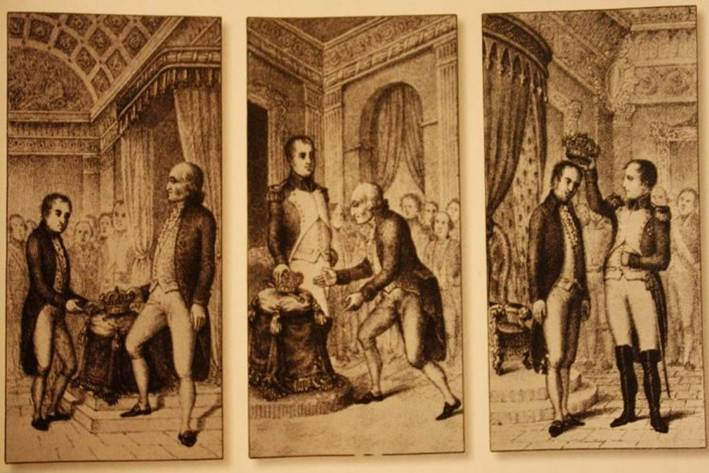
Engraving showing the successive abdications to the Spanish throne made in Bayonne, at the behest of Napoleon Bonaparte, who ends up crowning his brother José as king
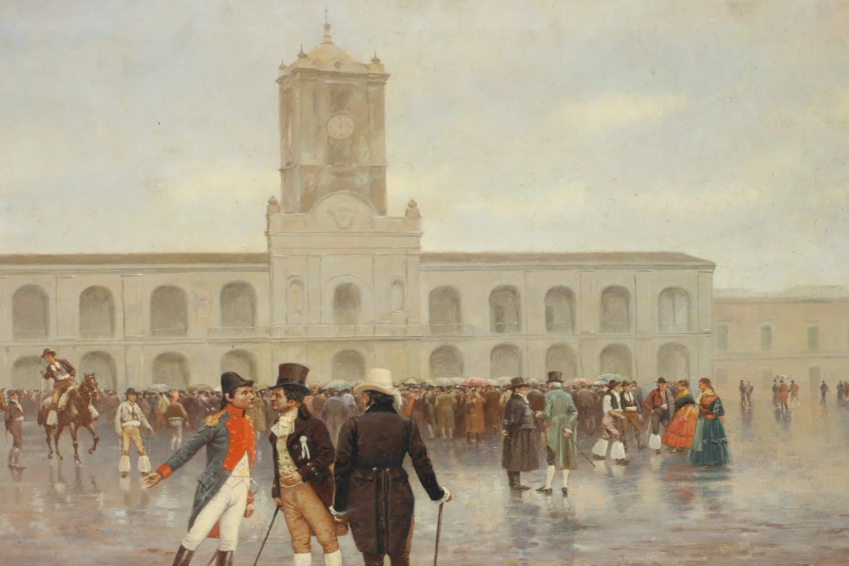
The stage was set for the upcoming events that would unfold during the Week of May.