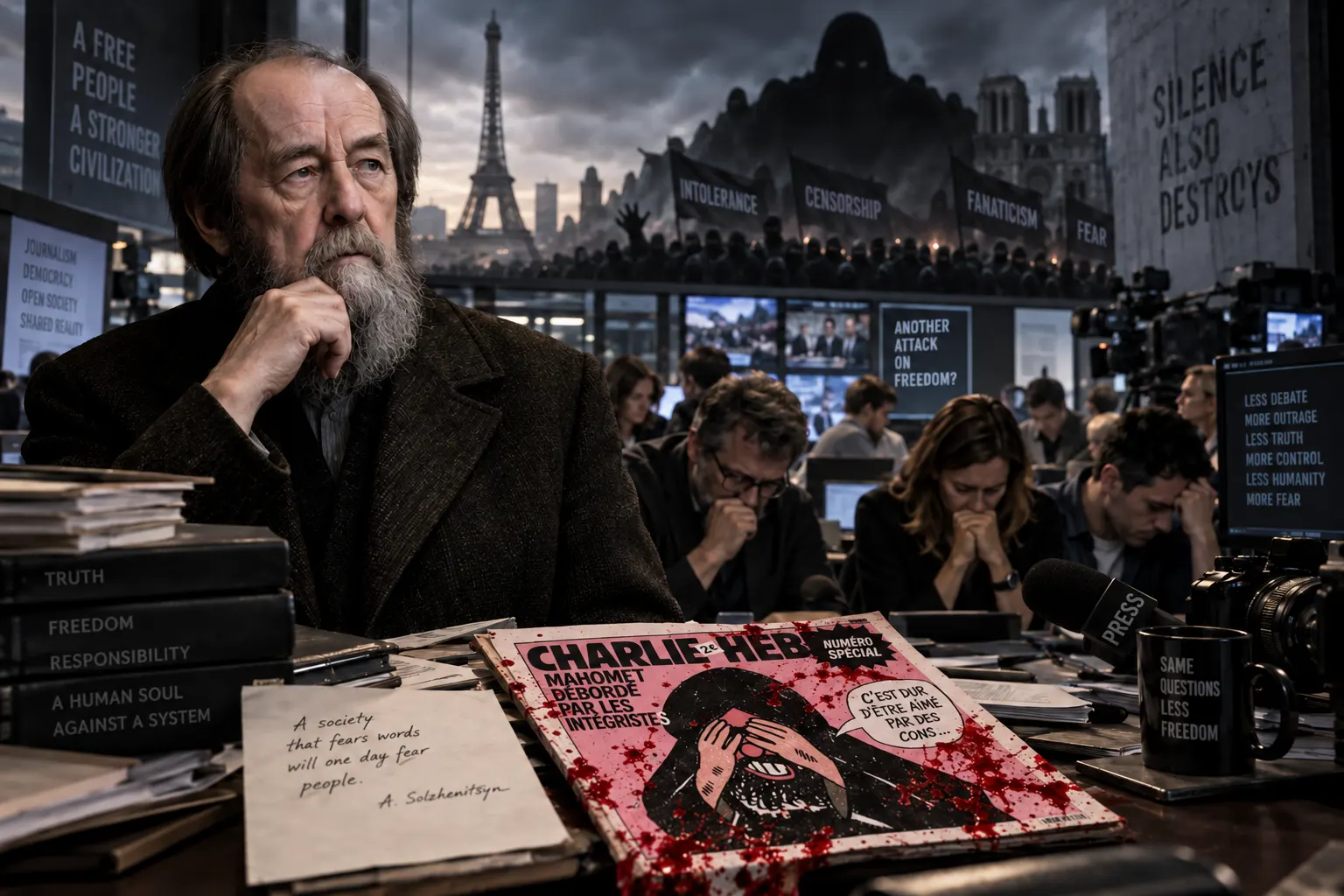





On June 8, 1978, Alexandr Solzhenitsyn spoke at Harvard. Four years earlier, the USSR had expelled him; before that, eight years in camps. In front of the gathered American elite for graduation, he delivered his famous speech about the decline of courage in the West. For him, the West has everything (freedoms, prosperity, rights) and no longer has the will to use it to face reality and call evil by its name.
For Solzhenitsyn, the problem was not direct censorship, but the free press, which participates in the decline of courage due to intellectual conformity. Almost 50 years later, that diagnosis seems more relevant than ever.
Comfort as a Dissolver
His reproach was not the lack of freedom of expression, but its disuse. A press that judged more conformist than the one it had left behind; not due to state censorship, but because of a diffuse fear of upsetting the spirit of the age.
Elites that preferred procedural prudence over moral judgment, even confusing legality with courage. That cowardice does not need tyrants. It is enough with comfort and social fear.
Charlie Hebdo as Revealer
On January 7, 2015, twelve people were killed at Charlie Hebdo over some drawings. No Western newsroom was then directly threatened.
And yet, within hours, the New York Daily News pixelated the cartoons; CNN refused to air them and asked its journalists to describe them on air; the Telegraph withdrew the cover; the Associated Press removed it from its archive, citing an old policy against “deliberately provocative” images.



