One of the details that caught the most attention is that several parts of the interface clearly resemble ChromeOS, Google's current operating system for Chromebooks.
Google may have suffered a significant leak hours before its Android Show event. A 16-minute video began circulating on Telegram showing Aluminium OS in action, the supposed new operating system based on Android designed for computers.
The leak was shared by the well-known insider Mystic Leaks and quickly started generating buzz among users and specialized media, as it would showcase the future replacement or evolution of ChromeOS with an experience much closer to traditional Android.
The leak was shared by the well-known insider Mystic Leaks.
What Aluminium OS Would Be Like, the New Android for Notebooks
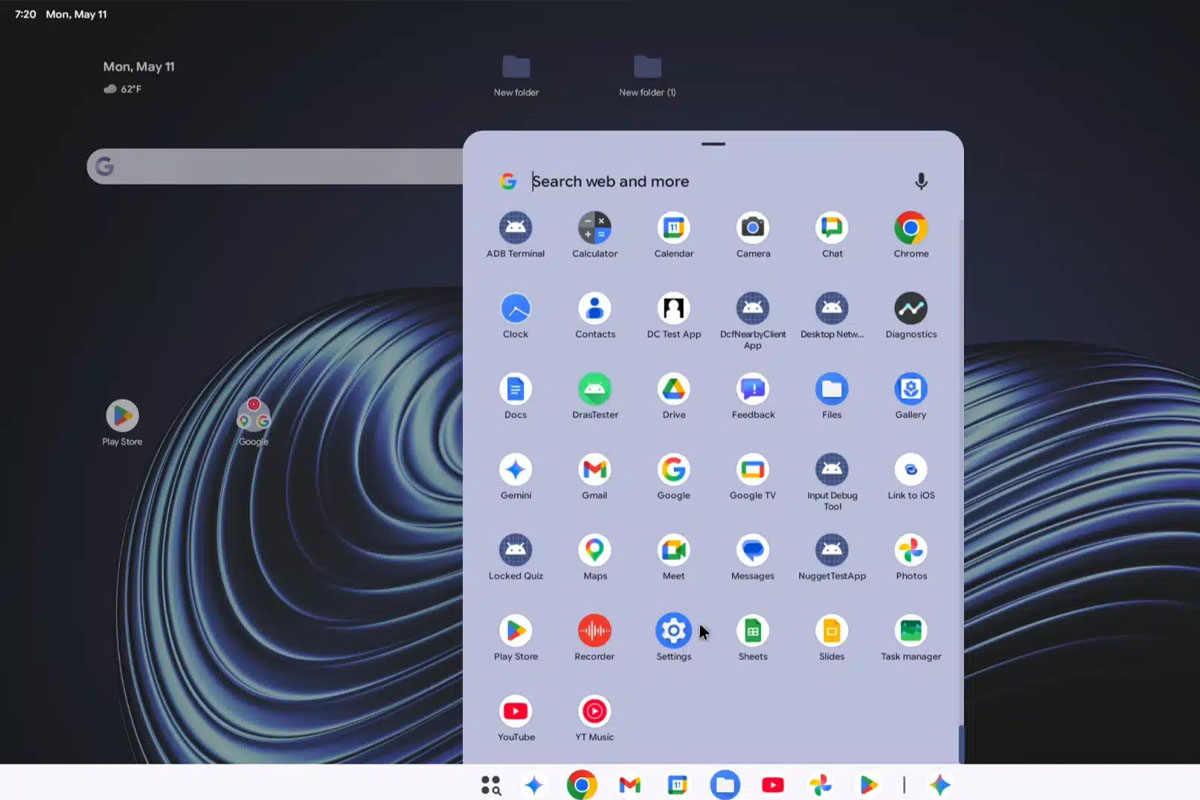
According to the leaked images, Aluminium OS operates on a base of Android 17 specifically adapted for large screens and notebooks. The video starts with a classic Android loading screen and then shows the entire initial setup process of the device.
The interface maintains a very similar aesthetic to the stock Android seen on Pixel phones, although completely redesigned for desktop.
Among the most important changes are:
Desktop-style taskbar
Icons directly on the desktop
Integrated Google search on the main screen
The bottom bar, quick access to applications, and the design of the app drawer maintain a fairly similar logic, although now with a much stronger integration of Android and its mobile applications.
The system is very reminiscent of ChromeOS.
In the settings menu, the label “Android version 17” even explicitly appears, something that further reinforced theories about a possible unification between Android and ChromeOS.
What Google Seeks with Aluminium OS
Although Google has not officially confirmed the existence of Aluminium OS, rumors about a project to bring Android fully to the PC environment have been circulating for some time.
The idea would be to compete more directly against Windows, macOS, and the new devices powered by artificial intelligence, also leveraging the enormous ecosystem of Android apps.
What is Google looking for with Aluminium OS?
Everything indicates that the company aims to build a hybrid experience between notebook and tablet, with full support for mobile applications, desktop functions, and tools powered by Gemini AI.