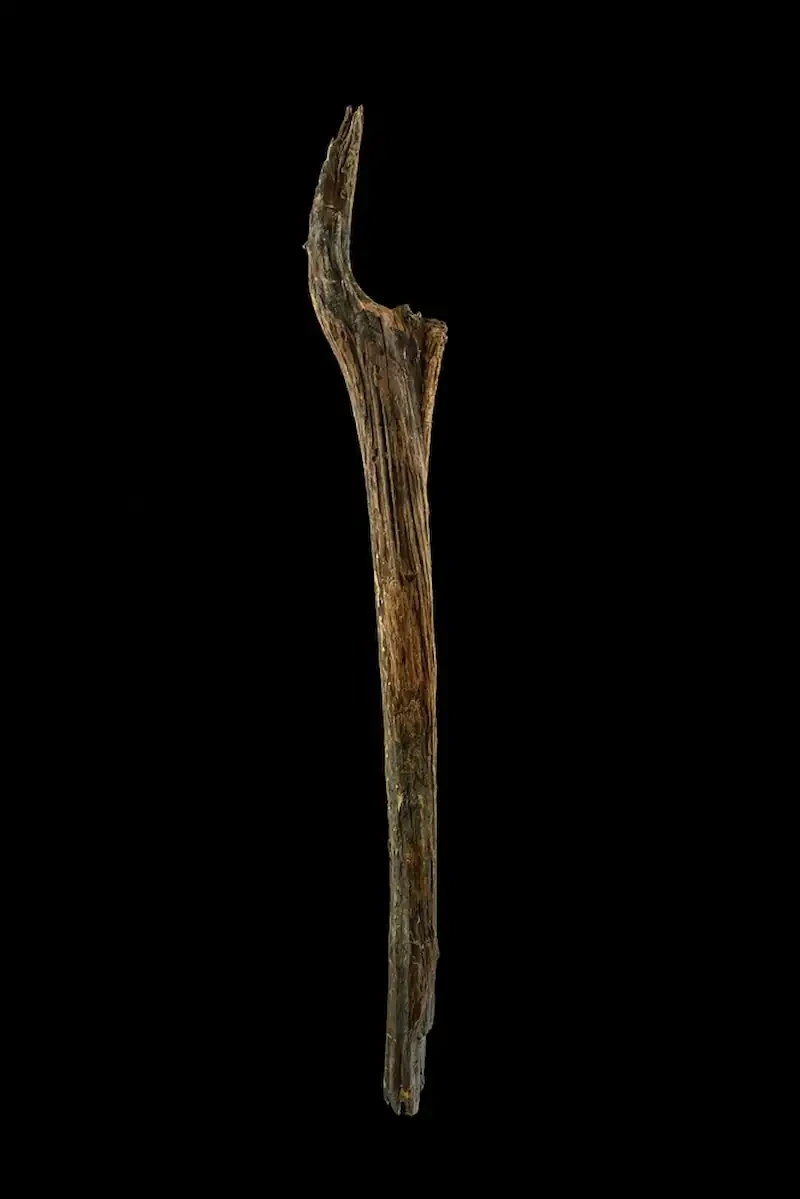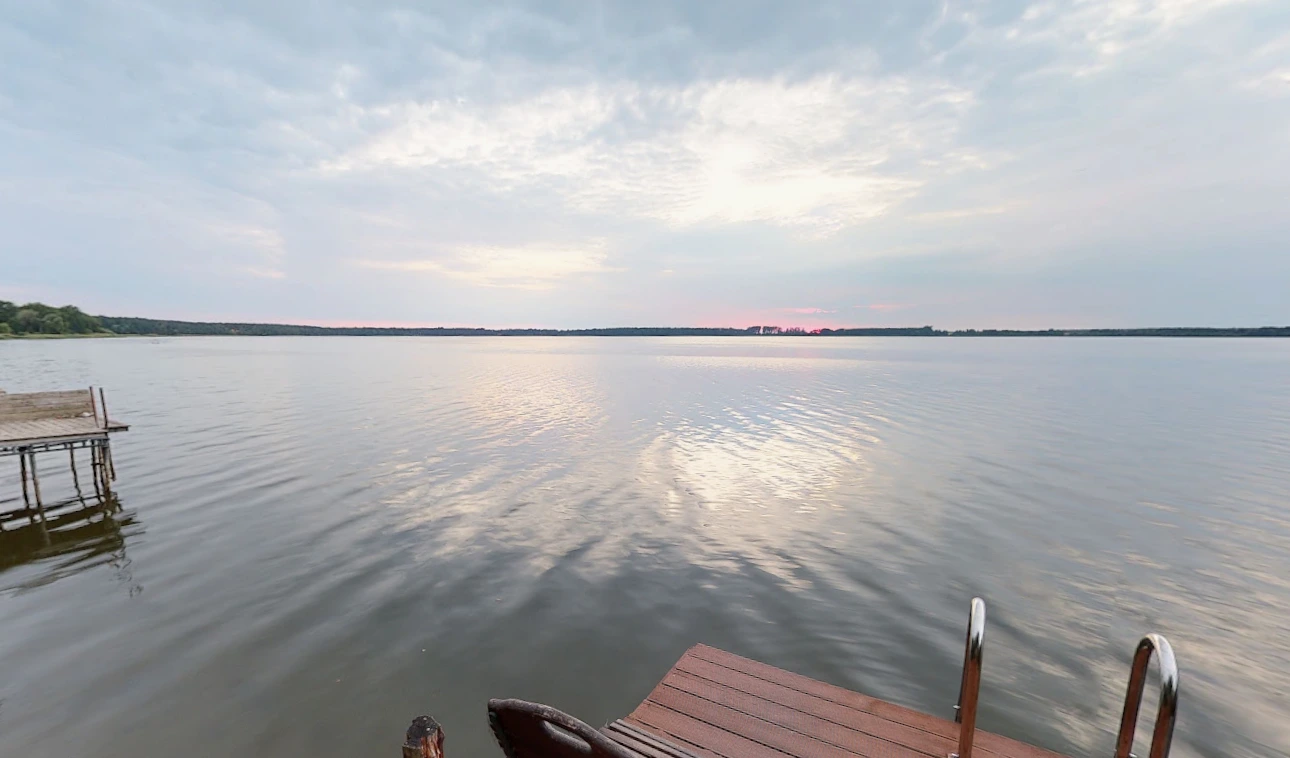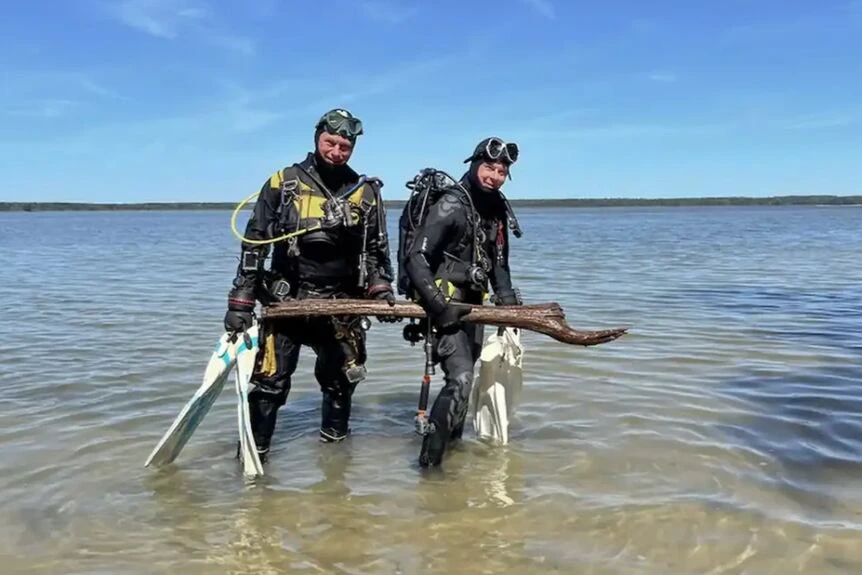

German archaeologists recovered wooden pieces up to 10,500 years old from Lake Arendsee that show clear signs of cutting and modification made by humans. The finding, deemed exceptional, corresponds to the Mesolithic period, when communities in Central Europe lived by hunting, gathering, and fishing, without yet being sedentary farmers.
The remains were uncovered during underwater archaeology campaigns conducted by the Landesamt für Denkmalpflege und Archäologie of Saxony-Anhalt over several years in this body of water in northern Germany. Among the objects, a post about 1.60 meters tall stands out, preserving signs of work, and split planks up to 1.30 meters long, in addition to other fragments that are still being analyzed.
The rarity of the discovery lies in the fact that organic material of such antiquity is almost never preserved. Therefore, these woods offer a rare opportunity to study how Mesolithic groups utilized their surrounding environment.
So far, researchers have not been able to determine with certainty what the pieces were used for. One hypothesis suggests that the post and the planks were part of dwellings or other structures built by hunter-gatherers. They could also correspond to constructions of an unknown function.

A Possible Change in Perspective on the Mesolithic
The distribution of the remains and future studies of the site will be key to establishing what type of activity took place there. Until now, evidence of constructions from this period in Central Europe was much more limited: they were mainly known through marks or alterations preserved in the soil, and not through relatively complete wooden structures.
If investigations confirm that the pieces belonged to permanent constructions or to spaces of intensive use, the finding could change the understanding of the degree of organization of these groups and how they transformed the places where they lived. The temporal difference is also significant: these are structures about 10,500 years old, approximately 3,000 years before the arrival of the first farmers with their longhouses in Central Europe.