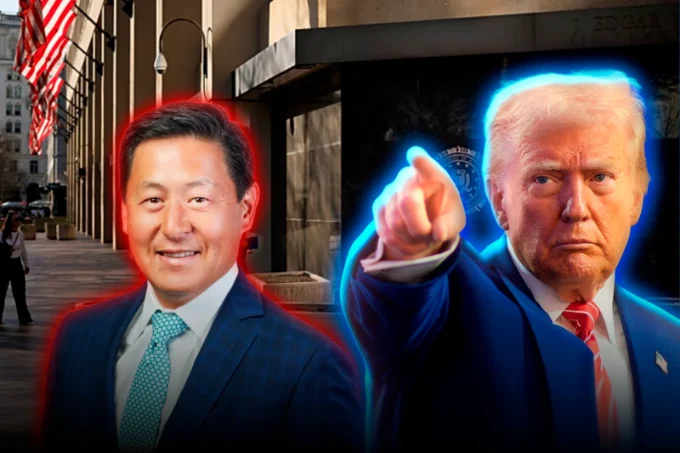

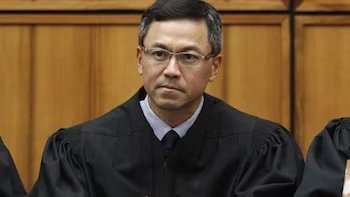
The federal Democratic judge Theodore D. Chuang, appointed during the administration of leftist former president Barack Obama, is facing strong criticism after blocking the Trump administration's plan to move the FBI headquarters to the Ronald Reagan Building, a decision seen as another example of judicial resistance to the current administration's initiatives.
Chuang, a judge of the United States District Court for the District of Maryland, ruled on Monday that the Trump administration cannot proceed with canceling the previous project and moving the FBI headquarters. In a 47-page opinion, he concluded that the administration's decision to redirect more than $323 million allocated by Congress was ''arbitrary and capricious'' and contrary to the law.
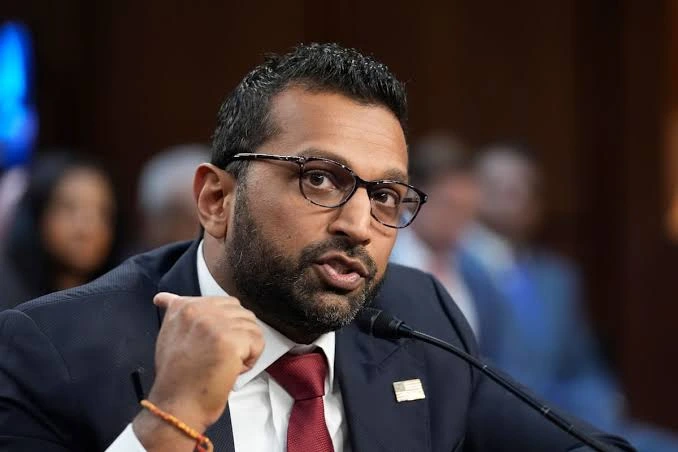
The case began after Maryland sued the FBI director, Kash Patel, and the agency. The state accused the Trump administration of attempting to illegally sabotage the project approved in 2023 and diverting funds that Congress had allocated for the construction of a new headquarters.
However, the Trump administration argues that moving to the Reagan building represents a considerably more efficient alternative for taxpayers. Patel stated in December that Americans were about to incur a cost close to $5 billion for a new headquarters that would not be completed until 2035. According to the FBI director, the government decided to abandon that project and use an existing federal building, which would save billions and allow the transition to begin immediately.
Chuang's decision has drawn criticism partly due to his political and judicial history. Federal Election Commission records show that before becoming a federal judge he made numerous contributions to Democratic Party candidates and organizations. Between 2004 and 2013, he contributed nearly $6,000 to figures such as Barack Obama, Tammy Duckworth, and John Kerry, as well as to Democratic committees. There are no records of political contributions from Chuang since 2013.
Although his contributions occurred before his judicial appointment in 2014 and do not in themselves constitute evidence of bias, his critics argue that his political history deserves attention when combined with several judicial decisions that affected Trump’s policies.
One of the most cited precedents occurred in 2017 when Chuang ruled against the first version of the travel restrictions pushed by Trump for citizens of Iran, Libya, Somalia, Sudan, Syria, and Yemen. The decision made the judge one of those who intervened early against one of the main security and immigration initiatives of the Republican president.