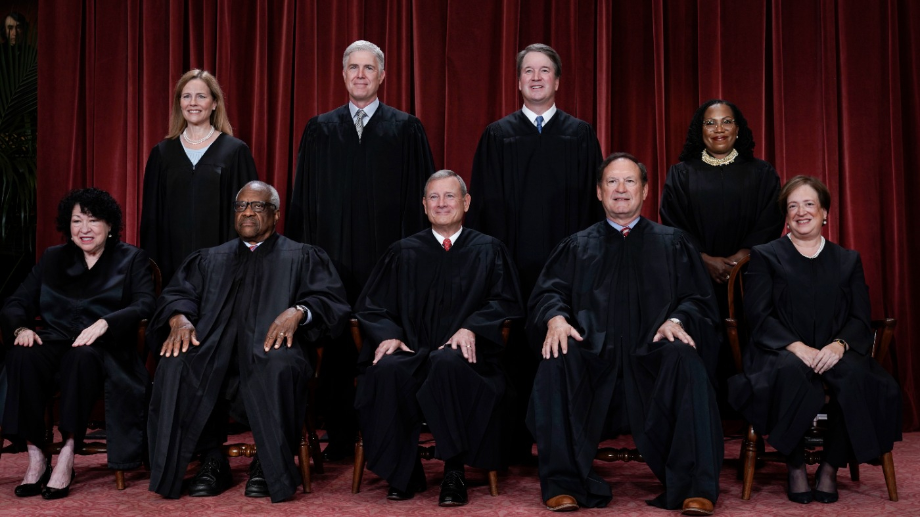
The U.S. Supreme Court rejected Virginia's attempt this Friday to reinstate a new electoral map for the House of Representatives that would have given Democrats the chance to gain up to four additional seats in a deeply divided Congress. The decision marks a new chapter in the growing national dispute over redistricting and consolidates the court's stance of avoiding last-minute changes to electoral processes that are already underway.
The ruling represents a significant legal victory for those defending the stability of the electoral system against unfair modifications pushed during the political season by the Democratic Party. The Supreme Court decided not to intervene in the ruling previously issued by the Virginia Supreme Court, which had invalidated a recent constitutional amendment narrowly approved in the state.
The controversy arose after the state legislature, controlled by the Democratic Party, pushed for a reform aimed at modifying the boundaries of several congressional districts. The goal was to respond to the advantages that Republicans had gained in states like Texas, Florida, North Carolina, and Ohio through new electoral maps favorable to the Republican Party.
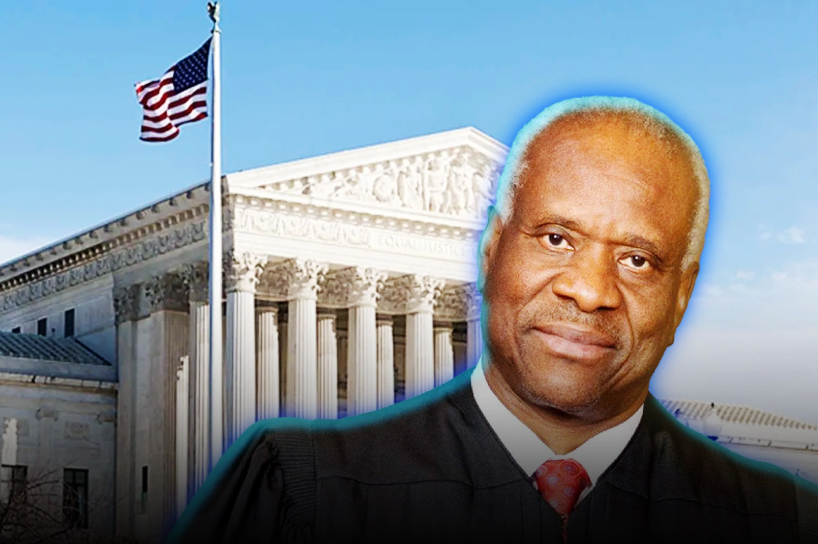
The Supreme Court of the United States halted a Democratic attempt to illegally redraw electoral districts in Virginia.
However, the Virginia Supreme Court concluded, in a 4-3 vote, that the legislature acted incorrectly by initiating the process to include the amendment on the ballot after early voting for last year's general elections had already begun. According to the state court, allowing constitutional modifications once the voting process had started violated basic principles of legal certainty and electoral stability.
The Democrats attempted to take the case, which cost Virginia residents around 70 million dollars, to the federal Supreme Court arguing that the state court had misinterpreted national precedents regarding elections and early voting. Their position held that, from a legal standpoint, an election does not conclude until the official voting day, and therefore, there was still room to approve constitutional changes while the polls remained open.
Nevertheless, the Supreme Court rejected that interpretation and chose not to intervene. Although the court did not issue an extensive explanation, its decision was seen as a reaffirmation of the principle that states have broad autonomy to manage their own electoral processes and resolve internal constitutional disputes without unnecessary federal interference.
The Democratic movement cost the electorate in Virginia around seventy million dollars.
Election law specialists considered that the ruling reinforces the need to maintain clear and predictable rules during electoral processes. Modifying districts or altering mechanisms of political representation when elections are already underway could create confusion among voters, electoral authorities, and candidates, in addition to affecting public trust in the democratic system.
The ruling also avoids a last-minute alteration in Virginia's electoral calendar. The state electoral commissioner, Steve Koski, had warned weeks earlier that it was essential to have a definitive judicial decision before last Tuesday to establish new district boundaries ahead of the primary elections scheduled for August 4. In the absence of a favorable resolution, the office of Democratic Governor Abigail Spanberger confirmed that the elections will be held using the districts originally approved in 2021.
The case is part of a much broader political battle unfolding across the United States over redistricting. President Donald Trump encouraged last year states governed by Republicans to redesign their electoral maps in a regulatory manner to maximize the Republican Party's chances in the House of Representatives.
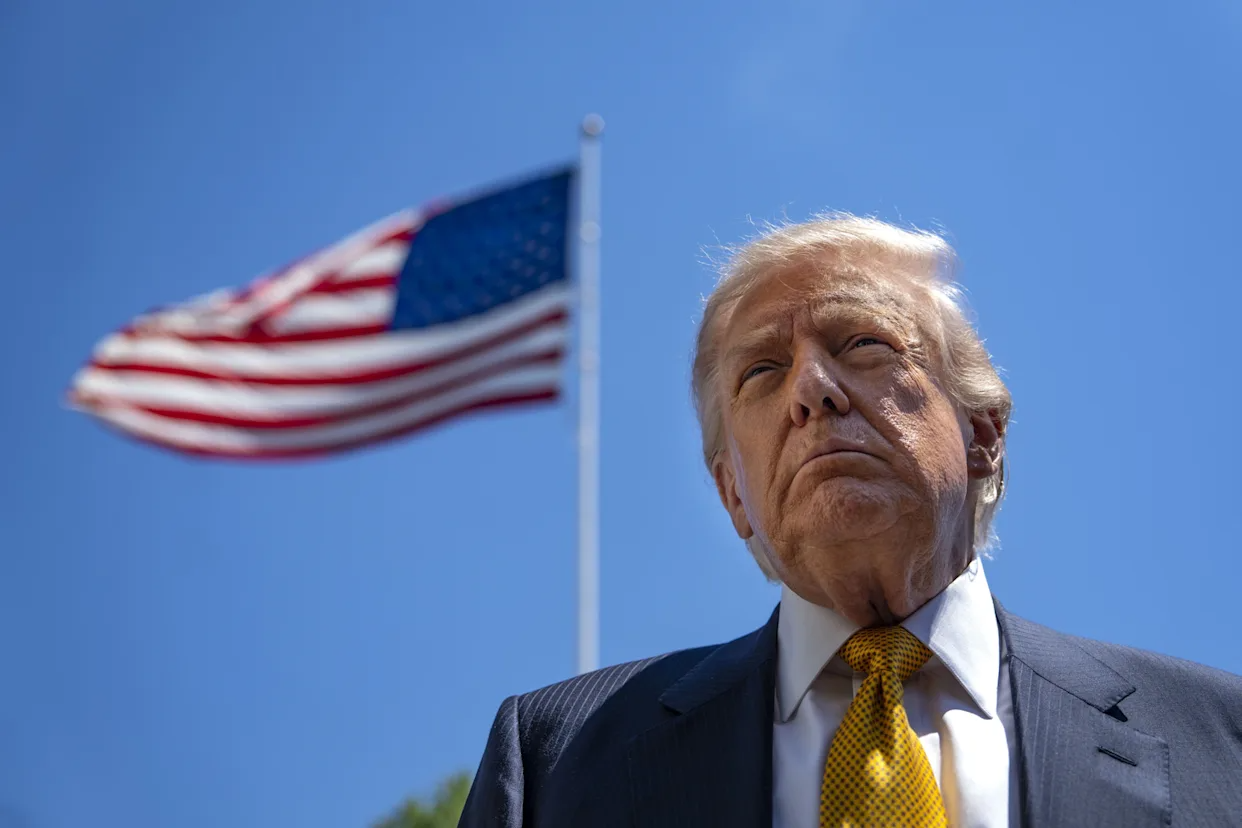
President Donald Trump encouraged Republicans to redraw electoral maps through legal means.
This process accelerated following a recent Supreme Court decision that reduced restrictions that previously limited certain changes in electoral districts. As a result, states like Alabama and Louisiana began to move forward with new maps more favorable to Republicans.
The Democrats hoped to partially balance that scenario through the reform pushed in Virginia. For several weeks, the approval of the amendment seemed to turn the national competition for electoral redistricting into a tie between both parties. However, the Virginia Supreme Court's decision ultimately dismantled that strategy.
Although Democratic leaders could use the ruling as a political argument to question a Supreme Court perceived by progressive sectors as leaning towards conservative positions, the decision also reinforces the idea that electoral rules should not be changed impulsively or under partisan pressure.
The Democratic governor of Virginia confirmed that the elections will be held using the maps approved in 2021.