In the midst of the serious political and social crisis that Bolivia is experiencing due to the blockades driven by sectors aligned with Evo Morales, eight countries in the region issued a joint statement in support of the constitutional government of Rodrigo Paz and warned about the humanitarian impact that the roadblocks and violent protests are already causing.
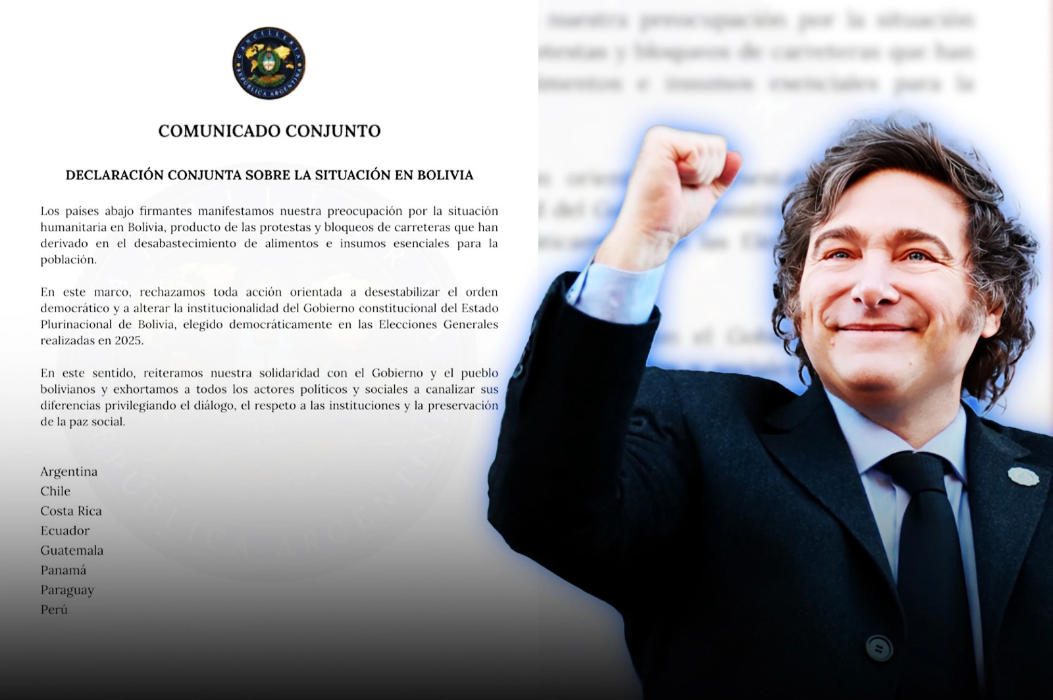
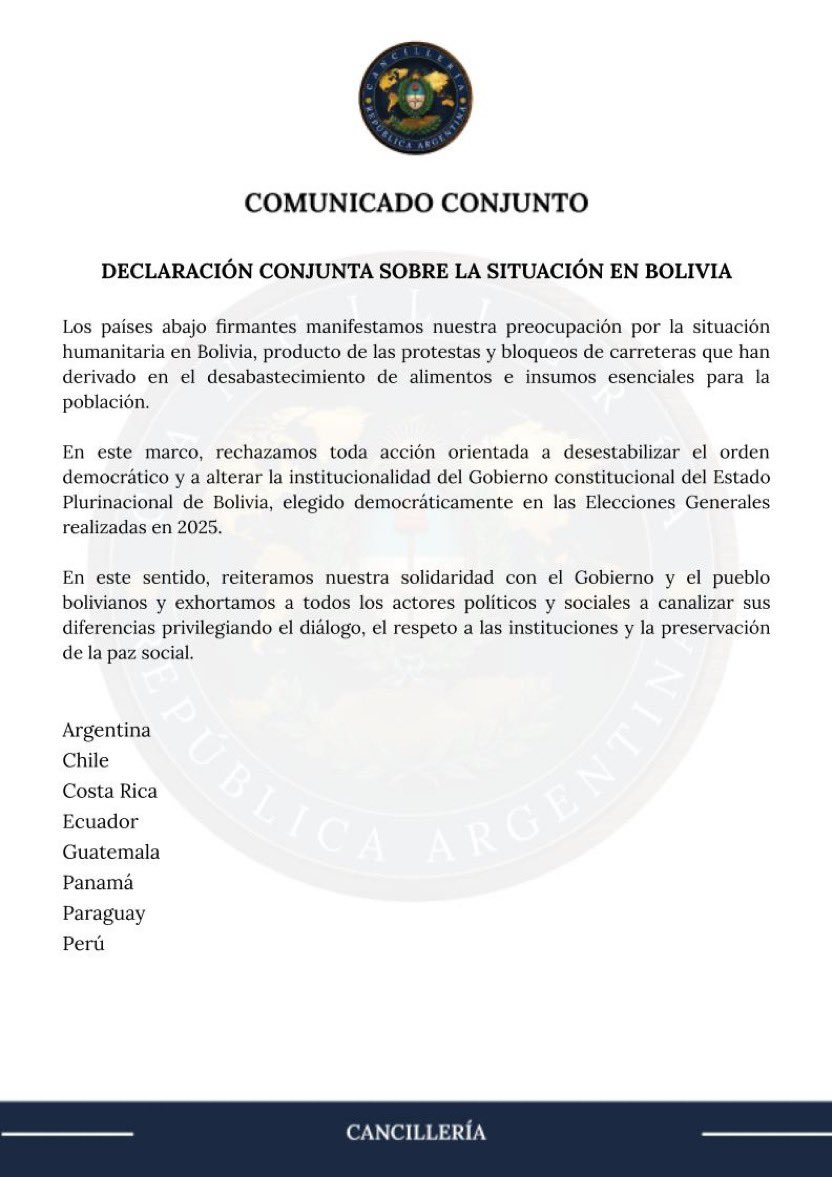
The statement was disseminated by the Argentine Foreign Ministry and is signed by Argentina, Chile, Costa Rica, Ecuador, Guatemala, Panama, Paraguay, and Peru. The document expresses “concern for the humanitarian situation in Bolivia” and notes that the protests and roadblocks have already led to “the shortage of food and essential supplies for the population.”
The joint statement against coup attempts.
The statement also rejects “any action aimed at destabilizing the democratic order” and altering “the institutional framework of the constitutional government of the Plurinational State of Bolivia, democratically elected in the General Elections held in 2025.”
The regional position represents strong diplomatic support for the administration of Rodrigo Paz, which has been facing an escalation of protests, pickets, and mobilizations driven by trade unions, peasant organizations, and sectors linked to evismo for weeks.
In the joint statement, the signing countries also reiterated “their solidarity with the Government and the Bolivian people” and urged various political and social actors to resolve their differences “by prioritizing dialogue, respect for institutions, and the preservation of social peace.”
Argentina provides humanitarian airlift amid shortages
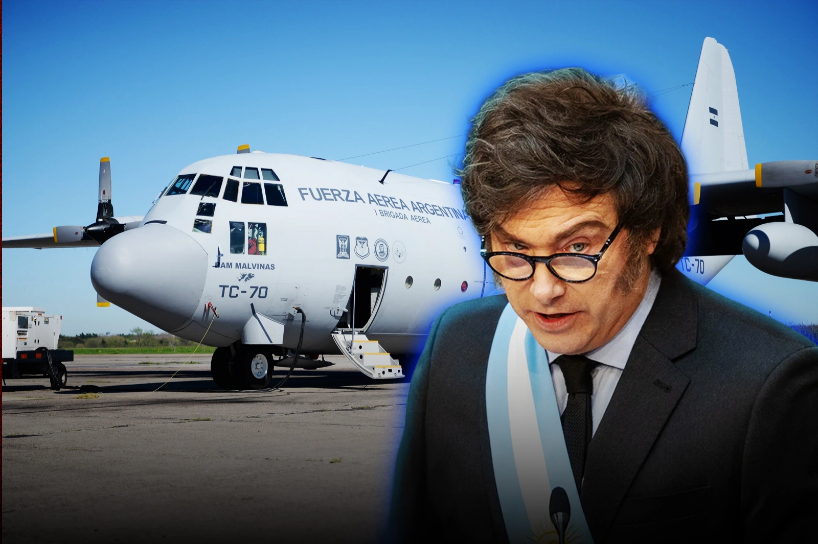
In parallel, the Government of Javier Milei decided to provide humanitarian assistance to Bolivia following a formal request made by the administration of Rodrigo Paz. Argentina will send a Hercules C-130 aircraft from the Air Force to establish an airlift for the transport of food and essential goods to the areas most affected by the shortages caused by the blockades and the internal crisis.
Humanitarian aid was confirmed this Friday.
Foreign Minister Pablo Quirno explained that this is a temporary operation coordinated between the Foreign Ministry and the Ministry of Defense, also clarifying that both the food and the costs of the operation will be covered by the Bolivian government. The assistance aims to alleviate the emergency while Bolivia tries to normalize its distribution system and contain the social escalation.
The Argentine aid arrives in an extremely delicate context for Bolivia, which is facing shortages of dollars, fuel, and basic products after years of economic deterioration under socialist administrations. With Rodrigo Paz coming to power, the country is trying to move towards market reforms and economic stabilization, while the left is pushing for protests, blockades, and mobilizations that have further aggravated the crisis.