Mexico will end 2025 as the second most dangerous country in the world for practicing journalism, only behind Gaza, according to the annual report by Reporters Without Borders (RSF).
The assessment is direct: violence against journalists is not "collateral damage." It is a phenomenon driven by two mutually reinforcing engines: expanding organized crime and a state incapable of investigating and punishing.
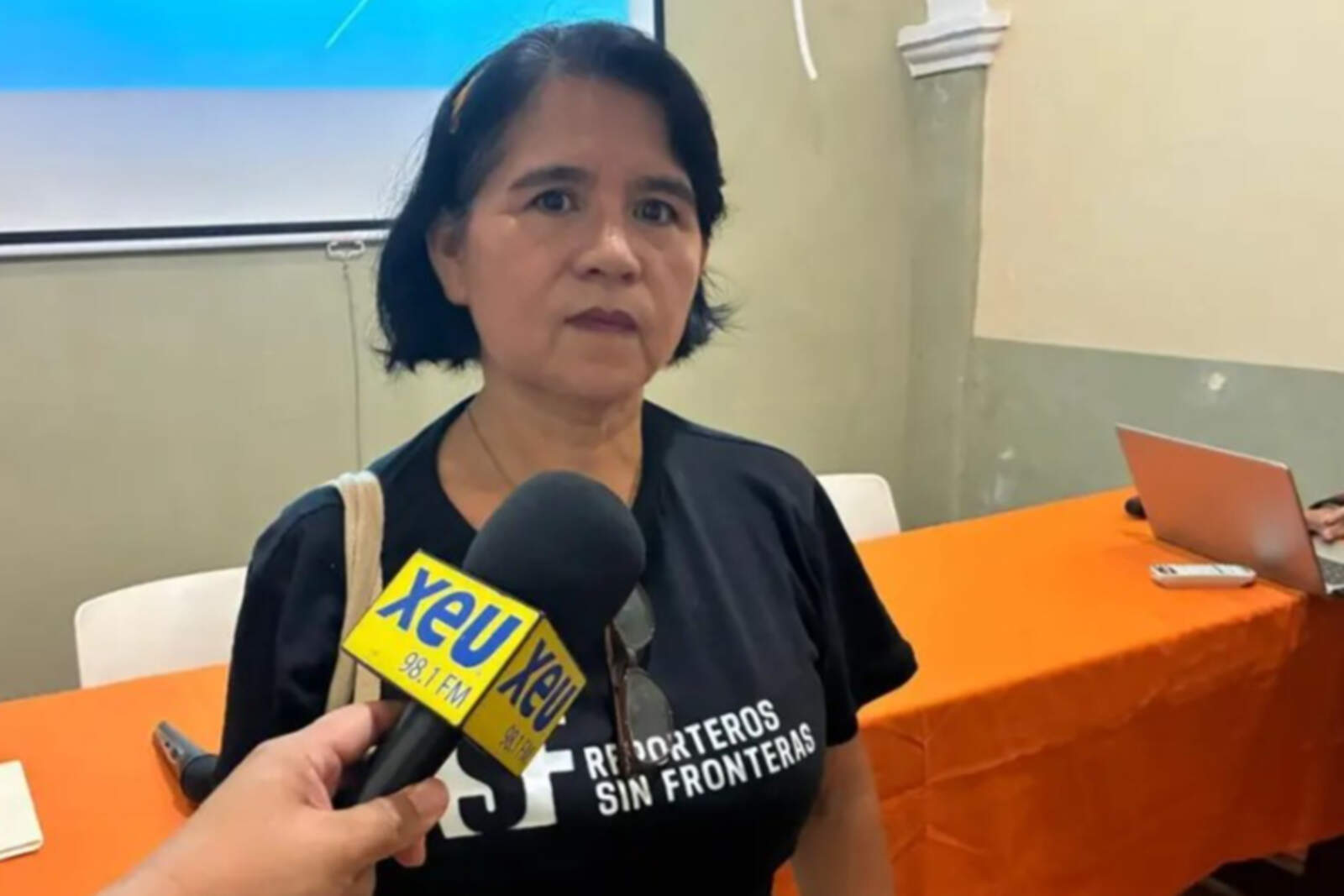
Balbina Flores, RSF's representative in Mexico, warned that seeing the country once again at the top confirms that the guarantees "aren't working." Protection, investigations, and public policy, she said, aren't breaking the cycle.
The core of the problem, RSF insists, is impunity. More than 90% of journalist murders remain unsolved, and all disappearances are still unsolved. In practical terms, the message to aggressors is devastating: one can attack and walk away unscathed.
In this logic, every frozen case file and every folder without progress not only fails the victim. It also increases the risk for the rest of the profession, because it normalizes aggression as a "manageable" cost of criminal power.
In addition to the lack of results, another factor that RSF considers fuel is added: the official narrative against the press. Stigmatization—when journalists are denigrated or criminalized from public platforms—opens the door to attacks that can escalate, the organization warns.
Flores warned that, in addition to being murdered, journalists are threatened and disparaged, which devalues their work and contributes to a climate where violence becomes acceptable or even celebrated by radicalized sectors.
The federal protection mechanism, created more than a decade ago, protects more than 600 journalists, but operates with limited resources and personnel. RSF acknowledges that it works, but points out internal deficiencies that are overwhelmed by the magnitude of the crisis.
In the background remains a demand that no longer allows for speeches: investigate, prosecute, and sentence. RSF calls for a thorough review of the Mechanism and demands that prosecutors prioritize cases, with real capacity to reach both material and intellectual perpetrators.
Mexico is not facing a perception problem. It is facing a rule of law deficit: when informing is punished and killing journalists has no consequences, democracy is left without witnesses.