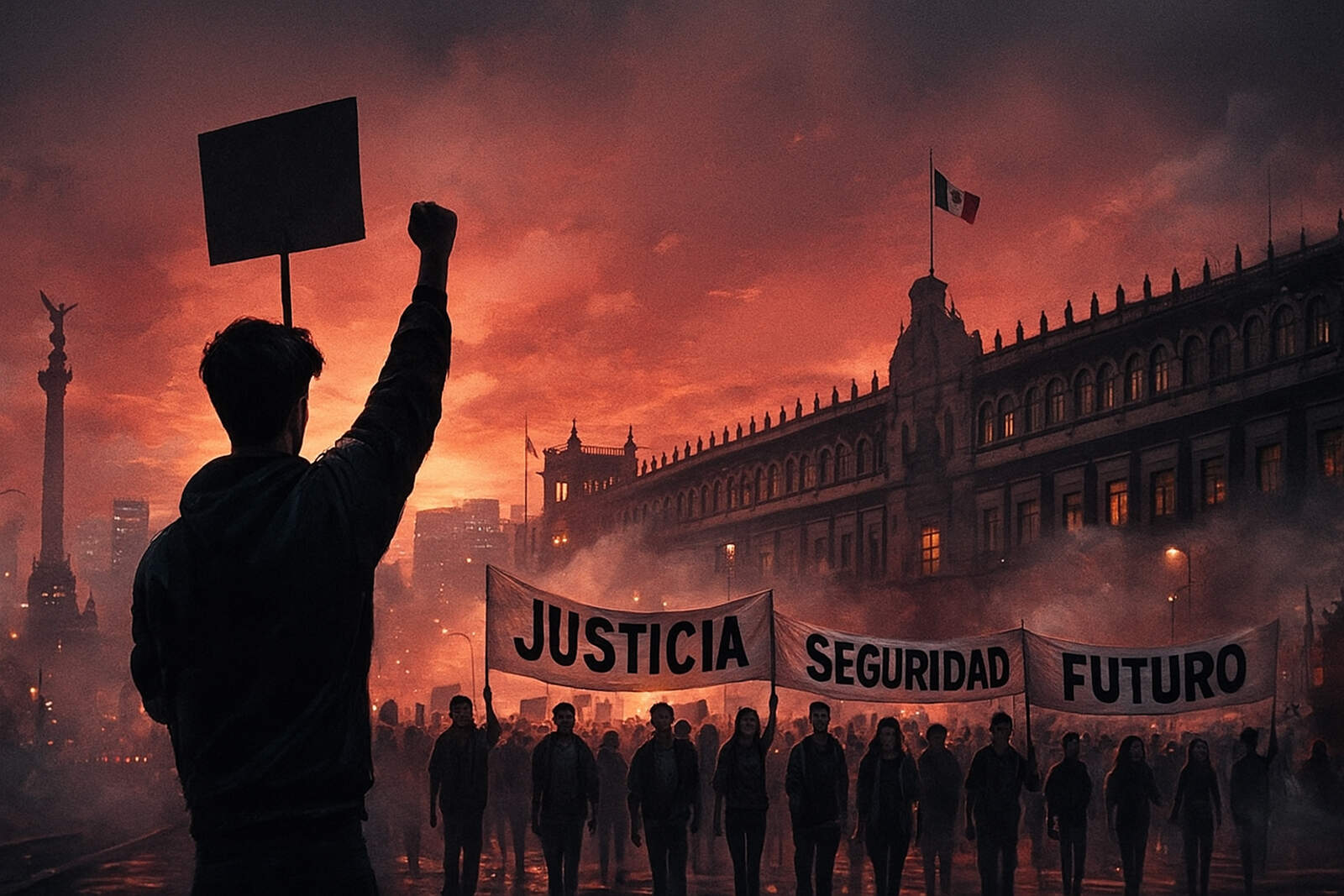
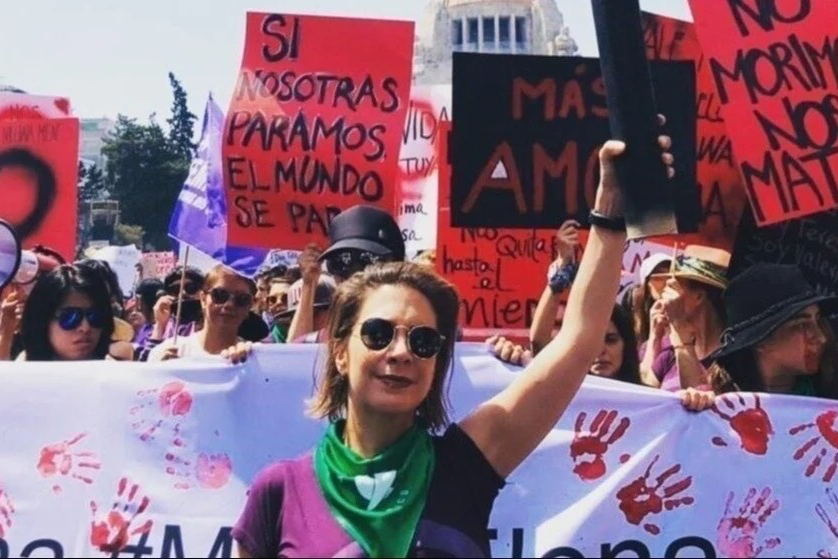
On November 15, thousands of young people marched across the country without coercion, without political parties, and, above all, without fear. They demanded something essential: security, justice, and a future. The government's response was immediate and brutal: arbitrary detentions, intimidation, beatings, and tear gas. This government doesn't pursue those who carry weapons to commit crimes; it pursues those who raise their voices.
Because the government is not afraid of organized crime, it is part of it; it fears awakened citizens. It fears young people because it doesn't control them, doesn't move them, and can't silence them. Deep down, what truly unsettles the regime is not the marches: it is the truth it can no longer hide.
That truth is simple and painful: in vast regions, Mexico no longer has a government; it has a simulation. The repression of November 15 was not an isolated excess; it was confirmation that those in power prefer to intimidate their youth rather than face reality: the State has surrendered and ceded much of its territory.
The last straw was the murder of Carlos Manzo. His death triggered the accumulated outrage of people who saw in him a brave man determined not to surrender his community, his municipality, or his state to organized crime. From the National Palace, the reaction was to blame the past and ironically ask: "So what's your proposal?" as if they were not the government, or as if they had a valid excuse when today they control power at almost every level to confront (if they wanted to) the criminals.
The most serious aspect: Carlos Manzo was not killed by just any hitman, but by a minor. A 17-year-old teenager who saw in a weapon the possibility of having a future. A teenager who found more opportunities in crime than the State itself could offer. A lost and confused child in a country that lost its way long ago.
That contrast with what happened on November 15 is brutal. An ignored mayor who asked for help; young people demanding a future who were beaten. For this government, protesting is more dangerous than extorting; marching is more serious than recruiting minors. The message is perverse: civic protest deserves prison, while criminal violence receives hugs.
The ruling party presented the "Michoacán Plan for Peace and Justice" as the great solution: three pillars, many words, zero structure. Meanwhile, the president spoke of peace and justice, her own deputies approved the 2026 Budget without allocating a single peso (0 pesos) to that plan. Peace without a budget is propaganda; justice without a State is simulation.
The document promises to strengthen federal forces, create a special prosecutor's office, and open "peace schools," but says nothing about criminal intelligence, financial intelligence, institutional coordination, territorial control, or effective justice. Nothing about how to recover regions where cartels collect protection money, control routes, kidnap, murder, or dictate justice. Michoacán, like much of the country, doesn't need promises: what it needs is government.
The infiltration of these groups into political and party structures is one of the main causes of impunity, which leads to the collusion of public officials with organized crime; the appointment of key positions with people close to the cartels; extortion in government actions and legislative agendas; and the appropriation of entire towns.
Where criminals choose candidates, finance campaigns, and have better equipment than the police, they replace authority and simulate social reintegration. There is no democracy: there is capture. It is time to say it as it is.
Mexico no longer lives a "security crisis": it lives a crisis of authority. The National Guard operates under military command; local police forces were abandoned after the elimination of FORTASEG; prosecutors' offices depend on political interests; penitentiary centers are schools of criminal professionalization. The State, which should impose order, today manages disorder.
Peace is not built with hugs nor is crime defeated with pretty words. Security is not improvised: it is planned, financed, and led with intelligence. Without territorial control, financial intelligence, the removal of colluded authorities, prosecutors or impartial judges, fortified borders to stop the trafficking of weapons (with which our families are murdered), a clean penitentiary system, and policies that rebuild the social fabric, any strategy will be just another morning press conference.
Meanwhile, this government reacts with immediate force to detain young people demanding a future, but stands idly by when it comes to confronting the criminals who have taken over the territory. That contradiction reveals something deeper: the government now believes its own lies. Meanwhile, as they play with homicide or missing persons statistics to construct a fictitious reality, Mexico will continue to pay the price for the worst security strategy in 25 years.
The teenager who murdered Carlos Manzo was not born a criminal: he was co-opted by a system where the State withdrew and allowed crime to organize what the government abandoned.
That's why Mexico needs a real and courageous institutional reconstruction: autonomous public ministries and prosecutors' offices; judges shielded against corruption; a civilian National Guard with external audits; well-paid, trained, and equipped local police; a national protection program for mayors at risk; a clean penitentiary system; and a Secretariat of Intelligence and National Security that unifies strategy, criminal, financial, and territorial intelligence.
President, you asked: "So what's your proposal?" Here it is: recover the moral and territorial authority of the Mexican State; rebuild intelligence; protect your citizens starting by ceasing to stigmatize and polarize; support those who bravely fight for Mexican families; backtrack on judicial reform; clean up and organize the penitentiary system; eradicate organized crime starting with your own party; truly rebuild the social fabric; and, without empty promises, give young people a reason to believe that good still makes sense.
Because today it has become clear that simple economic transfers are not generating real opportunities for development or a future with hope. Because peace is not decreed with plans and speeches without budget or will: it is achieved with effective actions and with truth. A government that refuses to see reality is either complicit or becomes part of the violence it should combat.
President, here is not just a proposal: I leave you the solution:
For peace to exist, there must first be justice. For justice to exist, we must eradicate impunity. That will only begin when the pact with organized crime is broken.
Alan Ávila Magos holds a degree in Public Administration from Universidad Anáhuac and a master's in Government from Universidad Panamericana. He has completed studies in national security and international analysis at institutions such as INAP, CIDE, and Syracuse University. He was National Secretary of Acción Juvenil and is currently National Counselor of PAN and president of JODCA. A university professor and committed Catholic, he promotes transcendent political humanism for the construction of a just, safe, and peaceful Mexico.