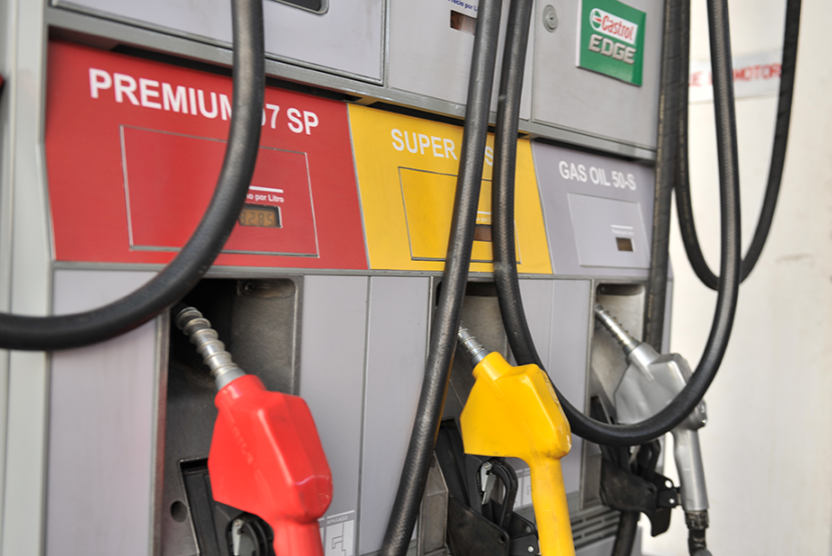
Who fills the tank at a Uruguayan gas station not only pays for the liter of gasoline. They pay, above all, for the collective decision that nearly half of that price turns into taxes: IMESI, 22% VAT, CO₂ tax, and a constellation of smaller levies that, when added together, make the pump one of the most expensive in Latin America. The result is predictable and, at the same time, paradoxical: a minimum wage that ranks among the highest in the region ends up buying barely four hundred and forty liters of gasoline a month. In the United States, that same wage—adjusted to its context—purchases more than five thousand liters. In Chile, seven hundred twelve. In Canada, more than double. The difference does not lie in the quality of the fuel or the distance to the oil well. It lies in the tax architecture that, with the best of intentions, ends up punishing those who need to move the most.
What is visible is the revenue that finances roads, hospitals, and subsidies. What is not visible is the private spending that never occurred. Every peso that the State extracts from the pump is a peso that stops circulating in the real economy. The transporter who pays 45% more per kilometer passes that cost onto the price of bread, meat, and milk. The worker who reduces their travel limits their job opportunities. The small business owner who postpones the purchase of a van halts the hiring of an employee. Gasoline is not just fuel; it is the lubricant of social mobility. When it is artificially inflated, the entire machine slows down.
The numbers, discreet but eloquent, speak for themselves. Uruguay leads the regional ranking of pump prices, even surpassing economies with nominally lower wages. While in Qatar a minimum wage buys more than six thousand liters and in Saudi Arabia more than five thousand, here the same monthly effort barely reaches just over four hundred. The gap is not arbitrary: it responds to a tax burden that, in countries with greater economic freedom, rarely exceeds 25% of the final price. Here it hovers around 48%. The State, through ANCAP and a regulatory maze, decides that the consumer pays not only the cost of importing and refining but also the cost of maintaining a structure that, year after year, generates million-dollar surcharges: just between May 2025 and April 2026, Uruguayans paid an additional 81 million dollars for fuels.
The money does not disappear; it is redistributed. What the driver's pocket loses, the treasury gains. That treasury spends it on visible works—a bridge, a stretch of road—and the citizen applauds. But no one applauds the jobs that were not created, the investment that did not arrive, the family that canceled their vacation because the trip to the coast became prohibitive. No one accounts for the kilometers that the delivery person stopped making, the orders that online commerce lost, the young people who postponed getting their driver's license because the car became a luxury. The economy is not a fixed pie; it is a dynamic process where each intervention generates concentric waves of unintended consequences.
Worse still: the high tax burden on fuels acts as a regressive tax disguised as progressive. It affects those with the least more harshly because transportation is an essential good for rural workers, delivery drivers, taxi drivers, and parents taking their children to school. Meanwhile, large fleets and companies with logistical capacity end up passing the cost onto the final consumer. The circle closes: the State collects more to "help" the same people whose lives it previously made more expensive.
The economic history is filled with identical examples. Every time a government has believed that taxing a basic input could finance spending without consequences, the result has been the same: lower growth, lower mobility, lower freedom. Uruguay is no exception to this rule. It has one of the highest minimum wages in the region, yes; but it also has one of the most expensive fuels on the continent. Real purchasing power is measured not by what the salary says on the paycheck but by what that salary can buy once the State has taken its share from each liter, each kilometer, each daily decision.
Reducing the tax burden on fuels is not a favor to oil companies or a liberal whim. It is about restoring to Uruguayans the ability to decide how and where to move. It is allowing the minimum wage to once again be worth what it promises: not just a number in a decree but a real instrument of progress. As long as we continue to believe that the path to well-being involves making essentials more expensive, we will keep filling the tank with resignation and emptying the future with taxes. Expensive gasoline is not a technical problem. It is the most visible manifestation of a philosophy that prioritizes the visible over the invisible, the immediate over the enduring, control over freedom. And while that philosophy dominates, the true fuel of prosperity—private initiative, savings, mobility—will continue to be scarce at Uruguayan gas stations.