The initiative comes amid the boom that Vaca Muerta is experiencing, which has become one of the main engines of the Argentine economy. The growth in hydrocarbon production has allowed oil to become this year the main product of export for the country, while the energy complex is already generating foreign currency income that far exceeds the annual commitments with the IMF.
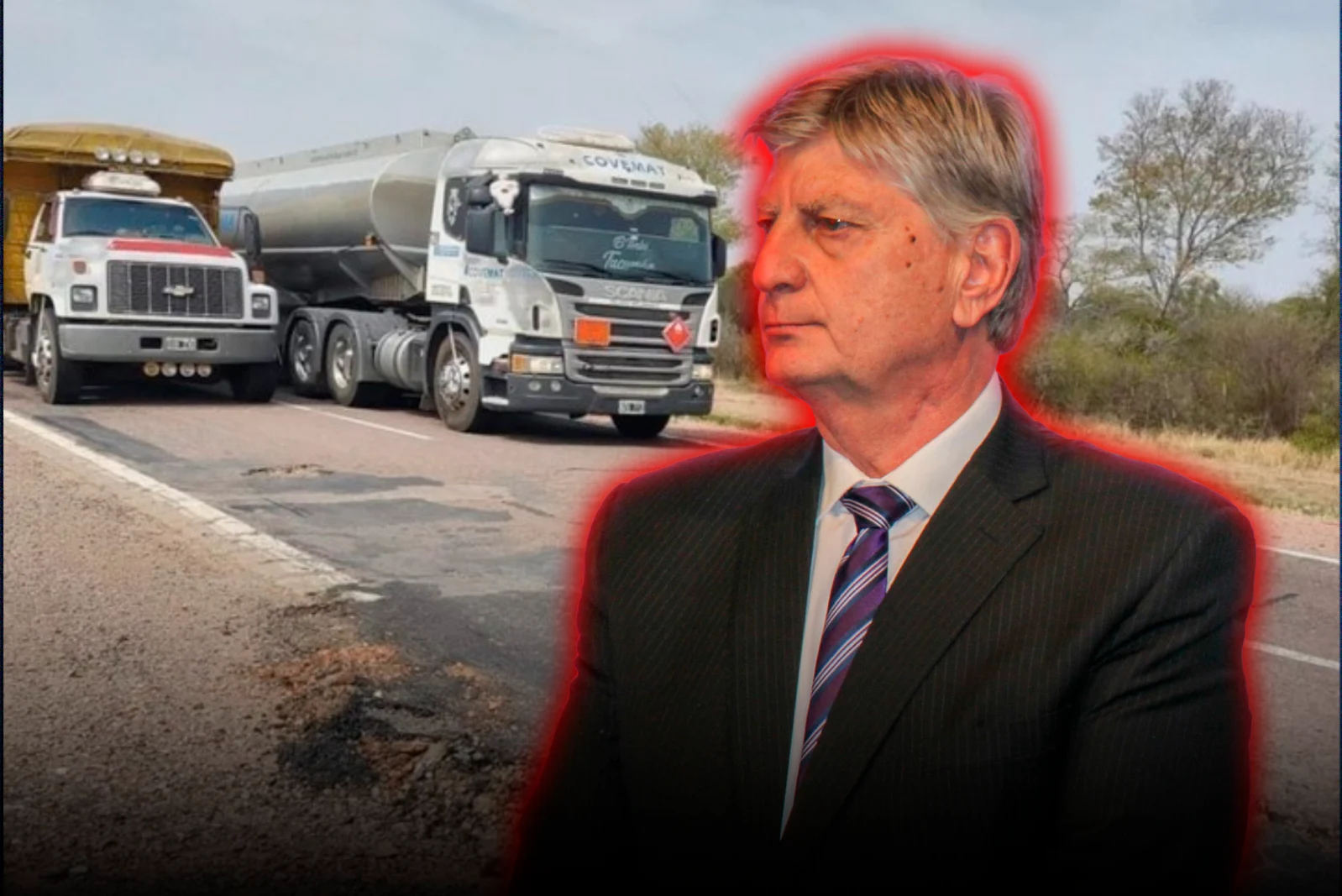
The Peronist governor of La Pampa, Sergio Ziliotto, sent a bill to the Legislature to create a new road tax aimed at trucks with five or more axles that pass through the province on their way to Vaca Muerta. The initiative seeks to charge a toll on heavy transport, arguing the significant damage it causes to road infrastructure, in a context of strong growth in the oil and gas activity driven by the policies of the Government of Javier Milei.
According to the bill, the new tax will not apply to trucks registered in La Pampa, as those that pay the Motor Vehicle Tax there will be exempt. In practice, the burden will mainly fall on transporters from other provinces who use the roads in La Pampa to supply the development of Vaca Muerta.
Sergio Ziliotto, governor of La Pampa
From the provincial administration, they maintain that truck traffic has increased exponentially during Milei's administration. For example, Provincial Roads reported that on a stretch of Provincial Route 13, the daily passage of heavy vehicles increased from 17 units in 2015 to 226 in 2026, an increase of nearly 1,000%, primarily driven by the transport of sand intended for unconventional exploitation in Neuquén.
The project establishes that 90% of the revenue will be allocated to a Road Development and Conservation Fund to finance works and maintenance of provincial roads, while the remaining 10% will be distributed among municipalities specifically for road infrastructure.
However, the project could also open a legal debate. In April of this year, the Supreme Court declared various provincial regimes unconstitutional that imposed differentiated tax burdens on companies based outside their jurisdictions, considering that such mechanisms function as true "internal customs" prohibited by the National Constitution.
Sergio Ziliotto, governor of La Pampa
Although the La Pampa proposal does not directly tax the establishment of companies, but rather the use of road infrastructure by heavy transport, the exclusion of trucks registered in La Pampa could lead to judicial challenges due to potential unequal treatment towards transporters from other provinces.
As the project begins its legislative process, Governor Ziliotto's initiative adds a new chapter to the discussion about the tax voracity of governors at a time when the national government seeks to promote investments and reduce costs for productive sectors.