Archaeologists found the weapon still sharp next to axes, arrowheads and other objects that point to a possible settlement on stilts and ritual practices from the Bronze Age
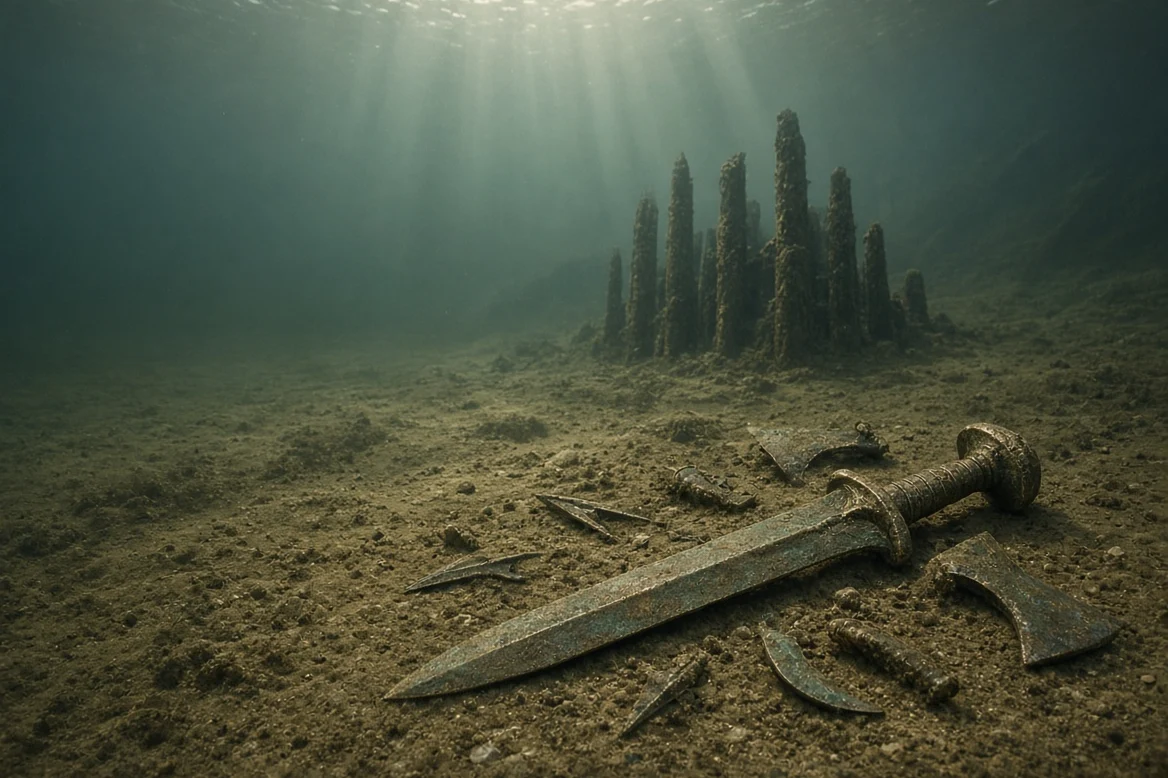
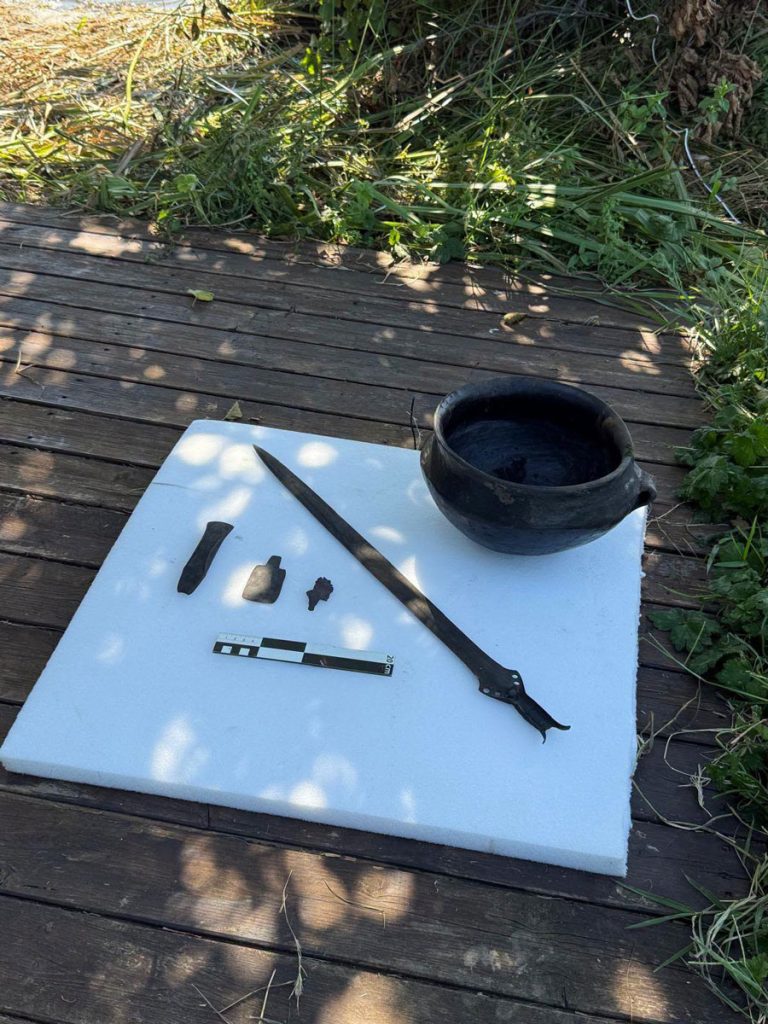
A team of Italian researchers recovered a bronze sword from the bottom of Lake Mezzano, in the center of the country, which remains sharp after more than three thousand years The discovery, announced by the Superintendency of Archaeology, Fine Arts and Landscape of the Province of Viterbo and Southern Etruria along with the Underwater Unit of the Carabinieri of Rome, also includes axes, arrowheads, daggers, spearheads, pins, and a knife.
The sword was dated to the 13th century BC based on its design. According to specialists, the collection of objects suggests that there may have been a settlement of houses built on stilts in the area during the Bronze Age. The inhabitants may have deposited these items in the lake as part of ritual or cult practices.
Lake Mezzano is located in a region with a long history of human occupation. The recovery work was carried out in relatively deep waters and required careful technical deployment to avoid damaging the pieces. The still sharp bronze sword is the most striking element of the collection due to its state of preservation and its antiquity.
Archaeologists emphasize that this type of deposits in lakes is not unusual in European Bronze Age contexts. Similar offerings have been documented at various alpine and Mediterranean sites, often associated with communities living in lakeside settlements.
A possible settlement on the water
The presence of bronze tools and weapons on the lakebed reinforces the hypothesis that there was a settlement of houses elevated on stilts This habitat model allowed for the use of aquatic resources while also providing some protection against floods or attacks.
The recovered objects include both everyday utensils and weapons The axes and the knife point to domestic or artisanal activities, while the arrowheads, daggers, and spearheads indicate a context in which hunting or defense was part of daily life. The fact that all these elements appear together at the bottom of the lake suggests a deliberate act of deposition.
Researchers emphasize that this is not a simple discard of broken or unused materials. The quality of the sword and the rest of the items indicates that pieces in good condition were chosen, reinforcing the ritual interpretation. In many Bronze Age cultures, lakes and rivers served as sacred spaces where high-value metal objects were offered.
The collaboration between the regional superintendency and the underwater Carabinieri allowed for precise documentation of the context of each find. The pieces will be studied in the laboratory to determine their metallurgical composition and possible traces of use. This analysis could provide data on manufacturing techniques and metal exchange routes in central Italy at that time.
Continuity of a millennia-old tradition
Lake Mezzano thus joins the list of Italian sites where underwater archaeology has revealed little-known aspects of recent prehistory Similar findings in other bodies of water on the peninsula have shown that Bronze Age communities maintained a close relationship with the lakeside landscape, both for subsistence and for symbolic practices.
Specialists remind us that these ritual deposits often appear in transition areas between land and water, places that in the imagination of the time could represent thresholds between the world of the living and that of ancestors or deities. The exceptional preservation of the sword allows for the observation of details of its forging that would otherwise have been lost
Although the study of all the pieces is still incomplete, the collection already offers a coherent image of a community that lived by the lake and, at some point in the 13th century BC, decided to surrender a series of valuable objects to the water. This gesture, repeated in other parts of Europe, speaks of a shared worldview that linked metal, water, and the sacred.
Research work will continue in the coming months. New underwater prospecting campaigns are expected to locate remains of the wooden structures that supported the houses on stilts, which would definitively confirm the existence of the settlement. For now, the sword and the rest of the recovered items constitute an eloquent testimony of the life and beliefs of those who inhabited the shores of Mezzano more than three millennia ago.