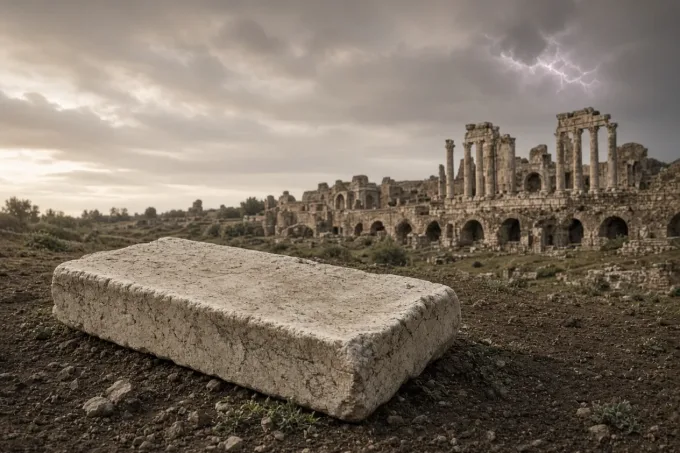

Archaeologists discovered in Tivoli, Italy, a marble slab with the inscription “FVLGVR SVBMANIVM”, found in the vicinity of the amphitheater of Hadrian's Villa. The text is related to Sumano, the Roman deity associated with lightning that struck during the night.
The discovery provides new material evidence about how the Romans interpreted places struck by lightning. For that society, the phenomenon could be understood as a divine intervention, so the affected space required a specific religious treatment.
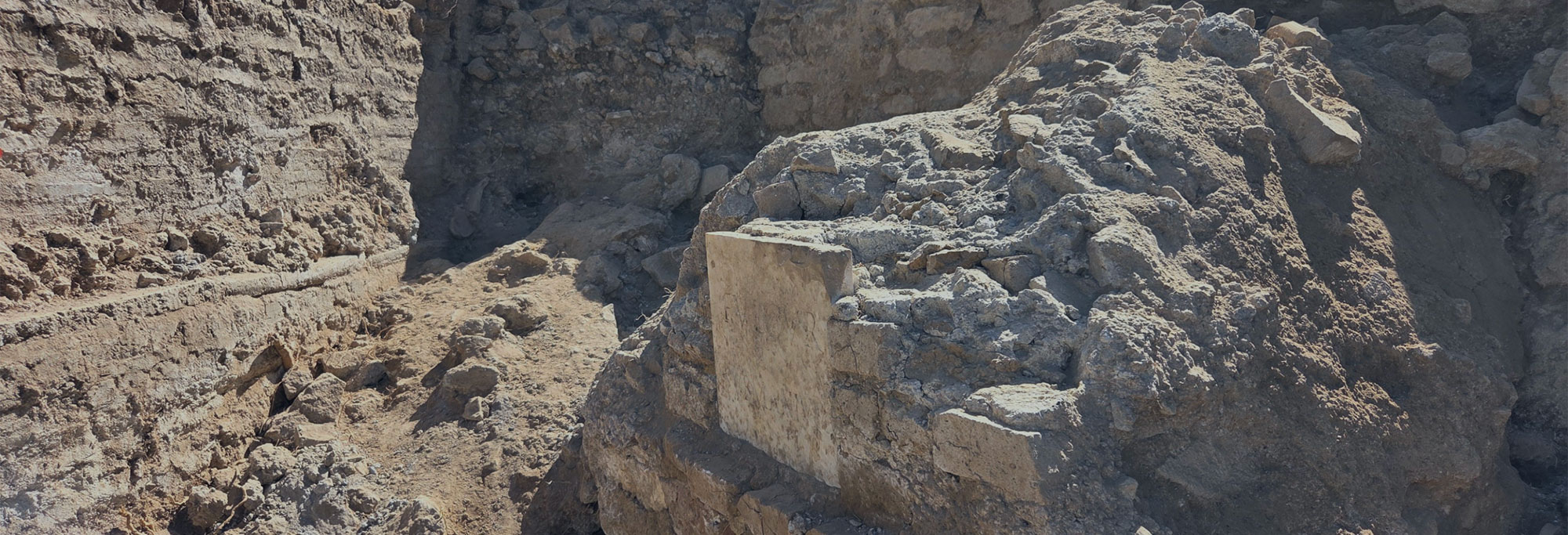 The ritual for places struck by lightning
The piece is linked to a practice known as fulgur conditum. When lightning struck an object or a specific place, the affected elements could be buried, and the site would acquire a sacred character.
The inscription found would have precisely served as a marker and memory of that consecration. The natural phenomenon thus ceased to be considered merely an accident and became a manifestation of the divine within human space.
Fabio Giorgio Cavallero explained that the discovery opens new possibilities for interpreting that sector of the imperial residence. “The finding opens new perspectives on the history of this sector of Hadrian's Villa and on the role of the ritual of fulgur conditum in the reorganization of spaces”, he stated.
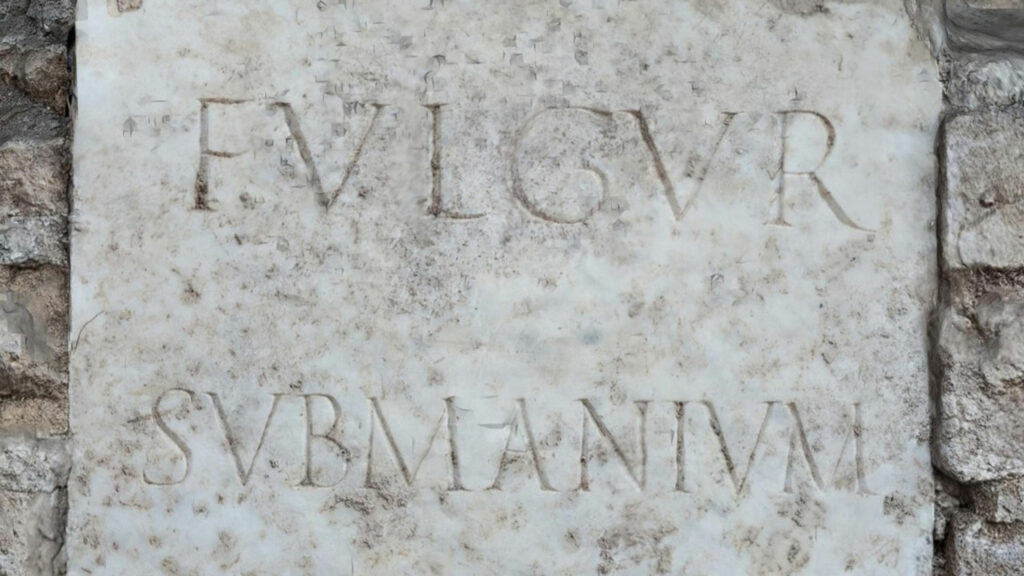 Sumano and the lightning that struck during the night
For the Romans, lightning could have different religious associations. In particular, Sumano was linked to those that occurred during the night, while other traditions associated daytime lightning with Jupiter.
The presence of the inscription near the amphitheater suggests that this sector was modified or delineated after an event interpreted religiously. The space would have acquired a different status following the lightning strike, and the slab would have served to preserve the memory of that transformation.
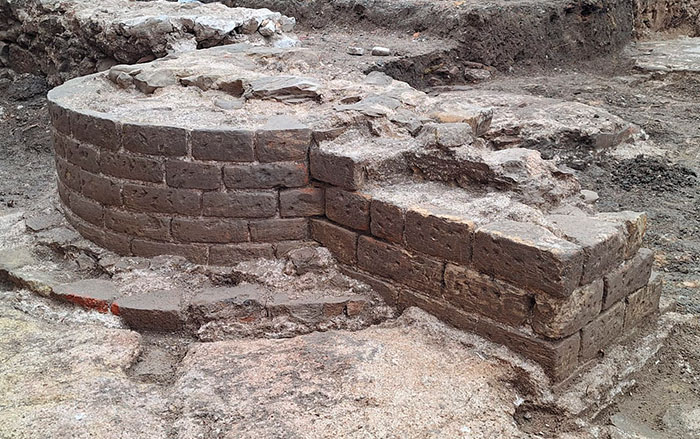 Alberto Samonà, from the Italian Ministry of Culture, highlighted the possibility of accessing specific religious procedures through the piece. “Finding the material sign of the sanctification of a place struck by lightning allows us to closely examine the meticulous ritual procedures of that time”, he noted.
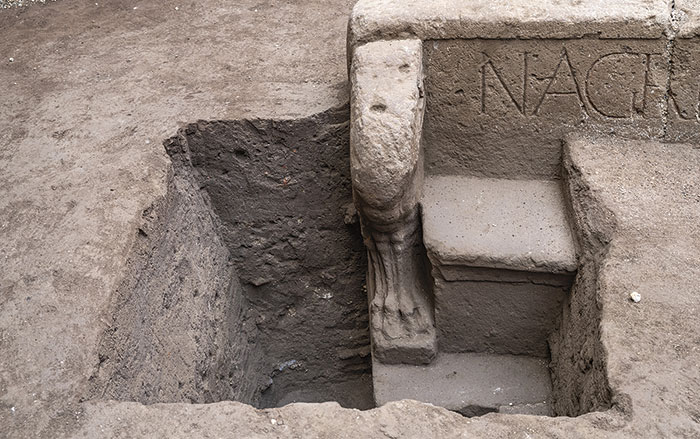 The fulgur conditum involved preserving or burying the remains associated with what had been struck by lightning. Those objects were consecrated and separated from their usual use, while the place was recognized as a religious space.