
Argentina is under scrutiny from the United States for its alleged exposure to a global network used to triangulate goods of Chinese origin and facilitate their entry into the U.S. market while avoiding tariffs.
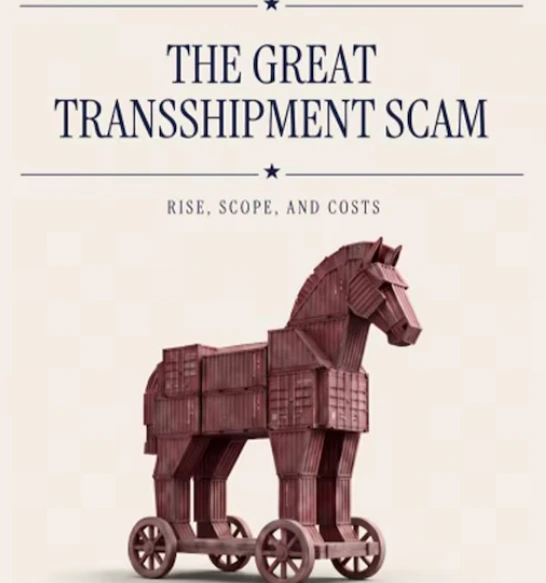
The warning comes from a report by the White House Office of Trade and Manufacturing Policy, titled The Great Transshipment Scam, which included the country in Level 3 of the so-called Shadow Transshipment Network.
The document identifies a structure involving more than 40 countries that, according to Washington, allows products manufactured in China to be sent first to third markets and then enter the United States under a different commercial identity, avoiding the high tariffs applied to Chinese imports.
Argentina appears among the “Latin American corridors”
The U.S. report places Argentina among the so-called “Latin American Corridors”, along with Brazil, Chile, Colombia, and Peru.
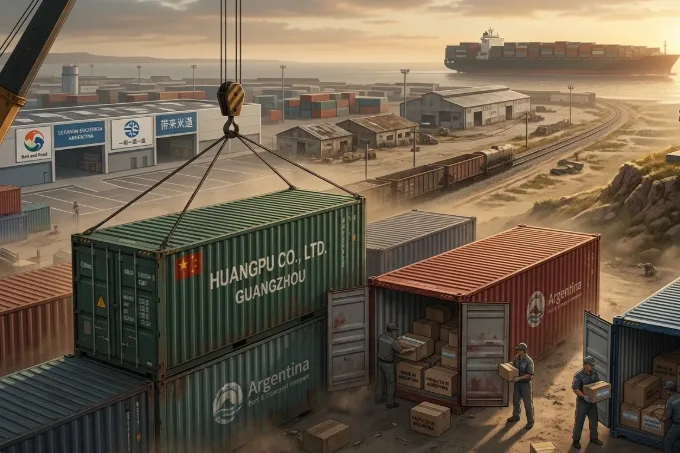
According to the White House, these countries can serve as storage, assembly, or redistribution points for Chinese products through bonded warehouses, free trade zones, and logistics corridors that subsequently allow access to the U.S. market.
Argentina was classified within Level 3, reserved for what Washington calls “opportunistic targets.”
These are smaller-scale economies that do not necessarily concentrate the largest volumes of triangulation but can offer advantages for those seeking to evade trade controls: lower labor costs, port infrastructure, free trade zones, and limited customs capabilities.

However, inclusion in this category does not mean that the Argentine government or national companies are deliberately participating in the fraudulent scheme. The document itself acknowledges that these territories can be used for limited logistical or productive operations without necessarily involving the knowledge or participation of local authorities.
How the triangulation of Chinese products works
The mechanism pointed out by Washington is relatively simple. When a product manufactured in China faces high tariffs upon entering the United States directly, the exporter can first send it to a third country.
There, the goods can be stored, repackaged, or subjected to certain processes before being sent back to the United States, aiming to appear as originating from another market.
In this way, operators attempt to avoid the tariffs that Washington directly applies to Chinese products, generating a significant economic margin.
The report estimates that this type of fraud costs the United States around US$60 billion annually and claims it contributes to the displacement of about 450,000 jobs.