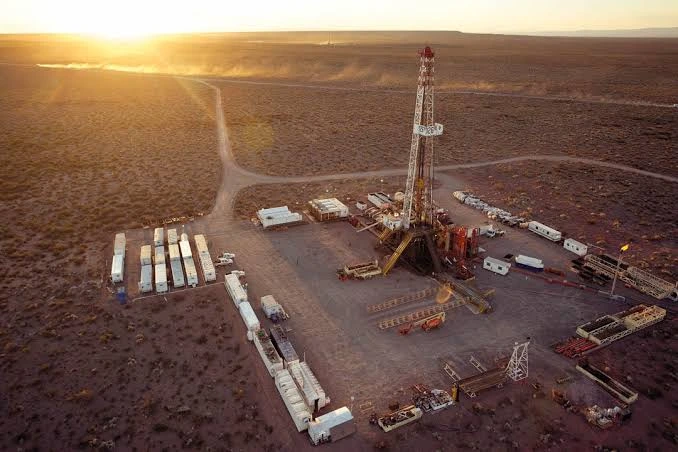

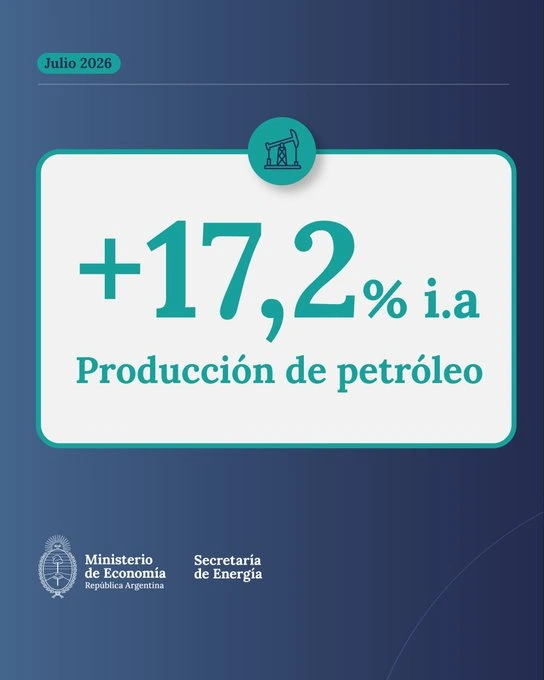
The National Energy Secretariat, under the leadership of the administration of Javier Milei, announced that during the month of July 2026, Argentina reached a new historical maximum in oil production. With an unprecedented national average of 916.2 thousand barrels per day (recording peaks of 912,966 barrels per day according to the updated spreadsheets), the country experienced a remarkable increase of 17.2% compared to the same month in 2025.
As the official industry reports indicate, "The data shows the continuity of growth in hydrocarbon production and reaffirms the positive trend of the energy industry, accompanied by a greater role of the private sector".
This energy resurgence immediately translates into financial sovereignty and genuine dollars for the Argentine economy, burying the fiscal deficit. During the first seven months of 2026, the increase in hydrocarbon extraction greatly strengthened the surplus of the energy trade balance, accumulating an impressive figure of over USD 6.8 billion in foreign currency.
The heart of this private revolution is the formation of unconventional resources in Vaca Muerta, where the extraction of shale oil reached 643.1 thousand barrels per day in July, consolidating a spectacular year-on-year increase of 26.4%.
Furthermore, natural gas production remained robust and stable with 158.8 million cubic meters per day nationwide, bolstered by the performance of Vaca Muerta, which contributed 96.5 million cubic meters per day, a 5.9% increase compared to the previous year.
Looking at the specific details of the production map, the absolute engine of this historical expansion is located in the province of Neuquén, which leads the structural change in the sector against the decline of monopolies and old regulations.