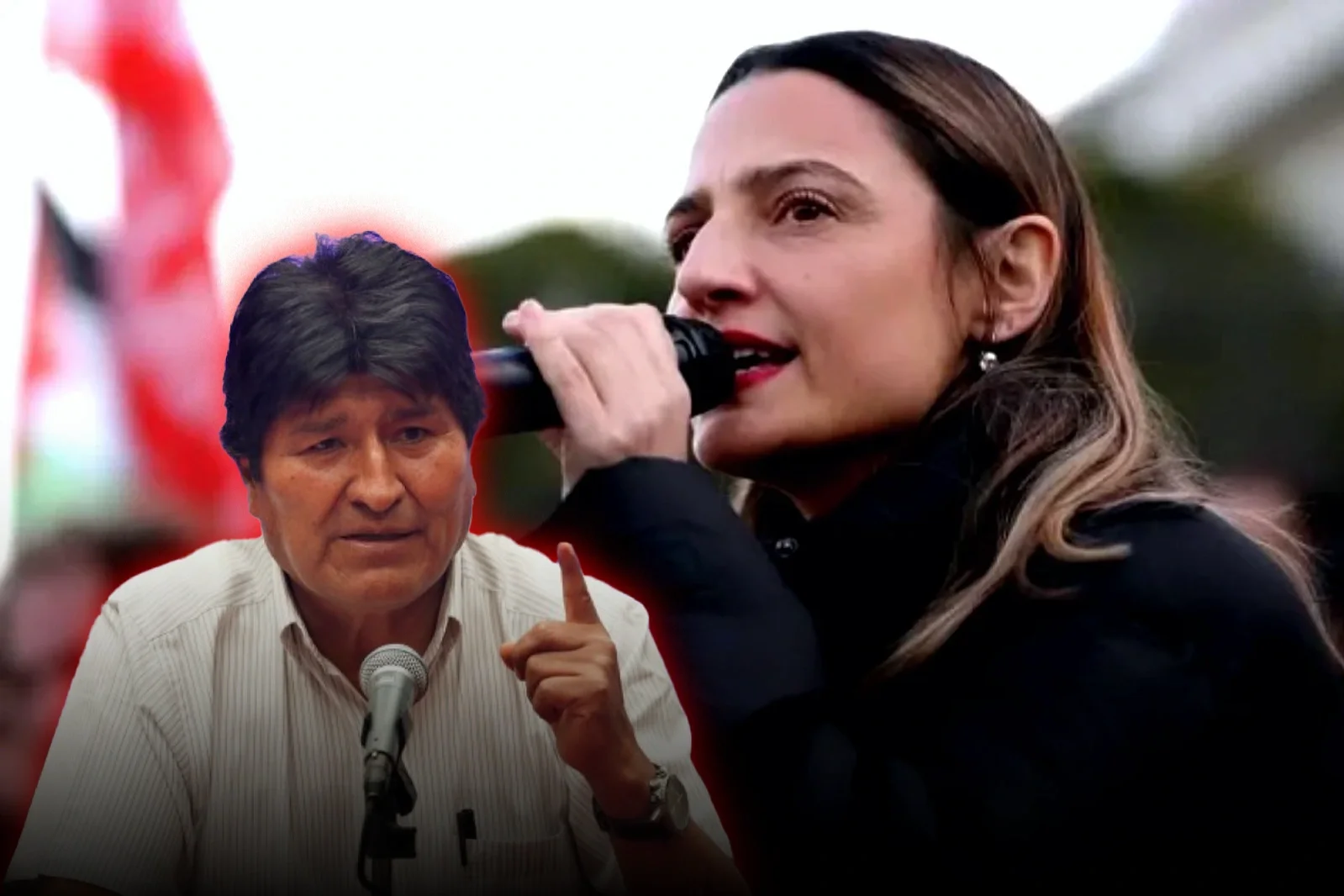
The Bolivian government accused socialist leader Mercedes Trimarchi of supporting the blockades and mobilizations driven by sectors aligned with Evo Morales.
The Bolivian government announced the expulsion of former Argentine leftist deputy Mercedes Trimarchi after accusing her of politically intervening in social conflicts and protests aimed at destabilizing the constitutional government of Rodrigo Paz. The Argentine leader had participated in a town hall meeting held in El Alto, where she publicly expressed her support for the mobilizations and blockades against the Bolivian Executive.
Bolivian authorities described her presence as an act of interference in the country's internal affairs and maintained that no foreign leader can actively participate in local political conflicts that affect institutional stability.
Former congresswoman Mercedes Trimarchi
The measure comes amid a severe political and social crisis in Bolivia, marked by weeks of blockades, protests, and clashes driven mainly by union sectors and groups close to former president Evo Morales. The government of Rodrigo Paz claims that behind many of these mobilizations lies a coordinated attempt to generate destabilization and force the fall of the Executive through ongoing street pressure.
According to a report from Infobae, Trimarchi participated in political activities alongside opposition social organizations during her visit to Bolivia. The leader belongs to the Socialist Workers' Movement (MST) of Argentina, a force linked to radical left sectors in Latin America.
The case further exacerbates regional diplomatic tension surrounding the Bolivian crisis. In recent weeks, the government of Rodrigo Paz had already been involved in diplomatic conflicts with Colombia after accusing President Gustavo Petro and Colombian officials of politically supporting the protests against the Bolivian Executive. Bolivia even previously expelled Colombian ambassador Elizabeth García for alleged "interference" in internal affairs.
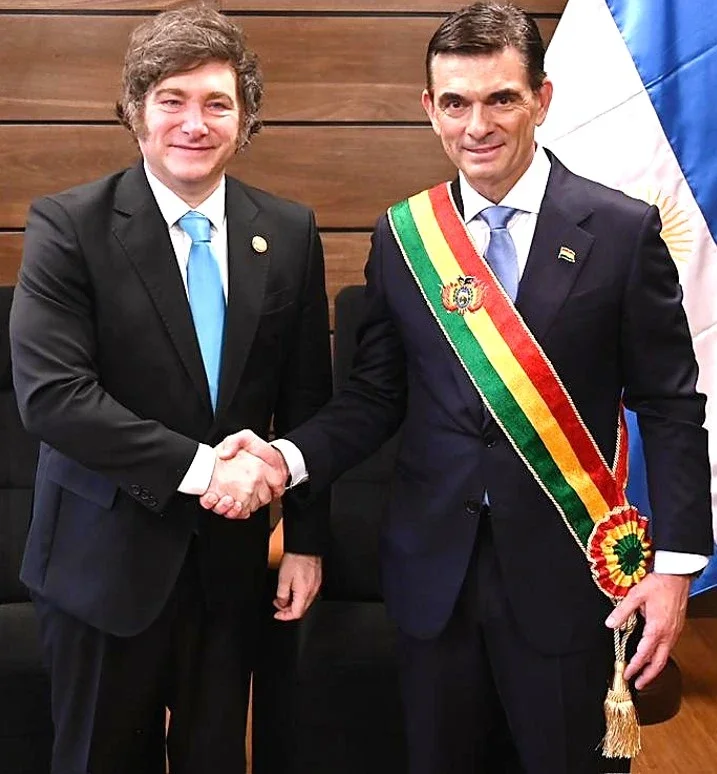
President Javier Milei alongside Rodrigo Paz
The Paz administration insists that the mobilizations do not solely respond to social or economic demands, but rather are part of a political strategy driven by Evo Morales' sectors to weaken the government and regain power. Meanwhile, Evo Morales continues to face an arrest warrant and judicial proceedings for aggravated human trafficking, a situation that has further heightened political tension within the country.
The episode also generated repercussions in Argentina, where socialist left sectors criticized the Bolivian decision and accused Paz's government of attempting to criminalize international solidarity with social protests. However, from La Paz, it was emphasized that the measure aims to defend national sovereignty and prevent the participation of foreign leaders in a context of high political and institutional conflict.