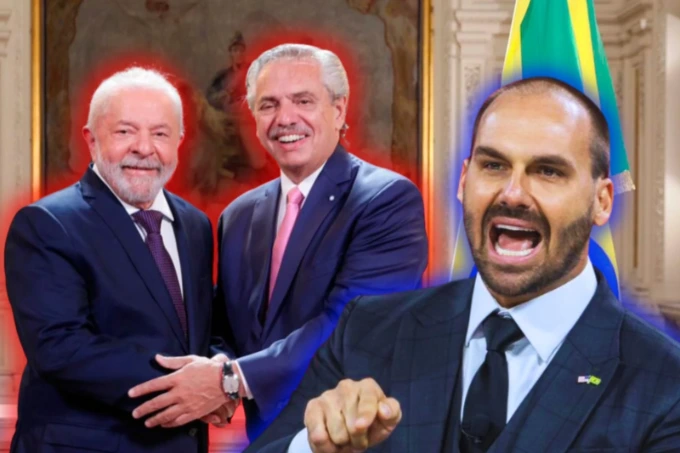
The Brazilian responded that Alberto visited Lula when he was imprisoned and supported the current Argentine president: "I congratulate President Milei for calling things by their name"
The regional political landscape has become fractured following the historic visit of Argentine President Javier Milei, to the state of São Paulo, where he participated in the launch of the presidential campaign of Senator Flávio Bolsonaro for the elections on October 4.
In this context of resistance against the advance of socialism, former Kirchnerist President Alberto Fernández attempted to attack the libertarian leader, labeling him an "energumen" for demanding the freedom of political prisoners in Brazil. However, the response from Bolsonarism was swift, exposing the double standard of a Kirchnerism that today defends a "prisoner" while ignoring the persecution of patriotic leaders.
The focus of the conflict centered on a video released by Deputy Eduardo Bolsonaro, who exploded against Alberto Fernández for justifying his visit to Lula da Silva in 2022 while he was serving a sentence in Curitiba.
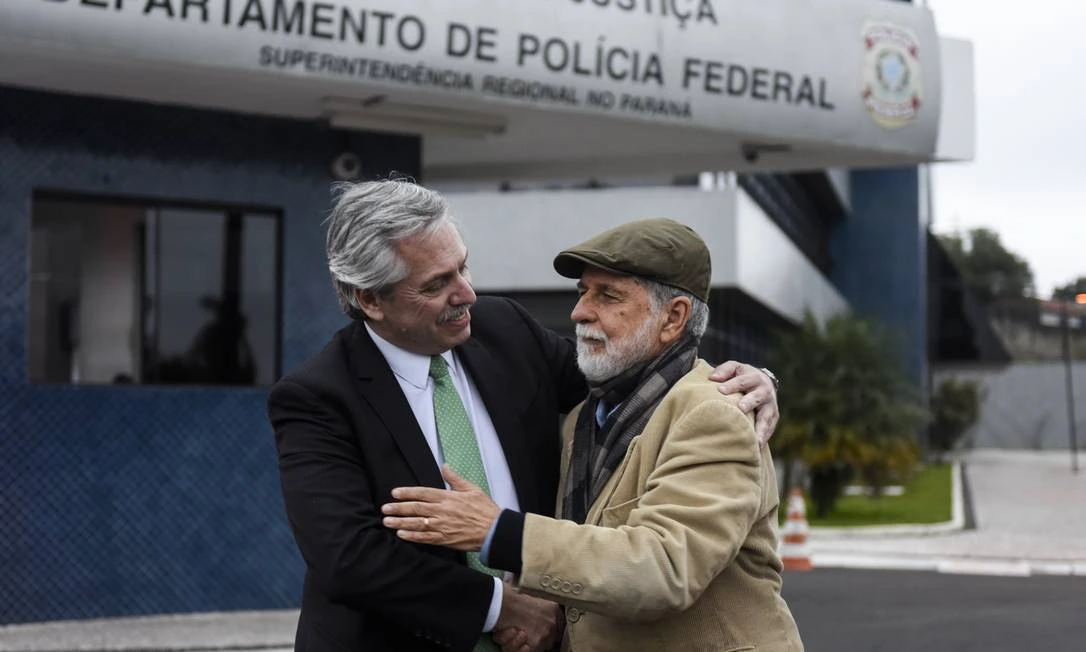
Bolsonaro was relentless in pointing out that, while Fernández presents himself as a man "committed to the rule of law", he is photographed with figures like Celso Amorim, advisor to Lula and defender of groups like Hamas.
"How do you feel having two bombs placed in the Israeli embassy and in AMIA in the 90s?", questioned the deputy, directly linking the left's foreign policy with terrorist organizations that are "the same trash".
Bolsonaro's indignation lies in the blatant hypocrisy of the Brazilian judicial system, represented by the minister of the Supreme Federal Court, Alexandre de Moraes —whom he labeled as "bald trash"—.
The legislator denounced that this judge prevented him from visiting his own father, former President Jair Bolsonaro, who is under house arrest, despite the fact that at the time Alberto Fernández and other foreign leaders were allowed to visit Lula during his 580 days in prison for corruption.
Alberto Fernández and Celso Amorim
"I congratulate President Milei for calling things by their names", stated Eduardo, highlighting that the Argentine leader had the decency to only call "trash" those who allow citizens like Clezão to die in prison after multiple denied requests for freedom.
The criticism was not limited to diplomatic matters but extended to economic and institutional issues. Eduardo Bolsonaro denounced a direct interference from the government of Lula da Silva in Argentine sovereignty, claiming that the Brazilian leader sent "1 trillion dollars" to try to promote a "temporary anesthesia" through former minister Sergio Massa during the last elections.
This maneuver aimed to sustain a "caste" that, according to his words, uses tax money to remain in power while leaving the country in ruins, as Alberto Fernández and Cristina Kirchner did, the latter marked by decades of "corruption".
For the conservative leader, the left behaves like "bacteria" that take advantage of any drop in the "immunity" of the social body to re-infect power. In this regard, the presence of Javier Milei in Brazil was seen as a significant international backing for the heir to Jair Bolsonaro's legacy.
In his speech, Milei was blunt: "We will not let ourselves be subdued by socialist trash" and "the leftists are destroying our countries". The Argentine leader not only called for defeating socialism at the polls but also advocated for the construction of a "blue wave" conservative movement that would restore freedom to the region.
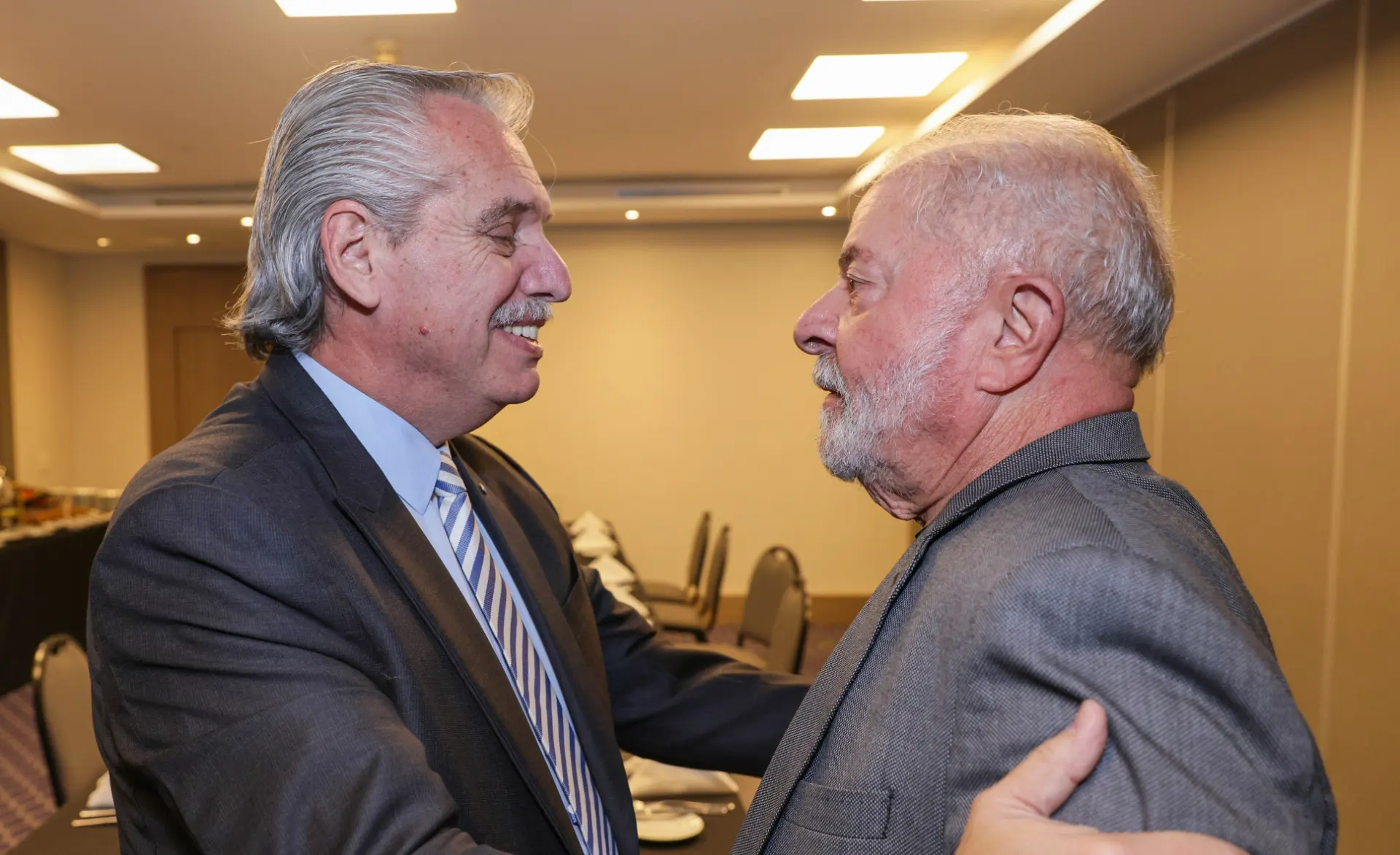
Alberto Fernández and Lula Da Silva
The strength of the alliance between Milei and the Bolsonaros provoked a hysterical reaction from the Lula government. The Palácio de Itamaraty labeled the statements as a "direct interference" and summoned its ambassador, Julio Bitelli, for consultations, an unprecedented measure in bilateral relations.
Figures from the Brazilian government, such as Minister Fernando Haddad, went so far as to call Milei"the clown of the Argentine president", demonstrating the desperation of a government that sees its narrative crumble in the face of the truth.
Meanwhile, Alberto Fernández's defense of Lula is based on a technicality: that the Supreme Federal Court annulled the sentences due to alleged "lack of impartiality" of Judge Sergio Moro.
However, for the conservative resistance, these judicial maneuvers are nothing more than a "stain on the rule of law" designed to restore political rights to a leader who represents the impoverishment of the continent.
With the elections of 2026 on the horizon, the cultural and political battle is more alive than ever, with Eduardo Bolsonaro and Javier Milei leading the vanguard against collectivism.