Macron's warning comes as France also faces increasing economic pressure. The rise in fuel prices is affecting households and further complicating the government's situation, which is trying to finalize the budget for 2027 while seeking to reduce a high fiscal deficit.
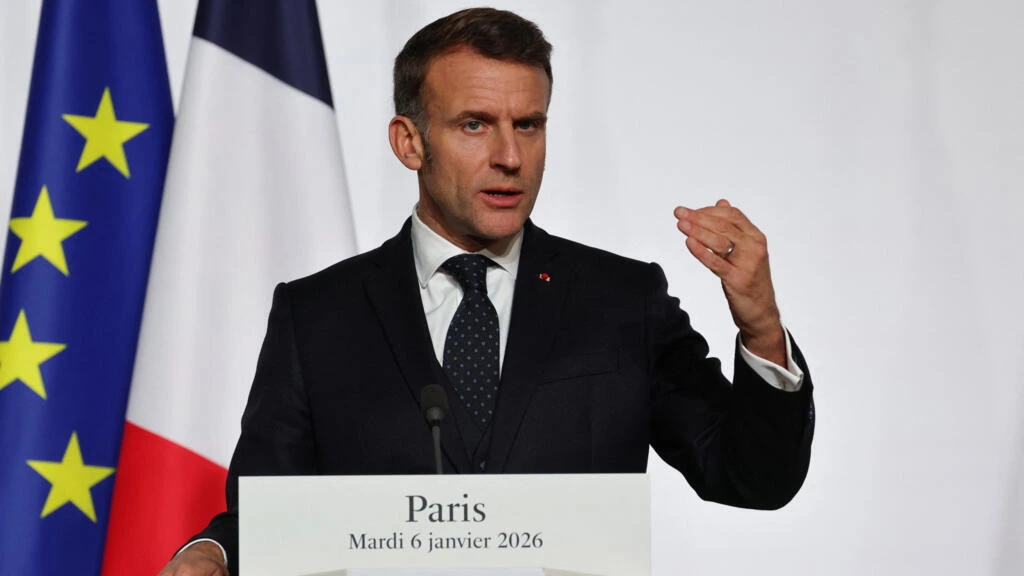
The President of France, Emmanuel Macron, warned this Friday that Russia is intensifying its hybrid attack campaign against Europe and France, in a context marked by the war in Ukraine, cyber threats, and the use of drones. The leader announced that his government will develop a plan aimed at strengthening the protection of critical infrastructures against this type of actions.
Macron made his statements in Paris, after meeting with leaders of the main French political parties to analyze the international situation. According to the president, the Russian threat has increased significantly in recent weeks and is part of a strategy aimed at generating fear among European countries and weakening their support for Ukraine.
The leader stated that Moscow seeks to test Europe's determination through actions that, although do not constitute conventional military attacks, can affect strategic facilities, essential services, and the safety of the population.
''We are facing an intensification of the Russian hybrid threat,'' Macron asserted, who stated that France does not intend to change its position due to these actions. In his view, European security is directly linked to the development of the war in Ukraine and to the continent's ability to maintain its support for Kiev.
Macron accused Russia of increasing its hybrid operations against Europe and stated that it is a Russian campaign to instill terror
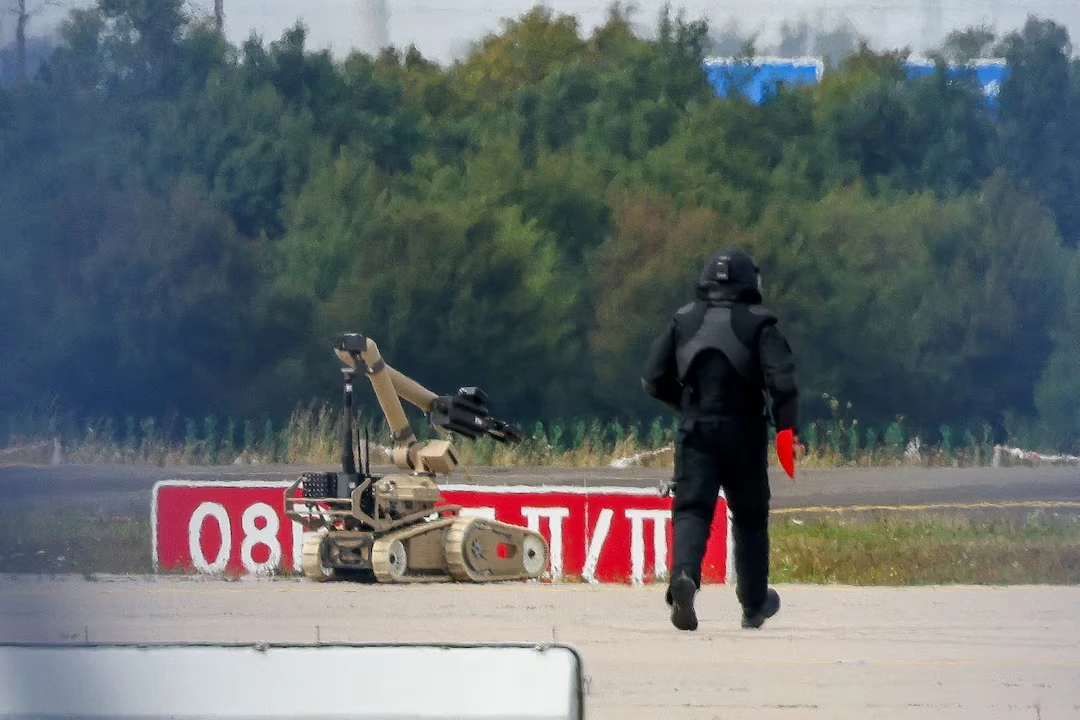
As an example of the change in tactics used by Russia, Macron mentioned the attempted drone attack recorded at Leipzig airport, Germany, in August. The German government concluded that Moscow was behind the incident. Russia, for its part, rejected the accusations from European governments and claims that the allegations of hybrid attacks are part of a campaign of hostility and ''anti-Russian hysteria''.
The French Ministry of Economy forecasts that the deficit will reach 5.4% of gross domestic product this year, due, among other factors, to weaker growth and rising financial costs. The situation has also increased tension in the markets: the spread between French and German ten-year sovereign bonds reached 100 basis points on Friday.
Macron cited the incident with the Russian drone in Leipzig to expand his accusations and warned of a rise in fuel prices
Macron pointed out that the high debt and deficit limit Paris's ability to adopt measures aimed at offsetting the rise in fuel prices. The French president attributed part of this pressure to the conflict in the Middle East, stating that it is a war that France did not choose and in which it does not participate directly.
In light of the energy crisis, Macron also announced that G7 countries will hold a meeting in the coming weeks to strengthen coordination and seek mechanisms to ensure energy supply. The initiative aims to reduce the vulnerability of developed economies to disruptions in international markets.