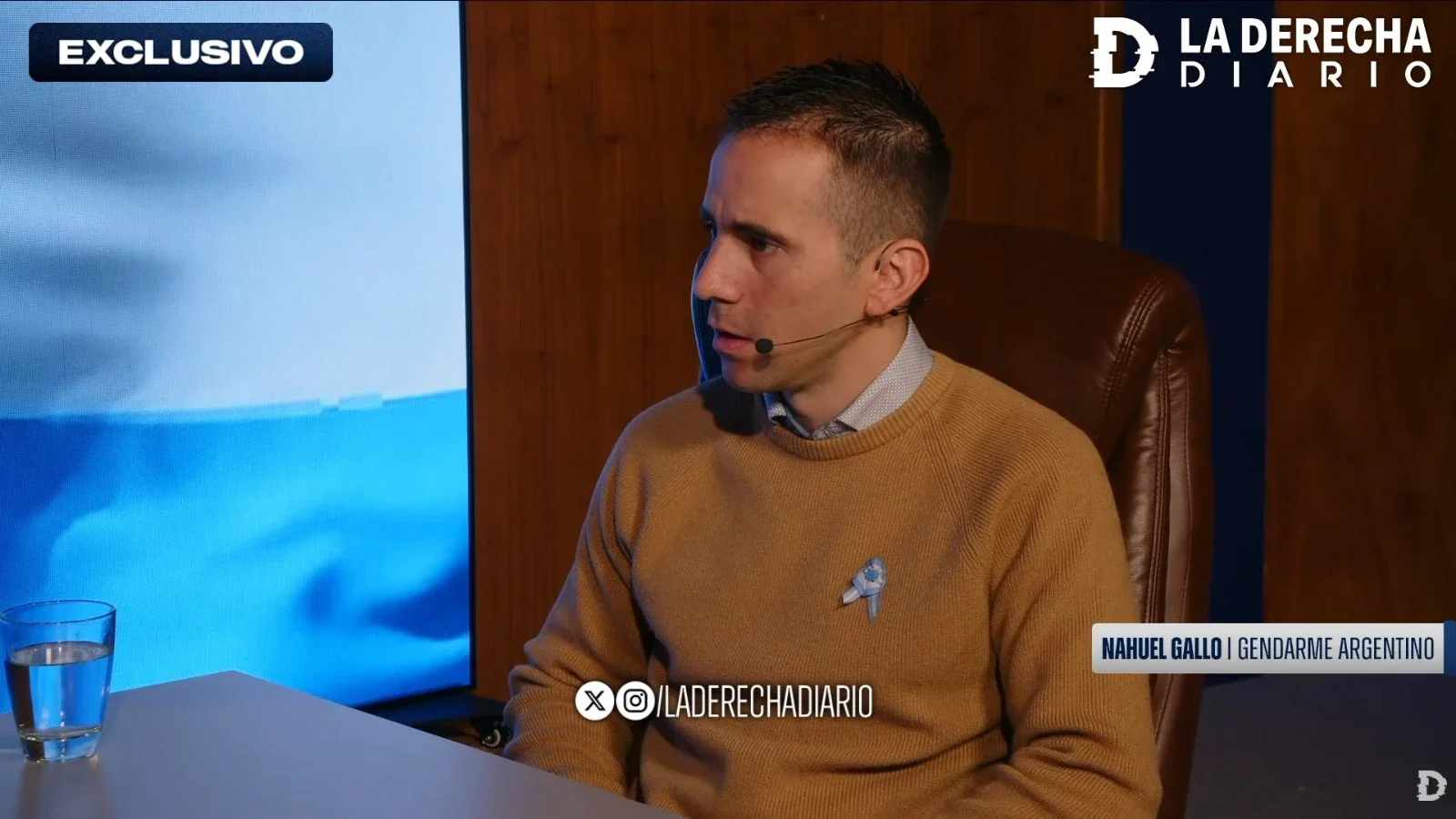
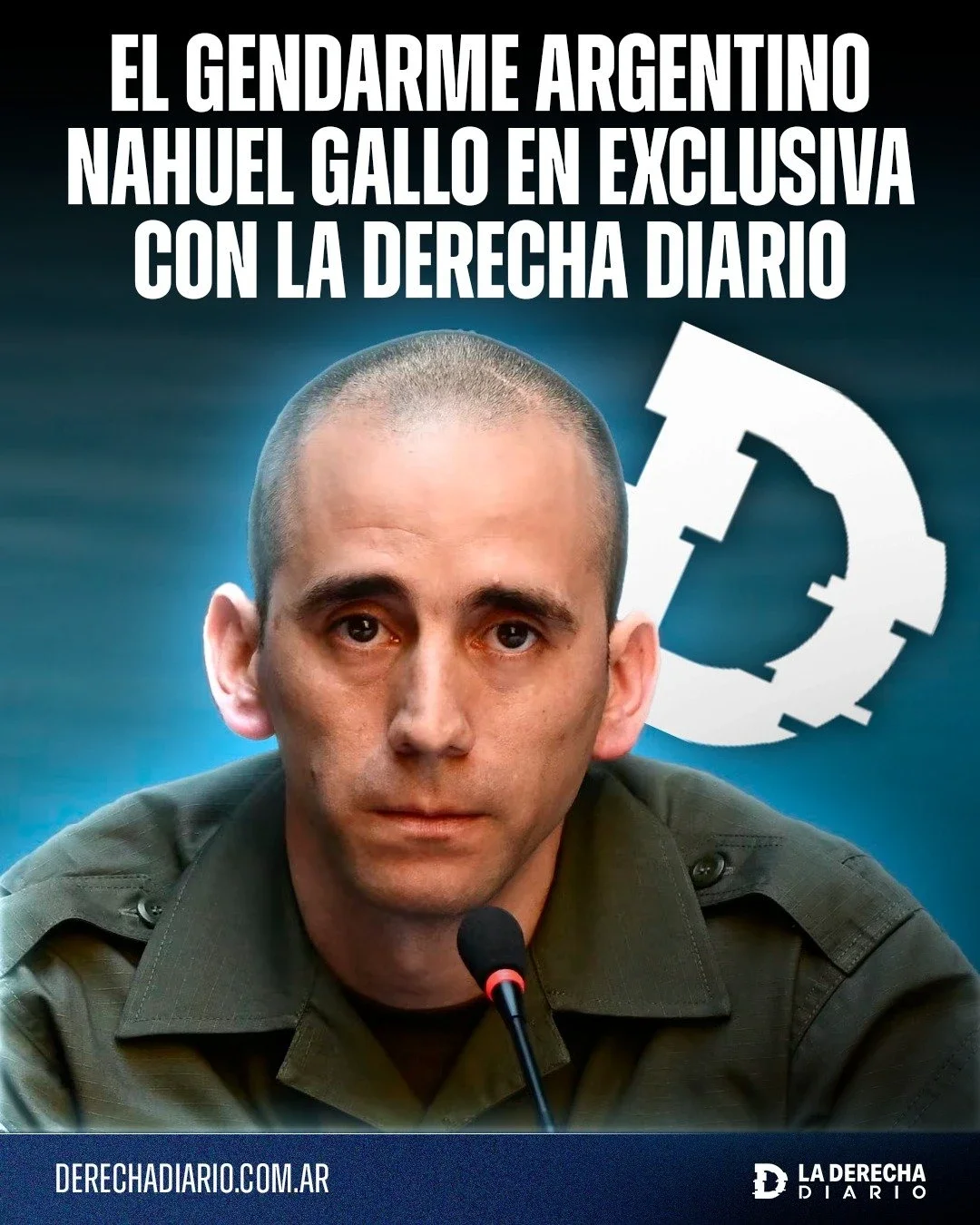
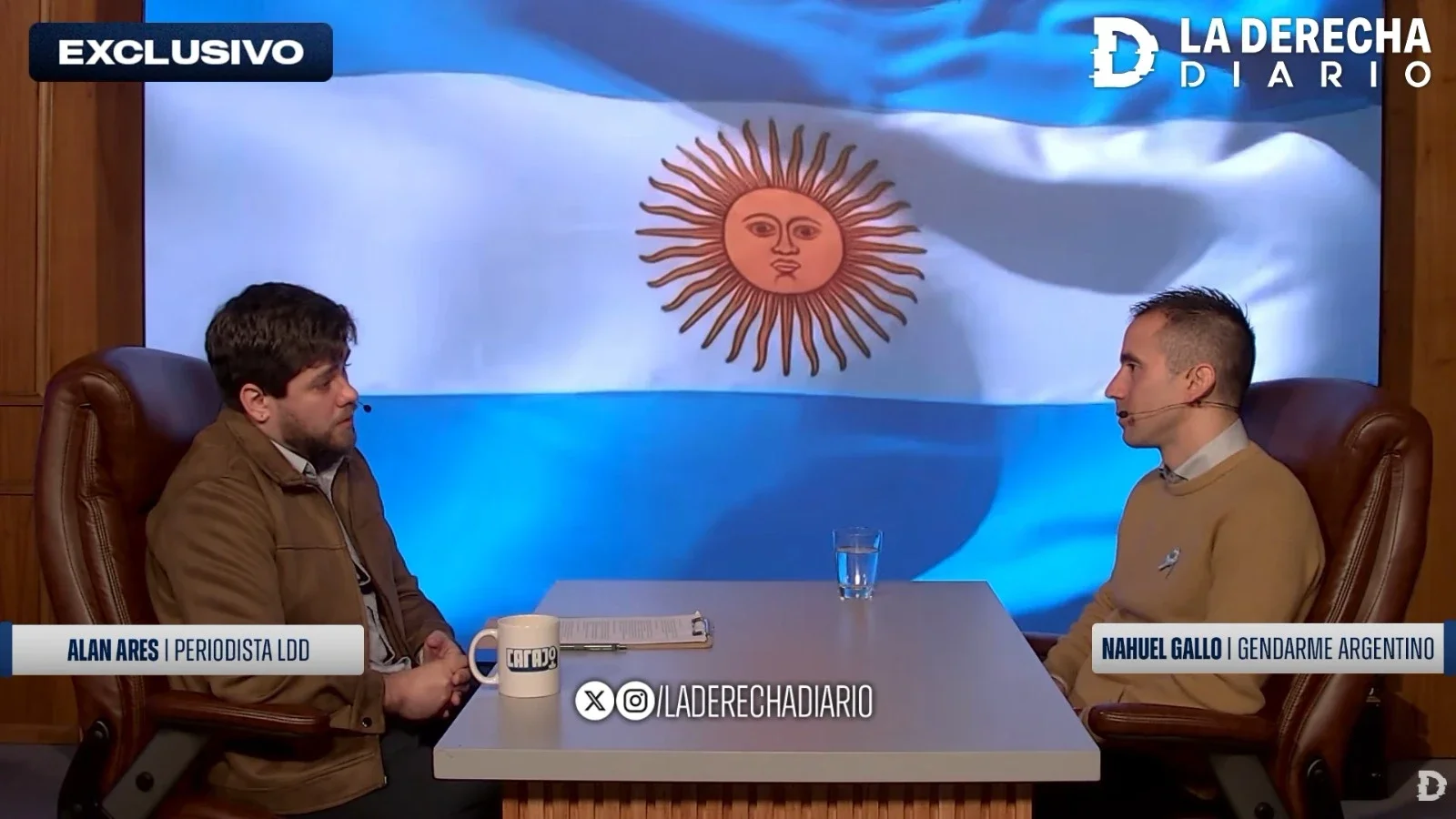
The Argentine gendarme Nahuel Gallo, who was held captive for 448 days by the Chavista regime in Venezuela, gave an exclusive interview to La Derecha Diario in which he recounted the weight of isolation, the impact of returning to everyday life in Argentina, and the role that the pressure from the government of Javier Milei played in sustaining his case against the dictatorship of Nicolás Maduro.
In an exclusive interview now available on our YouTube channel, Gallo reconstructed an experience marked by isolation, arbitrariness, and the political use of foreign political prisoners by the Venezuelan regime.
Nahuel Gallo exclusively for La Derecha Diario
One of the most powerful moments of the testimony comes when the gendarme described his difficult reintegration into everyday life after more than a year deprived of freedom. Gallo stated that he is still catching up on events that for any Argentine are part of the normal information flow, but which for him were frozen during his captivity.
“Two or three weeks ago, I found out that the boxer Locomotora passed away last year and I said wow,” he recounted, explaining that many things that his family or people take for granted he is discovering day by day, as if the country had continued to advance while his life remained halted inside a Chavista prison.
Gallo was also emphatic when referring to sectors of the Argentine left that still deny the existence of a dictatorship in Venezuela. “They should inform themselves a bit, listen a bit, and be empathetic with the Venezuelans who raise their voices,” he asserted, in a statement that directly targets those who downplay the crimes of Chavismo from the comfort of living in democracy.
During the interview, the gendarme revealed that he shared detention with people from up to 35 nationalities, including an Italian duke. He recounted that the mechanism of persecution was repeated with foreigners entering the country: their cell phones were checked, and if any critical content against the Venezuelan government was found, they were detained.
“All foreigners who entered had their cell phones checked; if they saw anything against the government, they were detained. We all had the same method of detention,” Gallo explained, describing a repressive machinery that did not distinguish nationalities and operated under a logic of absolute political control.
Check out the full interview with Nahuel on our social media.
Nahuel also considered that the pressure exerted by the government of Javier Milei was key in ensuring that his case did not get buried within the Chavista prison system. “I knew my government was doing something,” he maintained. He also mentioned that he was the only detainee who was filmed inside the prison, even during breakfast, lunch, and dinner.
According to his interpretation, the Venezuelan regime sought to use him as “bargaining chip.” While other detainees were denied food or became invisible, his movements were documented by Chavista officials, a sign that his case carried a different political weight because he was an Argentine under a government that was not willing to look the other way.
Gallo also expressed concern for citizens from other countries who remain detained in Venezuela and specifically pointed out the leftist government of Gustavo Petro, highlighting the lack of demands for the freedom of Colombians who still remain under the control of the Chavista regime.
The most intense moment came when he was asked what he would say or do if he were face to face with Nicolás Maduro. Gallo did not respond with a thirst for violence, but with a much more powerful definition of the psychological damage of his captivity.
Nahuel Gallo exclusively for La Derecha Diario
“He was a puppet of Cabello. I would pay him back in the same coin: leave him isolated. Isolation is the worst thing you can do to a human being. I wouldn’t hit him, I wouldn’t torture him, I would just leave him locked up like he left me,” he stated.
With that phrase, Gallo summarized the core of his experience: the silent torture of being isolated, far from his family, without certainties, and turned into a hostage of a regime that made political persecution a state policy.