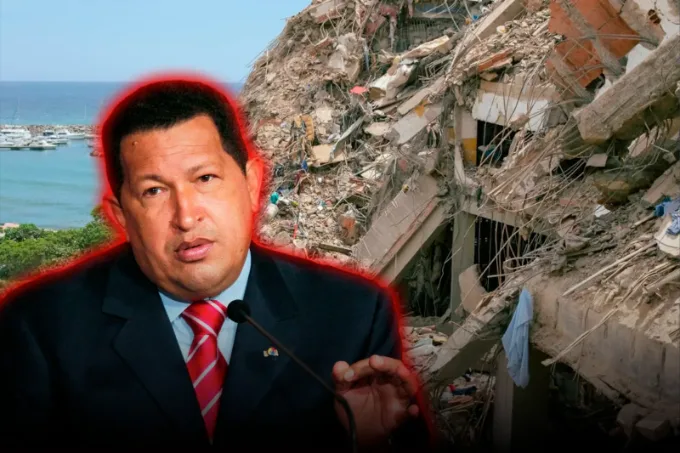
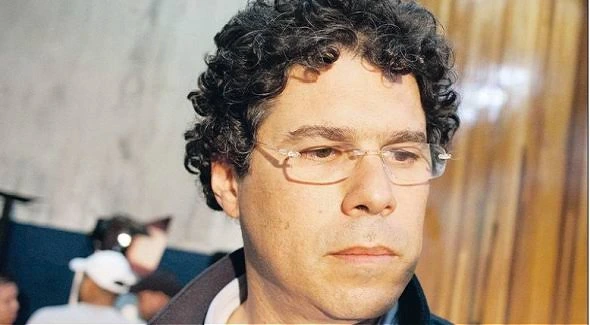
The former Minister of Science and Technology of Venezuela during Hugo Chávez's regime, Carlos Genatios, blamed corruption, inefficiency, and state abandonment for the deterioration of the country's seismic network, whose lack of functionality became evident after the double earthquake that struck the central-northern region of Venezuela on June 24.
Genatios, who led the Ministry of Science and Technology during Hugo Chávez's administration and directed the reconstruction of the state of La Guaira after the landslide in 1999, stated that the infrastructure designed to monitor seismic activity was one of the most advanced in Latin America when it was inaugurated in 2000.
Former Minister Carlos Genatios
The former official assured that, far from strengthening during the subsequent years when Venezuela received extraordinary income due to the increase in oil prices, the network began to deteriorate due to lack of maintenance and investment. In this regard, he recalled that between 2008 and 2009, the price of crude oil exceeded 100 dollars, but he denounced that the resources were not used to preserve or modernize the equipment responsible for recording seismic activity.
Genatios particularly questioned those who attribute the collapse of the scientific infrastructure to the so-called "blockade" or to the economic sanctions imposed years later by the United States and other countries. Through public statements, he maintained that the destruction of the network began long before the implementation of those measures and asserted that the responsibility lies with corruption and the mismanagement of public resources.
The engineer explained that, due to the deterioration of the system, the double earthquake recorded in June could not be measured correctly. He indicated that a large part of the network was out of service and the few records obtained had technical errors, which hindered the accurate assessment of the magnitude of the event and its effects on the affected areas.
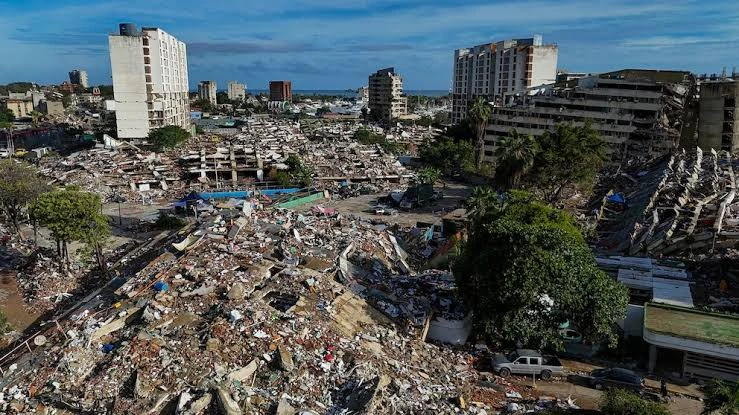
Venezuela after the earthquakes
In recent weeks, various reports and specialists pointed out deficiencies in the prevention, response, and emergency coordination systems, in addition to questioning the state of the public infrastructure designed to face such disasters.
The former minister concluded that the reconstruction of the seismic system must become a priority to prevent similar situations from recurring. In his view, recovering the capacity for scientific monitoring and strengthening the institutions responsible for disaster prevention will be essential to improve the country's preparedness for future natural events and reduce the impact they may have on the population.