Expansion of the taxpayer universe: asset and income caps are eliminated, allowing all individuals and undivided estates to adhere to the regime.
Treatment of large taxpayers: they will be able to enter through a simplified modality, although without accessing all the benefits provided.
The Government of Javier Milei will send the Fiscal Innocence Law 2 to Congress, a project aimed at deepening the formalization of savings and incentivizing the influx of dollars into the financial system.
The announcement was made by the Minister of Economy, Luis "Toto" Caputo, who confirmed in a press conference that "tomorrow we will be sending the Fiscal Innocence Law 2 to Congress".
"The goal remains to allow people who were forced to informalize their savings in the past to formalize those savings in the banking system without any penalties of any kind,” he explained.
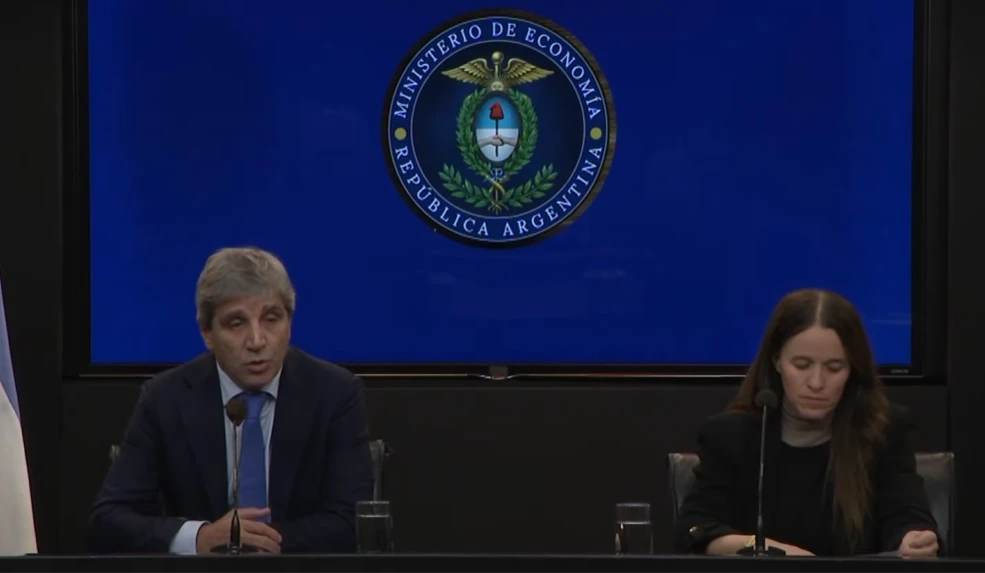
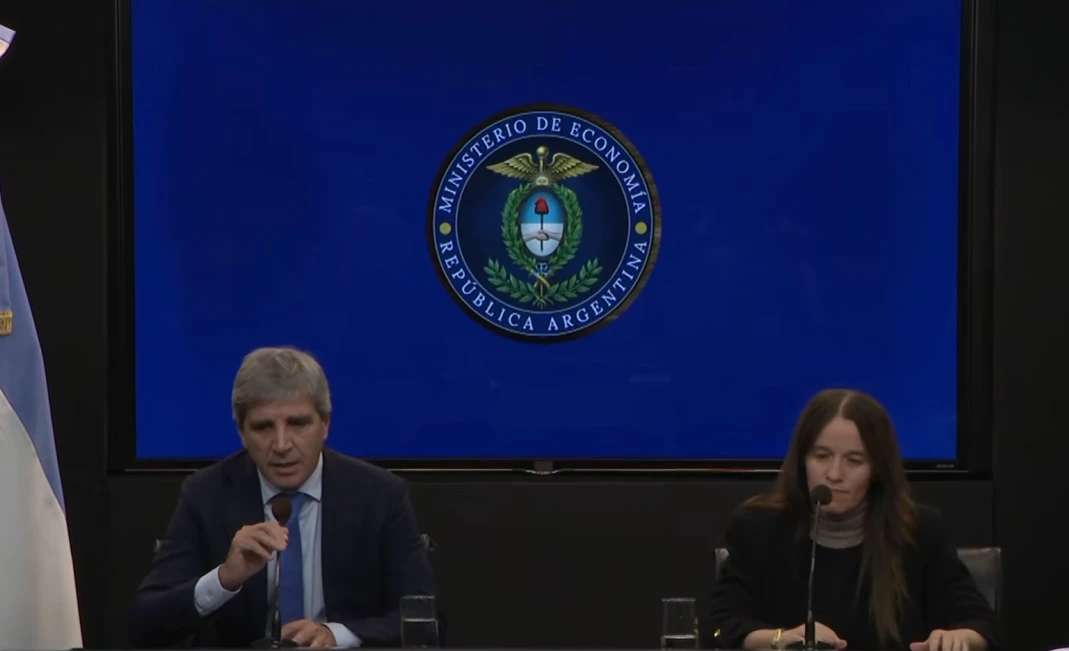
Luis Caputo and María Ibarzabal Murphy
The official stated that the new version of the project arises from technical observations made after the first law: “There is a new law because when the original was voted on, some doubts were raised by tax experts.”
In this context, Caputo recalled the origin of the initiative, linked to the historical problems of the Argentine economy, such as inflation and tax pressure, which led to a strong accumulation of savings outside the formal circuit.
“Today we are at a record of dollar deposits, 40 billion. Even so, there are more than four times that amount of savings under the mattress. The BCRA estimates that there are 170 billion dollars,” he detailed, emphasizing: “The goal is for people to finally be able to formalize their savings.”
Luis Caputo
Key changes in the new project
For her part, the Legal and Technical Secretary of the Presidency, María Ibarzabal Murphy, explained the main adjustments included in the new version of the regime, aimed at expanding its scope, clearing doubts, and providing greater legal certainty.
Among the most relevant modifications are:
New definition of significant discrepancy: clearer parameters are set, with a threshold of 15% and a minimum that avoids exclusions for low amounts.
Reversal of the burden of proof: the tax authority must support its objections without resorting to presumptions, using concrete information.
Regularization with a deadline: taxpayers will be able to rectify and pay differences within 15 business days to avoid being excluded from the regime.
Accelerated refunds: if a challenge is overturned, the State must return the amounts with interest within a maximum period of 45 days.
Luis Caputo and María Ibarzabal Murphy
Aims to mobilize dollars outside the system
The project is part of Milei's Government strategy to channel a significant mass of undeclared savings into the financial system. According to official estimates from the Central Bank, this stock would reach 170 billion dollars.
With these modifications, the Executive seeks to clear doubts, expand adherence, and consolidate a scheme that encourages the banking of capital without sanctions, in a context where the availability of foreign currency is considered key to maintaining economic stability.