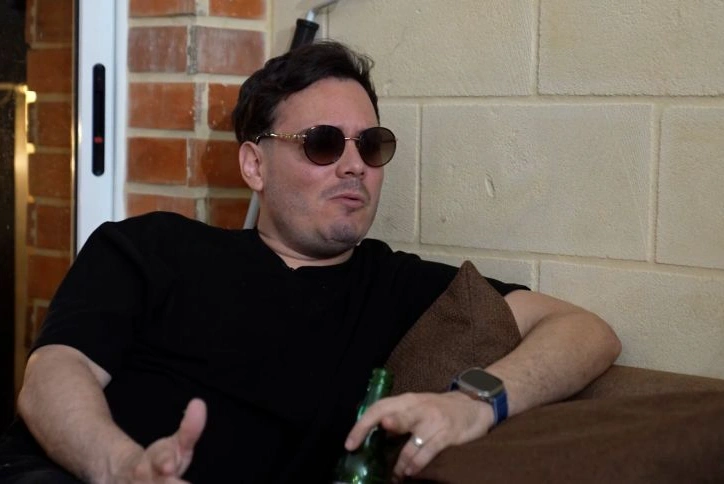

From Havana, he questioned the system and exposed the change in social mentality.
Nuevo
Agregar La Derecha Diario en
Compartir:
The influencer and businessman Sandro Castro, grandson of communist dictator Fidel Castro, surprised with a statement that completely shook the official narrative of the regime: “Most Cubans want capitalism, not communism.”
The phrase was uttered during an interview with CNN from Havana, where he bluntly proposed a change in the social climate on the island. As he argued, more and more citizens are moving away from the regime-driven model and are looking to economic systems based on market freedom
.
In this framework, he stated that many Cubans would have liked to live under a capitalist system, reflecting a growing disconnect between the island's dictators and the real aspirations of the population. In the same interview, he also pointed out against Miguel Díaz-Canel, arguing that he “is not doing his job well”, adding to the wave of criticism faced by the Cuban Government

.
The statements had a strong impact as they came from a direct member of the family who exercised power in Cuba for decades. In that sense, his words reflect an increasingly visible ideological fracture within Cuban society, where the wear and tear of the communist model is combined with a persistent economic crisis
.
Castro himself recognized the deterioration of living conditions on the island, marked by structural problems such as the shortage of basic products, power cuts and difficulties in accessing essential services. This context, according to his analysis, is key to understanding why support for different economic alternatives is growing.
The interview also revealed a broader phenomenon: the emergence of critical voices even within sectors historically linked to power in Cuba. In this scenario, support for capitalism ceases to be a marginal discourse and becomes a sign of the change of era that the island is going through
.
Far from being a simple isolated opinion, Sandro Castro's phrase condenses an increasingly widespread perception: the communist model, which for decades presented itself as immovable, is beginning to be openly questioned even from its own bowels.