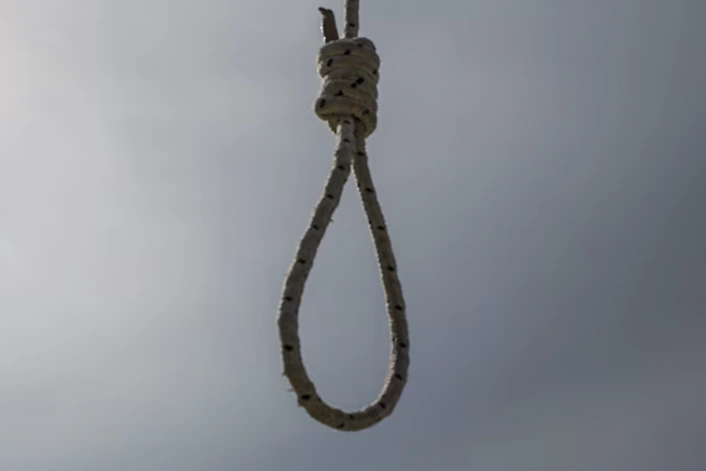
The Iranian regime has deepened its policy of internal repression since the beginning of the war on February 28, with at least 21 executions and more than 4,000 people arrested for political or national security reasons, as reported by the United Nations Organization.
The High Commissioner for Human Rights, Volker Türk, was blunt: “The authorities continue to violate the rights of the Iranian people in a brutal and ruthless manner.”
Executions and political persecution
According to the report:
9 people were executed for participating in protests 10 for
alleged membership of opposition groups
2 for charges of espionage
Organizations such as Amnesty International warn that Iran is one of the countries that most applies the death penalty
in the world.
Tortures, disappearances and forced confessions
The UN warned that many detainees were subjected to:
Enforced
disappearances
Systematic torture
Cruel and inhuman
treatment Confessions obtained under
duress
, even on television. Simulated executions
were also reported as a method of intimidation.
A system designed to instill fear
According to research cited by The Guardian, executions have accelerated in
Repression in the midst of an internal crisis
The executions take place in a context of growing political instability, marked by the rise of Mojtaba Khamenei after the death of
his father.
Far from easing tensions, the regime tightened internal control.
Urgent call from the international community
The UN demanded:
Immediately suspend executions
Ensure fair trials
Release arbitrarily detainees
However, so far there have been no signs of change on the part of
the regime.
An increasingly critical scenario
As the conflict in the Middle East continues, internal repression in Iran intensifies
.
The country is facing not only an external crisis, but also a profound human rights crisis.
And, as international organizations warn, the human cost continues to grow day by day.