On September 3, the president delivered a national address dedicated exclusively to the Falklands issue, in which he announced a significant series of diplomatic, economic, legal, and military measures.
Milei addressed the problem as a current issue of sovereignty, not merely as a historical controversy, and made it clear that ¨The Falklands are Argentine, by history and by right¨.
While the presidential message is part of the historic claim of national sovereignty, it arises as an immediate response to the advancement of the Sea Lion oil project, driven by the companies Navitas Petroleum and Rockhopper Exploration.
The Government believes that the exploitation is advancing without Argentine authorization in an area subject to a sovereignty dispute. Thus, Milei stated that the exploitation of hydrocarbons constitutes a new danger because it generates material capacity for the appropriation of natural resources in the area.
In this context, it is pertinent to analyze the measures announced in the speech, the energy dimension of the dispute, and the incorporation of the Falklands and the South Atlantic into a broader strategy of national and hemispheric security.
President Javier Milei
Sea Lion and the exploitation of Argentine resources
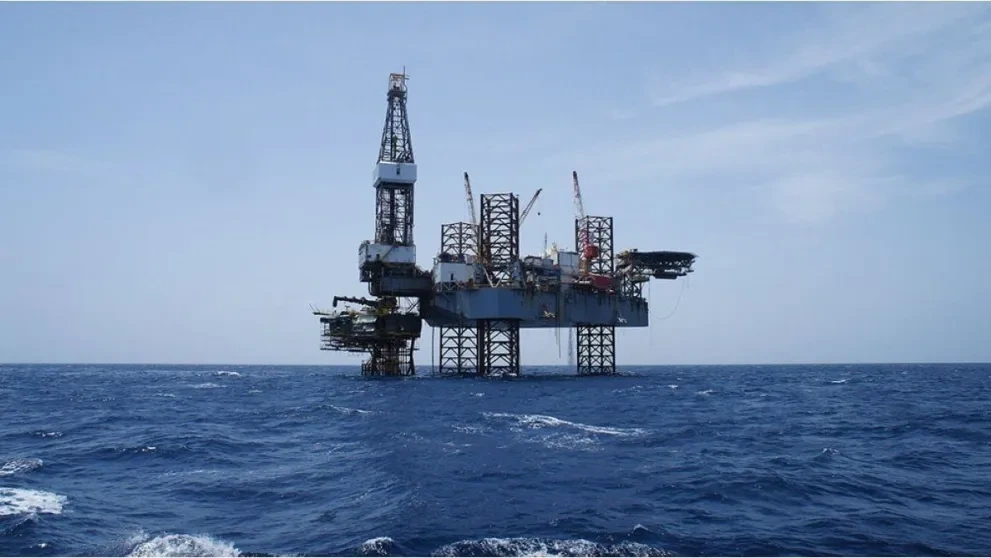
Sea Lion is an offshore oil field located approximately 220 kilometers north of the Falkland Islands. The project is operated by the Israeli company Navitas Petroleum, which holds 65%, along with the British company Rockhopper Exploration, which has 35%.
It is important to emphasize that the project is not a future possibility or mere exploration, but is already moving towards commercial exploitation.
In December 2025, both companies made the final investment decision (FID), and development is already underway: the dock and logistics base on the islands are being prepared, infrastructure and accommodation are being built, underwater components are being manufactured, and the FPSO vessel that will receive and store the oil is being fitted out.
Sea Lion aims to start producing oil in the first quarter of 2028, contemplating an initial phase of 11 underwater wells and a capacity of around 50,000-55,000 barrels per day.
For its part, the Foreign Ministry had already sent about 180 notes of discouragement to companies and to more than 29 countries. The defense of the natural resources of the Falkland Islands has historically transcended changes in government.
Since 2005, various Argentine administrations have promoted diplomatic protests, notes of discouragement, and sanctions against companies involved in the unilateral exploitation of hydrocarbons.
However, Milei's national address marks a turning point: it was presented from the Presidency as part of a comprehensive strategy that articulates sovereignty, defense, intelligence, economy, energy, and infrastructure in the South Atlantic.
In this way, the President not only deepened a state policy but also elevated the Falklands issue to a central component of Argentine national security.
Oil platform
Falklands as a national security issue
¨A poor country without armed forces can hardly advance effectively in its sovereign claims¨, stated President Milei in his speech. It is evident that the president is trying to express that diplomatic protests alone are not enough.
The defense of Argentine sovereignty—in this case, the Falklands—must involve legal, economic, military, and intelligence instruments, as effective sovereignty and national power are interdependent factors.
Regarding the application of sanctions, the Government signed Decree 868/2026, which streamlines the application of Law 26.659 against companies that develop hydrocarbon activities without Argentine authorization.
This resolution requires state agencies to report possible violations, accelerates their administrative procedure, and covers direct and indirect activities of financial, logistical, technical, or service support. It also strengthens the possibility of disqualifying companies linked to those projects from operating in Argentina.
Additionally, the president announced the submission to Congress of the National Sovereignty Defense Law, which includes the creation of a National Security Council specifically aimed at coordinating the areas of Defense, Foreign Affairs, Intelligence, and Economy.
In parallel, the Government allocated approximately US$142 million to advance with the Integrated Naval Base of Ushuaia, and indicated that it will prioritize additional funding in the 2027 Budget.
These measures did not arise overnight, but are part of a long prior process of military capability recovery driven by the ARMA Plan, which includes the incorporation of 24 F-16 fighters, Stryker vehicles, and new maritime surveillance capabilities.
In this way, Milei is ensuring that the claim for the Falklands ceases to be solely diplomatic and becomes an integral national security issue.
President Javier Milei
A historic opportunity for Argentina
In recent weeks, Trump made several statements regarding the Falklands issue, questioning whether Great Britain still retains the influence over the islands that it had in 1982.
He also criticized the United Kingdom for not having helped him in the Strait of Hormuz and when asked about the U.S. position regarding the sovereignty of the islands, he stated: “I always review all positions.”
Furthermore, it is no secret that Argentina today has an exceptionally close geopolitical alignment with Washington, largely due to the strong relationship between Milei and Trump.
However, these statements do not appear in isolation. In April of this year, an internal Pentagon email revealed that U.S. officials had evaluated revising Washington's position on the Falklands as a possible measure in response to European allies that did not sufficiently support the United States during the conflict with Iran.
This scenario is further enhanced by the renewed importance of the hemispheric logic of the Monroe Doctrine—advocated by the Trump Administration—which historically sought to limit the intervention and expansion of extraterritorial powers in America.
In light of this situation, Argentina has the opportunity to insert the claim for the islands into a broader discussion about the security of the American hemisphere, with the strategic objective of gaining Washington's support.
It is important to understand that Argentina is facing this unusual combination of facts and factors that may represent a historic opportunity to advance the claim for the sovereignty of the Falkland Islands.
Javier Milei, Donald Trump, and Andy Burnham
Conclusion
It is evident that President Milei's announcement not only seeks to reaffirm the importance of the sovereign claim but marks a turning point in Argentine policy towards the Falklands.
Without abandoning the historic diplomatic and legal path, the Government seeks to support the claim through a strategy that incorporates greater economic, military, institutional, and intelligence capabilities.
Moreover, the current international scenario presents an exceptional opportunity. The Milei-Trump relationship, the tensions between Washington and London, and the American hemispheric logic configure one of the most favorable diplomatic contexts—if not the most favorable—since 1982. It is pertinent to highlight that the Government has demonstrated an understanding and ability to seize this historic window by aligning with the execution of the Monroe Doctrine.
Ultimately, the Falklands do not represent merely a historical cause. Their resources, their position in the South Atlantic, and their projection towards Antarctica make the islands a central issue for Argentina's sovereign future and for the strategic security of the American hemisphere.