The Government of Javier Milei seeks to equip the F-16 fighters acquired for the Argentine Air Force with air-to-sea missiles, aiming to recover the anti-ship attack capability that the country lost after the decommissioning of the Super Étendard aircraft.
The initiative was outlined in report number 146 from the Chief of Cabinet presented to the Senate, which responded affirmatively to an inquiry about the potential acquisition of this type of weaponry.
The information was analyzed by defense specialist Andrei Serbin Pont in Infobae al Mediodía. He explained that the incorporation of these missiles will expand the capabilities of the new fighters and will allow for an aerial platform ready to attack naval targets.
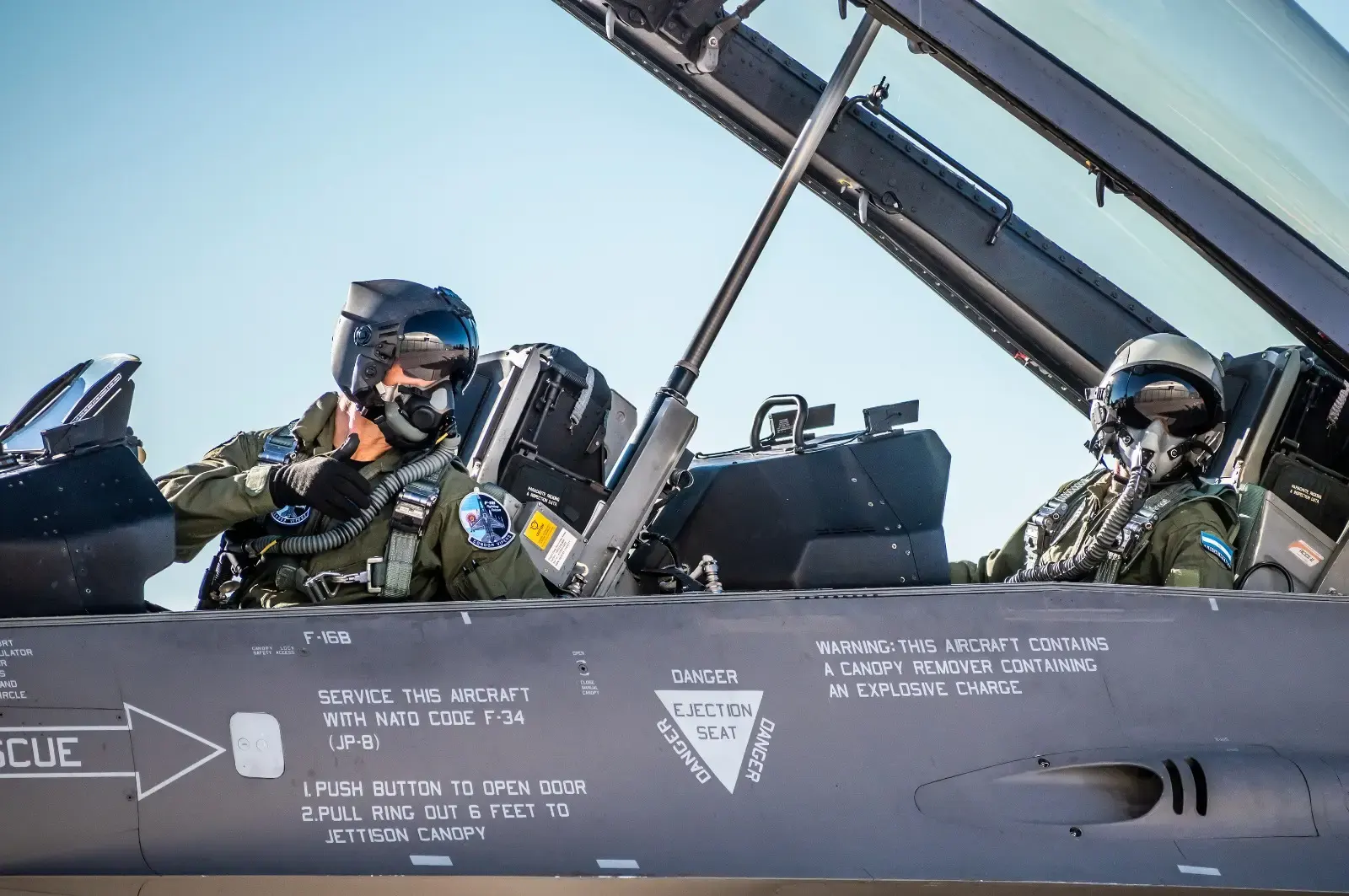
Argentine F-16 pilots.
Argentina has already received 12 F-16s and has planned two more deliveries of six aircraft each: one in 2027 and the last in 2028. Currently, these aircraft are equipped with armament that can be used against ships, although it was not specifically designed to neutralize vessels.
The possible air-to-sea missiles
Among the alternatives mentioned by Serbin Pont is the AGM-84 Harpoon family, a U.S. anti-ship missile that has already been integrated into various versions of the F-16.
Its incorporation into the Argentine units could be carried out through the necessary modifications to their systems, taking advantage of the modernization to the MLU Type 6.6 configuration and a software update.
The considered variants include the AGM-84L Harpoon Block II and AGM-84N Harpoon Block II+. The AGM-158C was also mentioned, although the specialist deemed it unlikely that this last option would be part of the currently analyzed choices.
The French missile Exocet is still in production, but its integration into the Argentine F-16s would require specific development.
Javier Milei and Carlos Presti.
The Malvinas precedent
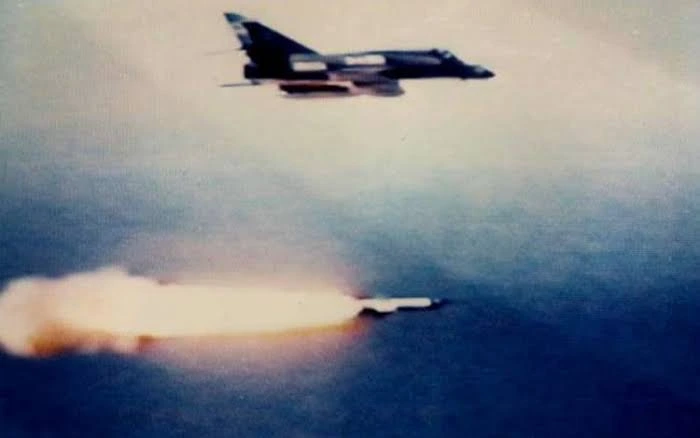
The recovery of this capability has a direct historical reference: the Falklands War of 1982. During the conflict, the Super Étendard of the Naval Aviation used AM39 Exocet missiles to attack British vessels.
Among the most significant operations were the attacks that led to the sinking of the destroyer HMS Sheffield and the logistics ship Atlantic Conveyor. There was also the attack on HMS Glamorgan, although in that case the missile was launched from a land-based installation.
The eventual incorporation of the Harpoon would also improve coordination between the Air Force and the Navy. The P-3C Orion maritime patrol aircraft incorporated by the latter force can operate missiles from the same family.
Argentinian Super Etendard aircraft.
Additionally, the integration of the Link 16 system facilitates the exchange of tactical information between military platforms.
Purchase of submarines and frigates
The re-equipment program of Milei's Government also includes credit operations for USD 3.5 billion to finance the potential acquisition of three submarines and two frigates.
Among the mentioned projects are the Scorpène and Type 209NG submarines, the Italian FCX-20 frigates, the modernization of MEKO destroyers, and the incorporation of naval helicopters.
For now, the plan to incorporate anti-ship missiles into the F-16s is already included in the official documentation, although it still remains to define which model will be selected, the acquisition conditions, and the timelines for completing their integration,