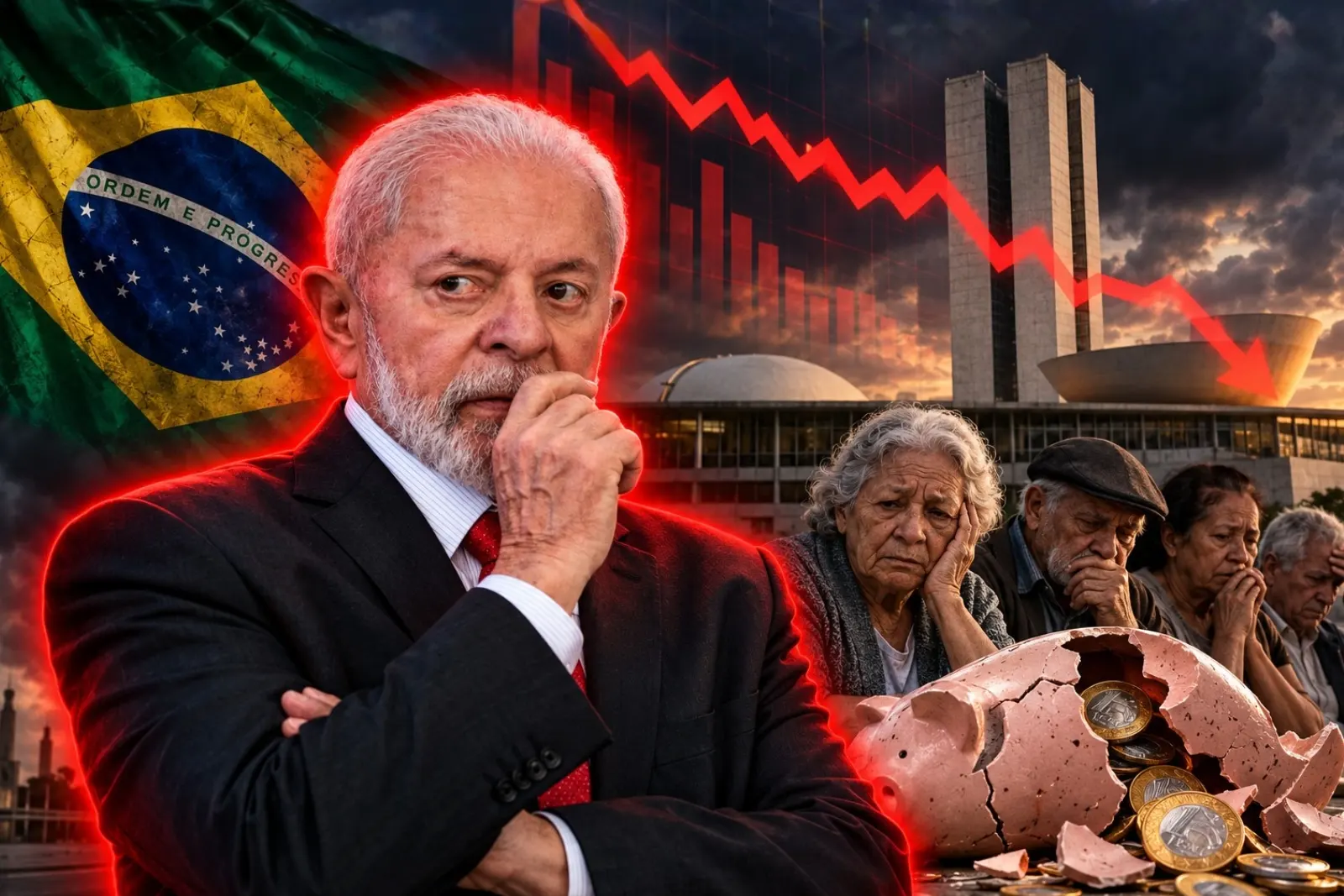
The measure was applied around 10 a.m., when projections anticipated a loss of 10.47%, and halted trading in cash, options, and private fixed income for 30 minutes.
After reopening, the Ibovespa deepened its decline to 17.34%. This was the first activation of the mechanism since the Covid-19 pandemic in 2020.
While the Brazilian market faces a strong outflow of funds, Argentina faces a completely different reality thanks to an economic model based on fiscal balance, reduction of regulations, and legal security to attract investments.
The Milei government's commitment to zero deficit and the defense of fiscal surplus are part of the main pillars of this strategy. The Incentive Regime for Large Investments (RIGI) is also noteworthy, offering tax and exchange benefits for projects exceeding USD 200 million.
Mining, with the development of lithium and copper projects, energy production from Vaca Muerta, and agribusinesses appear among the sectors with the greatest potential to attract international investments.
In this context, the deterioration of expectations regarding Brazil led the firm XP Investimentos to modify its outlook on that market.
In its strategic report for November, the firm downgraded its recommendation for Brazilian stocks from optimistic to neutral and warned of a scenario of high inflation and high interest rates, which deepens the capital outflow from that country, benefiting the Milei government.
The fraudulent reelection of the socialist dictator Lula da Silva generated a strong impact on the Brazilian financial market and on foreign investors.
Since the electoral result, more than 8.4 billion reais have been withdrawn from the Brazilian Stock Exchange, deepening a process of capital flight that coincided with a marked decline in stocks.
In this scenario, many investors began to look towards Argentina under Javier Milei as a great alternative, attracted by his program of reforms, deregulation, tax cuts, and economic opening.
Lula da Silva.
The strong capital outflow in Brazil
Data from B3, the Brazilian stock exchange, shows that the outflow of international funds reached 12.4 billion reais in eight consecutive trading days of position liquidation.
The capital withdrawal also affected institutional investors, who withdrew approximately 4.8 billion reais between October 26 and November 3. Thus, the total drainage of resources from the Brazilian stock market exceeded 17 billion reais during that period.
The market reaction was reflected in the Ibovespa, the main benchmark index for Brazilian stocks. Between Thursday, the 22nd, and Wednesday, the 4th, the indicator accumulated an 18.3% drop. The most pronounced episode occurred on Monday, the 26th, after the runoff, when it plummeted 13.88% in a single day, the third largest daily drop since 2000.
The magnitude of the collapse forced B3 to activate its automatic trading interruption mechanism, which temporarily suspends trading in the face of extreme index movements.