
When protecting nature means prohibiting the future

When protecting nature means prohibiting the future

Most read in Argentina

EXCLUSIVE: Former governor took a lawsuit against the current Morena governor of Tamaulipas to a US court

  1. Tragedy in a Chaco field: a young man ran over and killed his father while reversing

  2. Bone marrow: the silent factory of blood cells

  3. OSFA: The Milei Government moves forward with the payment of the historical debt and announced over $5 billion in reimbursements

  4. The Government expanded the zero tariff for electric cars and allowed the entry of models costing up to USD 35,000

Imagen de Editorial Team
porEditorial Team
Argentina

The debate over fish farms shows how extreme environmentalism turns any productive risk into an excuse for prohibition

Add La Derecha Diario on
Share:

Every civilization transforms nature. A house replaces virgin soil, a crop modifies an ecosystem, and a dam alters the course of a river. Even producing medicines, food, or energy requires intervening on resources that previously had another destination. The sensible question was never how to live without leaving a footprint, because that would only be possible by ceasing to produce. The real question is which institutions allow progress while holding accountable those who cause real harm.

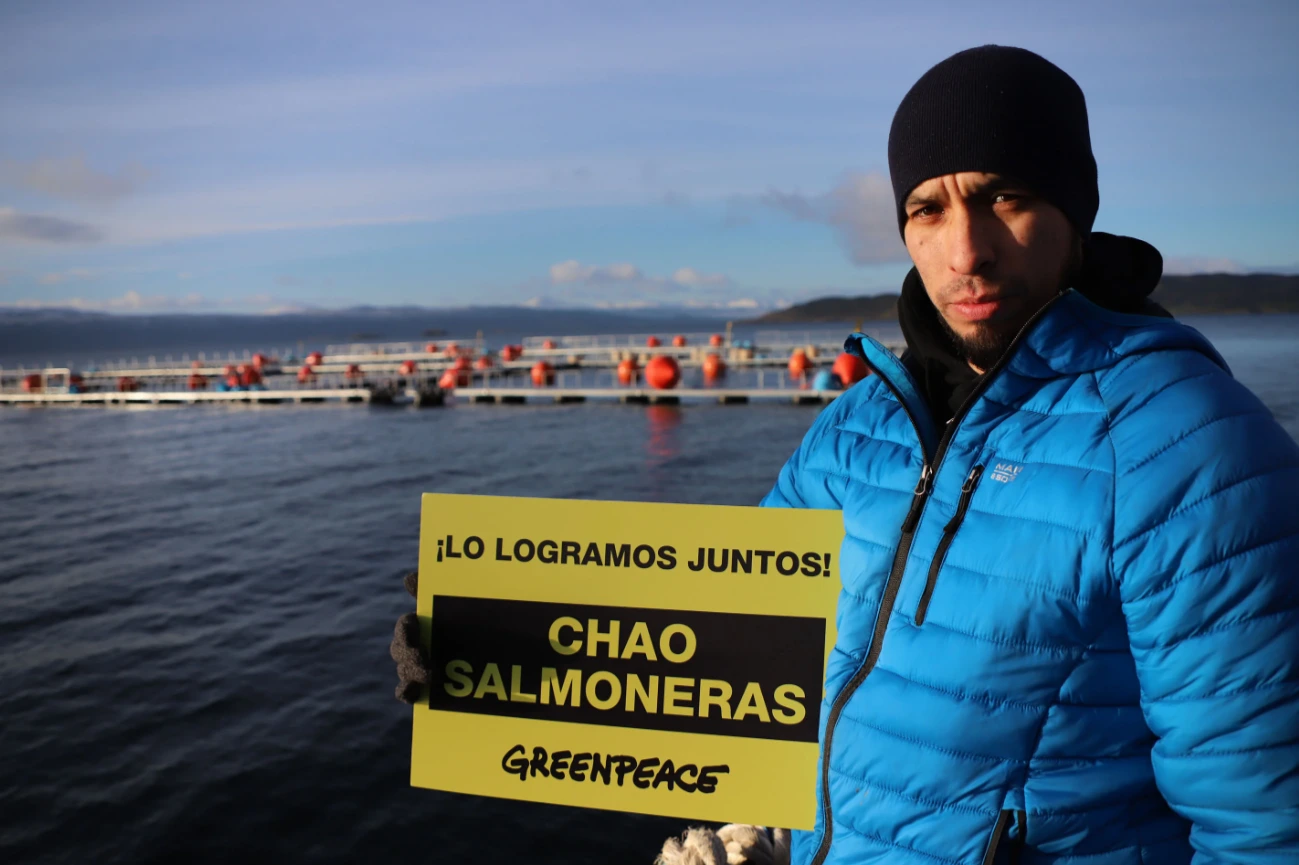
The discussion about salmon farming raises that dilemma again. The government of Tierra del Fuego banned industrial salmon farming in 2021, and Greenpeace celebrated the decision as an environmental precedent. When the province partially relaxed that ban in 2025, the organization denounced an “environmental regression.” Meanwhile, in the Falklands, a consultation is underway regarding a project that contemplates initially producing 50,000 tons of salmon annually at 16 locations.

The environmental risks are not imaginary. Salmon farming can generate waste, escapes of non-native species, and health problems, and Greenpeace has documented these effects for years. In the Falklands, even local organizations question the available information and demand more rigorous environmental assessments before proceeding. Recognizing those risks, however, does not force one to conclude that the only rational response is to prohibit the activity.

Here lies the difference between conservation and extreme environmentalism. Conservation means managing risks; extremism seeks to eliminate the risk by eliminating the human activity that produces it. Under that logic, uncertainty ceases to be a problem that must be resolved through knowledge, technology, and responsibility, and automatically becomes an argument to prevent.

The problem is that all innovation begins under uncertainty. No one knows in advance all the consequences of a new technology, an industry, or a productive method. If the condition for allowing an activity were to demonstrate beforehand that it will never cause harm, a good part of economic progress would have been impossible. A society that demands zero risk also ends up achieving zero innovation.

Moreover, prohibiting has costs that environmental discourse often renders invisible. The project analyzed in the Falklands could diversify an economy heavily linked to fishing. An assessment commissioned by the island administration estimated that a production of 30,000 tons could contribute about 35 million pounds annually and 133 jobs. These are projections, not certainties, but they remind us of something fundamental: giving up production also has economic and human consequences.

A liberal perspective offers a more demanding alternative than prohibition. If a company pollutes someone else's property, harms a fishery, or causes demonstrable damage, it must be held accountable. The role of serious institutions is precisely to define rights, assign responsibilities, and ensure that costs fall on those who generate them. Environmental damage should not be socialized, but it should not be used as a license to socialize the decision about which activities can exist.

Technology also modifies what once seemed inevitable. New monitoring systems, better sanitary methods, and changes in production processes can reduce impacts that previously seemed inseparable from an industry. The entrepreneur has incentives to discover those solutions when they must bear the cost of their mistakes and can reap the benefits of innovation. Prohibition, on the other hand, shuts down that process before it can begin.

That is why the debate about salmon transcends Tierra del Fuego and the Falklands. A free society should not choose between growth and nature, but rather build rules so that those who produce also bear the consequences of producing. The difference may seem small, but it separates two conceptions of society.

Environmentalism becomes dangerous when it stops asking how to do things better and starts deciding which things should never be done. Nature deserves protection, but the future does too. A civilization progresses when it learns to reduce the costs of transforming the world, not when it turns the fear of transforming it into a virtue.


La Derecha Diario on X

  1. URGENTE — FLÁVIO BOLSONARO BASADÍSIMO: SE BURLÓ DEL DEDO AMPUTADO DE LULA EN PLENO DEBATE PRESIDENCIAL LULA: "¿Estás a favor de la tarifa cero?". FLÁVIO: "Estoy a favor. Ahora, no sirve de nada, Lula, si das con una mano y quitás con los nueve dedos".

    2 hours ago

  2. FLÁVIO BOLSONARO DIO UN CIERRE HISTÓRICO EN EL DEBATE PRESIDENCIAL CONTRA EL DICTADOR LULA DA SILVA A DOS DÍAS DEL BALOTAJE "Quiero agradecerles a todos los que me abrazaron, que me mandaron un abrazo fuerte para el presidente Bolsonaro, que está siendo tratado injustamente. Voy a honrar su voto". "Me comprometo con tres cosas: nunca prometer lo que no pueda cumplir, devolverles el poder adquisitivo para que vuelvan a tener dinero en el bolsillo y luchar de verdad por su libertad, por la soberanía de Brasil y para que vuelvan a caminar en paz por las calles".

    7 min ago

  3. LULA ESTÁ GAGÁ: "SI GANO LOS BRASILEÑOS VERÁN AL GOBIERNO ACABAR CON LA POLICÍA Y DEJAR EL TERRITORIO LIBRE". Durante el debate presidencial contra Flávio Bolsonaro, Lula protagonizó un insólito momento al hablar de seguridad y pronunciar una frase que, literalmente, plantea acabar con la policía y dejar el territorio libre a los criminales como él.

    50 min ago

  4. BOLSONARO SACÓ UNA PÁGINA PARA RECOPILAR LAS MENTIRAS DE LULA Y NO PARAN DE AUMENTAR El candidato presidencial Flávio Bolsonaro lanzó "Desmentindo Lula", una plataforma que verifica en tiempo real las declaraciones del mandatario socialista durante el debate presidencial. La página ya contabiliza 133 afirmaciones que califica como incorrectas: 31 falsas, 72 engañosas y 30 equivocadas, según su propio registro, a solo dos días del balotaje.

    1 hour ago

  5. COMPLETAMENTE GAGÁ: El dictador Lula da Silva aseguró que, si gana las elecciones, creará un nuevo ministerio y los brasileños verán "al gobierno acabar con la policía y dejar el territorio libre".

    1 hour ago

La Derecha Diario logo
TwitterInstagramYouTubeTikTokFacebook
Derecha Diario TV

Nosotros

  • Quienes Somos
  • Autores
  • Donar

Privacidad

  • Protección de datos
  • Canales
  • Sitemap
  • RSS

Contacto

  • info@derechadiario.com.ar
PUBLICIDAD
La Derecha Diario logo
ESX logoInstagram logoYouTube logoTikTok logoFacebook
ARGENTINAUNITED STATESECUADORISRAELMEXICOURUGUAY
DERECHA DIARIO TV
  • ES
    XInstagramYouTubeTikTokFacebook
  • DERECHA DIARIO TV
  • Sections
  • ARGENTINA
  • UNITED STATES
  • ECUADOR
  • ISRAEL
  • MEXICO
  • URUGUAY
  • Countries
  • La Derecha Diario logoLA DERECHA DIARIO
  • La Derecha Diario México logoLA DERECHA DIARIO MÉXICO
  • La Derecha Diario Uruguay logoLA DERECHA DIARIO URUGUAY
  • La Derecha Diario Ecuador logoLA DERECHA DIARIO ECUADOR
  • La Derecha Diario Israel logoLA DERECHA DIARIO ISRAEL
  • La Derecha Diario Estados Unidos logoLA DERECHA DIARIO ESTADOS UNIDOS
  • Topics
  • GUERRA EN IRÁN
  • The Newspaper
  • QUIENES SOMOS
  • AUTORES
  • PUBLICIDAD
  • DONAR

Related news

Martín Varsavsky invested again in Argentina: “The country is heading in the right direction, the opposite of Europe”

Martín Varsavsky invested again in Argentina: “The country is heading in the right direction, the opposite of Europe”

The espionage folders on judges, opponents, and businessmen found in CFK's vault

The espionage folders on judges, opponents, and businessmen found in CFK's vault

The United Kingdom arrested an Iranian on suspicion of preparing acts of terrorism at a US base

The United Kingdom arrested an Iranian on suspicion of preparing acts of terrorism at a US base

Trump Effect: the US economy recorded its lowest unemployment rate in over 50 years and poverty also decreased

Trump Effect: the US economy recorded its lowest unemployment rate in over 50 years and poverty also decreased

The Trump administration begins a series of refunds for excessive charges to nearly a million Obamacare users

The Trump administration begins a series of refunds for excessive charges to nearly a million Obamacare users

National Lottery: all the winning numbers from Thursday, October 1

National Lottery: all the winning numbers from Thursday, October 1