
La Derecha Diario logo
ESX logoInstagram logoYouTube logoTikTok logoFacebook
ARGENTINABOLIVIAECUADORISRAELMEXICOURUGUAYDERECHA DIARIO TV
  • ES
    XInstagramYouTubeTikTokFacebook
  • DERECHA DIARIO TV
  • Secciones
  • ARGENTINA
  • BOLIVIA
  • ECUADOR
  • ISRAEL
  • MEXICO
  • URUGUAY
  • Países
  • La Derecha Diario logoLA DERECHA DIARIO
  • La Derecha Diario México logoLA DERECHA DIARIO MÉXICO
  • La Derecha Diario Uruguay logoLA DERECHA DIARIO URUGUAY
  • La Derecha Diario Ecuador logoLA DERECHA DIARIO ECUADOR
  • La Derecha Diario Bolívia logoLA DERECHA DIARIO BOLÍVIA
  • La Derechadiario República Dominicana logoLA DERECHADIARIO REPÚBLICA DOMINICANA
  • La Derecha Diario Israel logoLA DERECHA DIARIO ISRAEL
  • La Derecha Diario Estados Unidos logoLA DERECHA DIARIO ESTADOS UNIDOS
  • Temas
  • GUERRA EN IRÁN
  • El Diario
  • QUIENES SOMOS
  • AUTORES
  • PUBLICIDAD
  • DONAR

The Argentine economic resurgence

The Argentine economic resurgence
Imagen de Editorial Team
porEditorial Team
Argentina

There are clear signs of recovery after the opposition's attempt to leave scorched earth.

NuevoAgregar La Derecha Diario en
Compartir:

Since the beginning of the second semester of 2025, the opposition orchestrated and executed a systematic plan from Congress to undermine the government's main asset: fiscal balance. Over the course of a few months, it accelerated the approval of laws to finance legitimate and sensitive claims for society but unfundable from a fiscal perspective.

Under that same umbrella, many other just claims regarding compensation for our retirees, police, and teachers could be considered. But as a society, we have learned, not without some difficulties, that a society that “asks for flan” without learning to produce the milk, sugar, and eggs necessary is a society destined for failure.

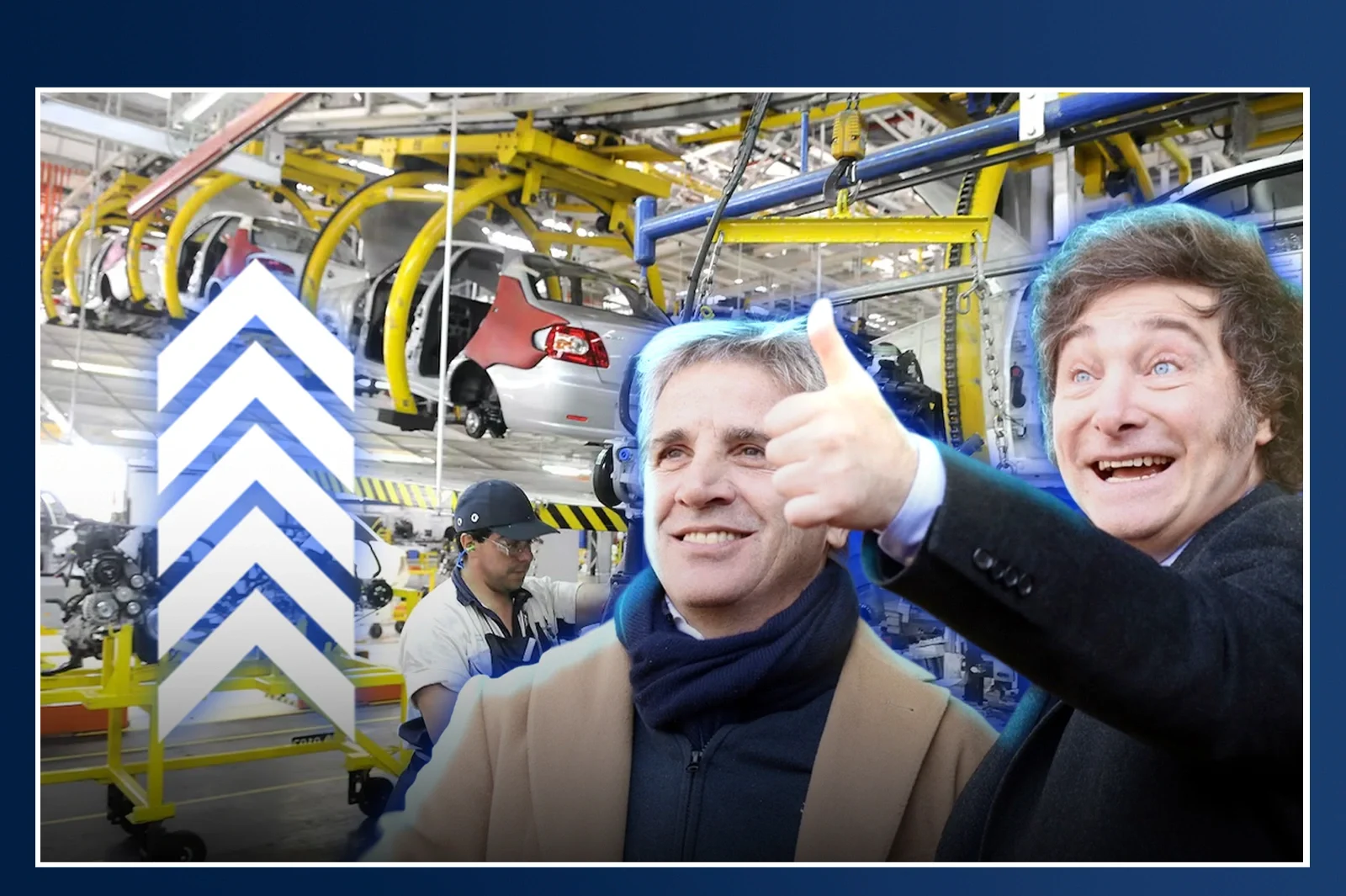
The expertise of President Javier Milei and Minister of Economy Luis Caputo, not only in designing economic policies but also in choosing strategic allies in geopolitical matters, allowed us to navigate the desert with considerable uncertainty but at least avoiding the run (equivalent to 50% of the circulating currency) from sweeping away the government and the electoral outcome, as the opposition intended.

The consequences were not light. The exchange rate slid to the ceiling of the band, which could be sustained thanks to the help from the USA, and interest rates soared to contain the collapse of demand for pesos. Both factors caused a setback in both the economic growth process and the inflationary deceleration.

All concentrated in a very difficult first quarter for the government, which also negatively impacted image polls and consumer confidence, one of the indices that best correlates with the depoliticized social mood of Argentine society.

It’s a promising dawn

Since March, a change in trend has been observed in the macroeconomy that is once again taking the correct path. There may still be some ups and downs along the way, but the trend is inexorable.

The BCRA is flooded with dollars thanks to an unprecedented growth in exports and a significant launch of dollar-denominated negotiable obligations from companies and provincial governments to carry out ambitious investment projects. The energy and agricultural surplus exceeds any optimistic estimates resulting from policies that have been betting on putting the correct stimuli in place from day one. In this sense, the President has just announced a reduction in export taxes on wheat and barley starting in June and on soybeans starting in January 2027, promising their complete elimination if re-elected.

This year, a positive trade balance greater than 20B is expected, as well as a probably neutral current account, something that has no similar precedents in Argentine history and could become a clear signal of the end of an era for the famous external restriction that systematically hindered growth during the times when Argentina imposed restrictions on exports.

This week, INDEC also released the monthly economic activity estimator for March (EMAE) with a year-on-year growth of 5.5% and a monthly growth of 3.5%, which also shows that 14 of the 15 analyzed sectors show some degree of reactivation; it is no longer just about the primary exporting sectors but also those linked to the internal market and more labor-intensive.

Inflation showed a clear downward trend in April, from 3.4% in March to 2.6% in April; and so far in May, there are again certain indications of a new deceleration in price evolution that could bring the May CPI down to levels closer to 2%.

The restrictive monetary policy will remain unchanged until inflation reaches a much lower floor than the current one, where the anchor point for genuine demand for money prompts banks to lower interest rates on loans to individuals and SMEs, which would give a second boost to consumption, this time accompanied by a recovery in purchasing power via retrospective salary increases compared to inflation on a clear downward path. 

The sustainability of change requires more reforms

Everything we have just recounted tells a story that has already begun but that we need to accelerate even more to reach 2027 with the three success indicators that ensure Javier Milei's re-election:

  1. Monthly inflation of 1.5%

  2. Exchange rate within the bands

  3. Unemployment below 10%

This acceleration is guaranteed by the continuity of the successful process of structural reforms and deregulation that this government has carried out since day one. Let’s review the agenda we are already following in this regard:

  • LABOR LAW: removal of rigidities that facilitates the incorporation of employees into the formal market.


  • GLACIERS: makes mining activity viable in the country.

  • SEEDS: guarantees intellectual property for new varieties that bring new technologies to market.

  • CNV: simplifies the issuance of debt under 120 million to create a capital market that restores credit to SMEs.

  • EU/MERCOSUR TREATY: it goes without saying the benefits of accessing a market like the European one, whose current ease allowed for a record shipment in time and quantity of honey produced in our regional economies.

  • LAND LAW: that ends the demonization of foreign investment in Argentine lands.

  • CABOTAGE LIBERALIZATION: lowers logistical costs of rivers and internal ports, giving life to places like Barranqueras, which will be the new Rosario.

  • BELGRANO CARGAS: Its privatization redefines the country's logistical infrastructure, making it more efficient and modern.

  • COMPANY LAW: which provides for a comprehensive modernization by introducing a special chapter for AI companies.

  • PCT: adhering to this international agreement on intellectual property puts us back on the international radar regarding respect for patent rights and attracting venture capital for innovation and development.

  • TRADE AGREEMENT WITH THE USA: opens the doors to the most attractive market in the world.

  • No more devaluation:

    If gaining competitiveness through adjustments to the exchange rate were a solution for Argentina, we would already be the largest power in the world. But we have abused this dangerous tool so much that Argentines have adopted bimonetarism as a defensive behavior, and it will take decades to change this self-protection mechanism.

    Argentina is heading towards a virtuous process of strong and sustained growth of its exports, which will inevitably lead to a certain revaluation of our currency. An unavoidable proof of this is the simultaneity we are seeing in the decrease of interest rates, significant purchases of reserves by the BCRA, and the decline of the exchange rate in real terms with an almost nonexistent gap.

    The false argument that we will only know the fair price of the dollar the day we lift the restrictions on companies constitutes a fallacy that confuses flows with stocks. Today, Argentina has its flows completely free from being dollarized, and its external functioning shows no challenges, even to achieve refinancing of its debt at reasonable rates, although the country risk still reflects a certain degree of doubt about what may happen in 2027.

    Thus, we can only achieve greater productivity if we manage to deregulate to lower costs and reduce taxes to relieve the burden on companies. Both measures will allow for more exports and greater volume sales to the internal market.

    The two major structural reforms that remain pending for Argentina to truly take off are tax and pension reforms.

    A tax reform must simplify the current tax maze imposed by ARCA and its provincial and municipal equivalents with hundreds of distorting, complex, and dubious constitutional taxes based on double taxation and very poor technical quality given the criteria that define good tax policies. To carry this out, a very high level of federal consensus is needed, as the entire current co-participation scheme should be re-discussed, which inevitably leads to winners and losers in a context where absolute majorities are required.

    The pension reform is key to providing fiscal sustainability to the pension system, which it currently lacks. From the retirement age in a world where life expectancy approaches 90 years to the existence of 110 special regimes that do not self-finance despite the incremental contributions of their affiliates and that the state must finance in a strongly inequitable manner compared to the rest of the mortals who retire under the general distribution regime.

    Both transformations will require that in 2027 the government reconfirms popular support at the polls for a new term so that there is no doubt that, beyond the natural disagreements generated by some forms, internal discussions, the majority of people do not want to change course.


    La Derecha Diario logo
    TwitterInstagramYouTubeTikTokFacebook
    Derecha Diario TV

    Nosotros

    • Quienes Somos
    • Autores
    • Donar

    Privacidad

    • Protección de datos
    • Canales
    • Sitemap
    • RSS

    Contacto

    • info@derechadiario.com.ar
    PUBLICIDAD

    Noticias relacionadas

    The true miracle of capitalism that economic science fails to measure

    The true miracle of capitalism that economic science fails to measure

    Causa Cuadernos: Néstor Kirchner's former secretary suspended her statement due to "stress"

    Causa Cuadernos: Néstor Kirchner's former secretary suspended her statement due to "stress"

    The government of Donald Trump deployed military forces and combat aircraft in Caracas.

    The government of Donald Trump deployed military forces and combat aircraft in Caracas.

    Trump announced a preliminary peace agreement with Iran that includes the reopening of the Strait of Hormuz.

    Trump announced a preliminary peace agreement with Iran that includes the reopening of the Strait of Hormuz.

    The communist George Soros funded campaigns that could free dangerous killers in New York.

    The communist George Soros funded campaigns that could free dangerous killers in New York.

    Shots and tension around the White House: the Secret Service shot the attacker.

    Shots and tension around the White House: the Secret Service shot the attacker.